
ANALYSIS
From the very beginning of Trump’s second term, his administration has had its eye on Massachusetts. The Bay State and its liberal-leaning politics appeared to be a perfect foil for their agenda, whether on higher education, the pharmaceutical industry, or immigration enforcement.
The bluster began only weeks into the administration. In February, Trump’s “border czar,” former Immigration and Customs Enforcement acting director Tom Homan, declared that unless Boston reversed a local law limiting police cooperation with federal immigration officials, “I’m coming to Boston; I’m bringing hell with me.”
Homan later claimed he had quietly slipped into the city in March, though he only announced the trip afterward. Unsurprisingly, no one had noticed.
Since then, ICE activity has been steady in the region and viral videos of confrontations with officials and the public pop-up from time to time.
Now, months later, the Trump administration finally made a big reveal. On Thursday, the Justice Department filed a 47-page lawsuit against the City of Boston over what Trump calls its sanctuary law. The suit, despite its claims, appeared less about overturning local policy than about grabbing headlines.
Advertisement
Hell this was not. Lame might be a better word.
At issue is the Boston Trust Act, an 11-year-old ordinance that prohibits Boston police from holding individuals for federal immigration purposes or honoring requests to transfer detainees to ICE custody. It essentially codified what many cities across the country have done: draw a clear line between local law enforcement and federal immigration enforcement.
Within Boston, the law has been broadly popular. Former mayors Marty Walsh and Kim Janey and current Mayor Michelle Wu have all embraced it, and defending the ordinance has consistently been good politics. There has never been a serious movement to repeal it.
Advertisement
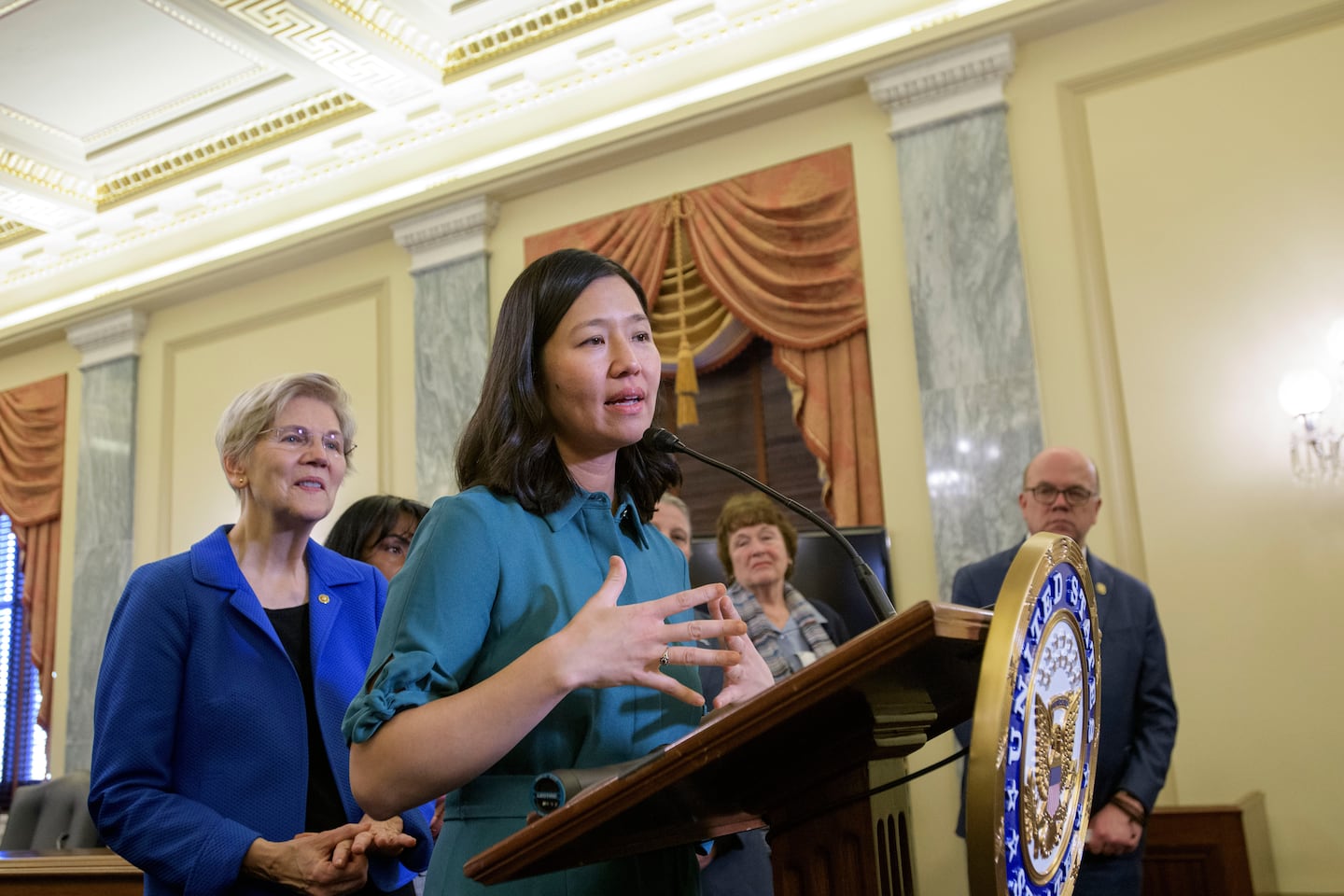
Wu, for her part, wasted no time in responding to the lawsuit.
“This is our city, and we will vigorously defend our laws and the constitutional rights of cities, which have been repeatedly upheld in courts across the country,” she said in a statement.
Attorney General Pam Bondi, speaking for the Trump administration, offered a very different take.
“If Boston won’t protect its citizens from illegal alien crime, this Department of Justice will,” Bondi said in a statement.
That framing, however, runs up against stubborn facts. Crime statistics show Boston as one of the safest big cities in America. Violent crime rates remain far lower than those in many other large urban centers. And many of the ICE arrests in the New England region over the past eight months have occurred outside the city’s borders.
Which raises the obvious question: What is this lawsuit really about?
If successful, the lawsuit could set a precedent that would fulfill a long-sought conservative objective of prohibiting so-called sanctuary city policies. The Trump administration has explored the boundaries of its legal authority this term, with an eye on the 6-3 conservative split on the Supreme Court. But some legal scholars say their arguments in this case, ultimately, are weak.
The real answer is politics. Lawsuits like this allow Trump officials to claim they are taking action. And politically, the spectacle of suing Boston reinforces Trump’s preferred narrative that liberal cities are hostile to law and order, and only his administration will step in.
Advertisement
But there’s a catch: If this is all politics, then in Massachusetts, the strategy also helps Democrats.
Wu has been quick to use Trump’s attacks as a foil in her reelection campaign. Each time the administration singles out Boston, it gives her another opportunity to rally her base. She currently holds a commanding lead over her better-funded challenger, and Trump’s Justice Department just handed her another talking point.
Local Republicans, if they were thinking strategically, might be the ones most eager for Trump to stay away. Every national spotlight the administration shines on Boston only strengthens Democrats’ hand statewide. It reminds Massachusetts voters that the national GOP is hostile to their city’s values, even as Republicans here try to carve out a more moderate identity.
Of course, the administration could escalate further. Trump has threatened before to deploy National Guard troops to cities with sanctuary laws. He raised the idea for Boston and Chicago. But that move is already less threatening than it was months ago. When he sent troops into Los Angeles during unrest, courts ruled many aspects of the deployment illegal. Trying to repeat that experiment in Boston would invite an immediate legal battle, and likely another political gift to Democrats.
So instead, we’re left with this lawsuit. It is noisy but not substantive, full of rhetoric but light on plausible legal grounding. It may produce a few days of headlines on Fox News, but in terms of actual change on the ground, it is unlikely to alter Boston’s immigration enforcement practices or shake the city’s political resolve.
Advertisement
Trump’s border czar once promised hell. What Boston got instead was a flimsy lawsuit that reads more like campaign literature than governing.
And in Massachusetts politics, that may be the lamest move of all.
James Pindell is a Globe political reporter who reports and analyzes American politics, especially in New England.
Comments on Trump administration brought lame, not hell, to Boston