
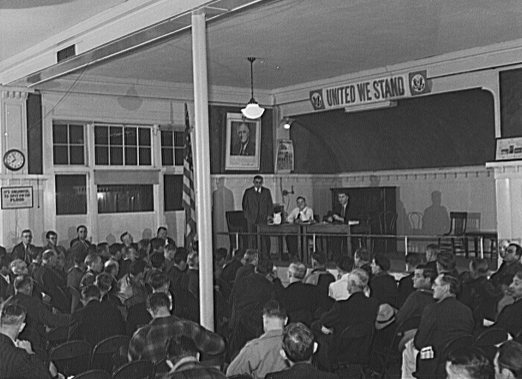
Labor organizations are strongest when the people they represent can scrutinize finances, choose leaders, inspect agreements, and participate without intimidation.
Democracy within labor institutions
A labor union is a private membership organization that also carries substantial responsibilities toward the people it represents. For many covered labor organizations, the Labor-Management Reporting and Disclosure Act (LMRDA) establishes protections for members and requirements for union governance. Among its central themes are free speech and assembly within the union, participation in union elections, financial reporting, and safeguards for union funds.
The U.S. Department of Labor's Office of Labor-Management Standards (OLMS) administers and enforces significant portions of the LMRDA. Requirements vary with the kind of organization and the legal provision involved; they should not be generalized to every employee association or public-sector union.
Rights paired with responsibilities
The LMRDA seeks a balance. Union members can have a voice in leadership and policy, but unions also need workable rules to negotiate, administer contracts, and represent members. Officials must handle organizational money responsibly, while members need information sufficient to hold those officials accountable. The statute addresses access to collective-bargaining agreements, financial disclosure, elections, and other governance matters.
The principle applies more broadly to responsible institutions: publish understandable financial records, protect fair elections, explain decisions, provide legitimate ways to raise concerns, and enforce rules consistently. These safeguards strengthen public confidence without prejudging any particular union or dispute.
Accountability should be evidence-based
Concerns about labor organizations sometimes focus on political expenditures, dues, internal elections, representation quality, or grievance procedures. A serious review separates verified misconduct from ordinary disagreement over strategy and also examines employer compliance with labor law. Neither workers nor employers benefit from broad allegations unsupported by records.
Questions worth asking
- Can members readily find reporting obligations, election rules, and grievance processes?
- Are financial statements and collective-bargaining terms clear enough for meaningful oversight?
- Do regulatory procedures protect internal democratic rights without unnecessary bureaucracy or retaliation?
Transparent governance, lawful representation, and fair procedures are not competing goals. An institution that listens to the people it serves is better positioned to earn their trust.
Primary sources and further reading
- Department of Labor — LMRDA Fact Sheet
- Department of Labor — Union Member Rights and Officer Responsibilities
- NLRB — Employer, Union, and Employee Rights
Research note (November 2026): This article explains existing legal frameworks and presents questions for civic discussion. It is not legal advice or a claim that any proposed reform has been formally adopted by the Coalition. Check the linked primary sources for current rules and exceptions.
Image credits and sources
Archival and illustrative photography; not a Coalition-sponsored event.
Comments on Labor Organizations, Member Rights, and Transparent Governance