

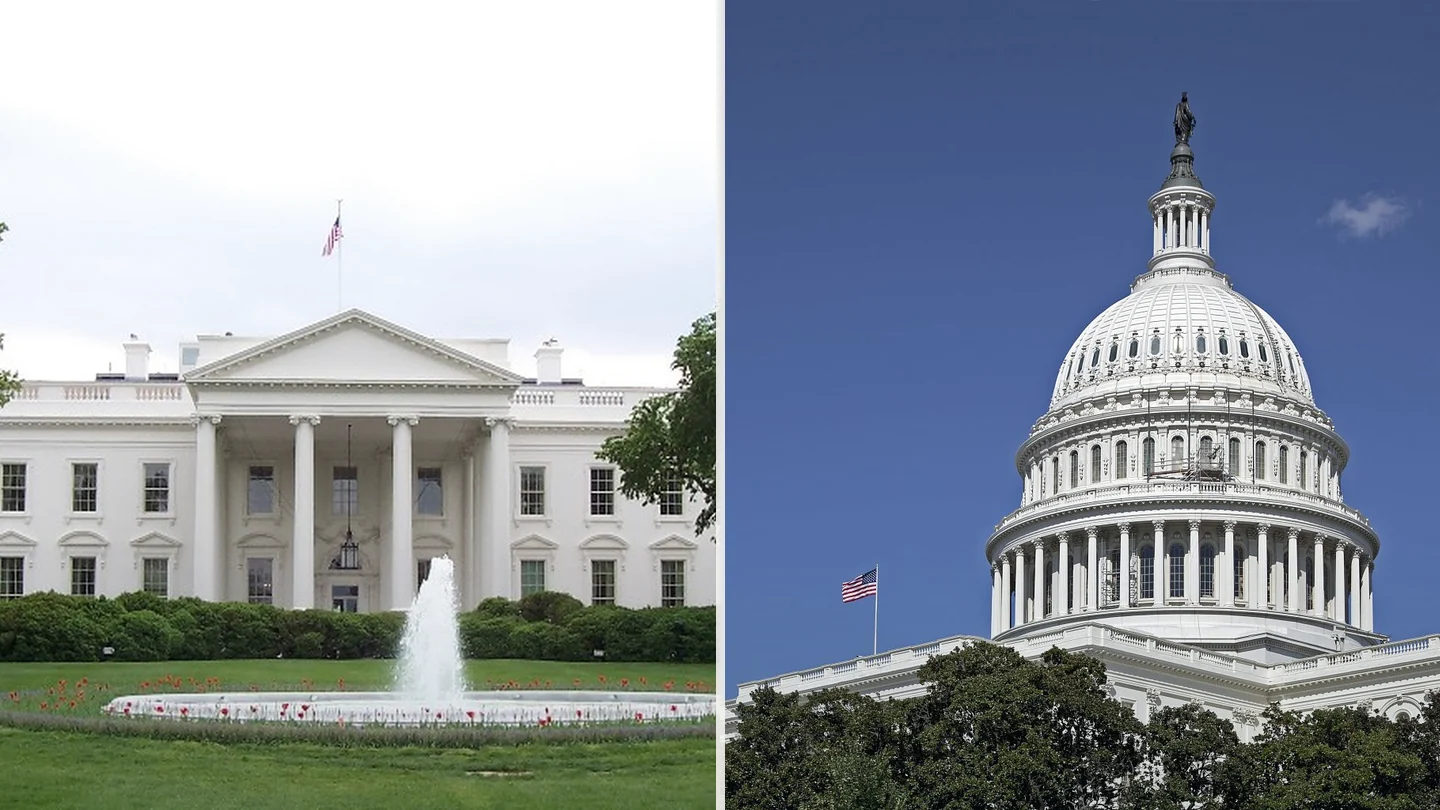
President Donald Trump issued a November 20 order requiring federal contractors to notify the White House of congressional inquiries into their executive-branch work. The administration cites confidentiality and efficiency; congressional Democrats question its implications for oversight.
WASHINGTON — President Donald Trump issued an executive order on Friday, November 20, directing companies that do business with the federal government to alert the White House when Congress seeks information about their work with the executive branch. The order extends the administration's approach to protecting confidential executive communications to private contractors and subcontractors, creating new procedures for requests from congressional investigators.
The directive, titled Protecting the Executive's Privileges and Enhancing Efficiencies in Federal Contracting, was published by the White House in Washington. It requires notification about congressional inquiries involving a contractor's communications or work with the executive branch and directs contractors to follow instructions concerning information that the administration determines is covered by executive privilege.
The White House describes the measure as a way to protect sensitive information and avoid uncoordinated responses to congressional requests. Democratic lawmakers preparing to lead congressional committees have questioned whether the administration is trying to restrict Congress's ability to obtain information. The disagreement concerns a longstanding constitutional boundary: Congress's authority to investigate federal operations and the president's authority to protect certain confidential executive communications.
What the order requires
Section 2 of the order tells federal contractors to notify both the White House and their contracting agencies immediately about pending or future congressional requests concerning their communications or work with the executive branch. Those companies must also comply with instructions about withholding communications that the White House or an agency determines are protected by executive privilege.
The requirements extend to subcontractors performing work under federal contracts. The order assigns federal agencies responsibility for informing contractors of their duties and directing prime contractors to ensure that their subcontractors comply. Agencies are to coordinate with the White House and contractors over appropriate responses and assertions of privilege.
The Office of Management and Budget has been instructed to prepare guidance for implementing the requirements. The text does not establish a specific date by which that guidance must be issued. It also does not identify a particular company, contract, or congressional inquiry to which the new process is limited.
For contractors that do not comply, agencies are directed to consider enforcement measures consistent with applicable law. The order identifies possible contract termination or cancellation as well as suspension or debarment, which can affect a company's eligibility for future federal business. Those consequences are listed as potential measures rather than automatic penalties for every violation.
At the time of publication, the administration had not publicly identified an individual contractor sanctioned under the new directive. Whether the requirements will be added to existing contracts, implemented through agency instructions, or addressed in future contracting terms remains an important practical question.
The White House's explanation
In a fact sheet released November 20, the administration said the directive is intended to protect privileged executive information and improve the economy and efficiency of federal contracting. It argued that agencies routinely work with contractors on matters that require confidentiality, including national security and homeland security programs.
The administration's position is that companies responding independently to congressional requests could release information before executive officials have an opportunity to evaluate whether a legal privilege applies. The White House also argues that disconnected responses could produce overlapping legal disputes, administrative costs, and uncertainty for agencies and the businesses they employ.
Executive privilege is a recognized legal doctrine that may shield some presidential communications and internal executive deliberations. It is not, however, a general rule that all government-related information is confidential. The circumstances of a request and the nature of the information can determine whether a particular claim of privilege is justified.
By routing requests through the White House and the responsible agency, the administration says it is seeking a consistent process to identify protected material rather than leaving each contractor to make separate decisions. The text of the order says implementation must remain consistent with applicable law.
Why congressional oversight is part of the dispute
The order arrives after November's midterm elections, in which Democrats won congressional majorities and began preparing for oversight inquiries when the new Congress convenes in January 2027. The political context gives the procedural change immediate significance beyond ordinary procurement administration.
Representative Robert Garcia, a California Democrat expected to lead the House Oversight Committee in the next Congress, has objected to the White House's approach. Responding to the order, Garcia characterized it as an attack on Congress's constitutional oversight authority, according to the Associated Press. His criticism reflects the concern that lawmakers could face additional obstacles in seeking records about government decisions, spending, or contractor performance.
White House Counsel Will Scharf and congressional Democrats had already exchanged warnings about anticipated investigations. Earlier in November, Scharf raised objections to what he described as potential misuse of congressional investigative powers. Garcia and other Democratic lawmakers have argued that investigations tied to legitimate legislative responsibilities are part of Congress's independent constitutional role.
These competing statements do not settle the legal status of any particular future request. A committee inquiry may have a proper legislative purpose, while a specific document requested in that inquiry may still raise valid privilege or other legal concerns. Whether a demand for information is enforceable can turn on the authorizing committee, the records sought, the purpose of the inquiry, and applicable protections.
What the law permits—and what remains uncertain
The Congressional Research Service, Congress's nonpartisan research agency, describes oversight as a central legislative function. Its guidance explains that congressional committees may obtain information, request testimony, and issue subpoenas under chamber and committee rules. Congress's investigative power also has constitutional limits, including protections afforded to people and organizations responding to inquiries.
The same guidance explains that executive privilege may limit access to certain executive-branch communications. The privilege is qualified rather than absolute: a properly presented need for information can overcome some claims. Disputes are commonly handled through negotiation and may sometimes reach the courts.
The new order does not itself decide whether a particular congressional request is lawful or whether an individual document is privileged. Nor does it announce a judicial ruling about the balance between congressional oversight and executive confidentiality. Any claim that the order either automatically defeats valid subpoenas or is necessarily unlawful would go beyond what its text establishes.
Legal specialists who advise government contractors have identified potential complications. In a November 21 assessment, attorneys at Crowell & Moring observed that private companies could face overlapping demands from two branches of government, particularly when congressional deadlines and executive instructions conflict. They noted that the order contains no express safe harbor relieving a contractor of obligations created by other laws or a valid subpoena.
That uncertainty matters because a company may be under a duty to preserve records and respond to lawful process even when another government authority directs it to withhold certain communications. Companies may need legal advice tailored to the specific request, not simply a general assumption that following the order resolves every obligation.
What the changes could mean in practice
Federal contractors supply the government with services and products ranging from technology and infrastructure to logistical and professional support. Congressional committees may seek information from those companies to examine how programs are managed, whether public funds are being used as intended, or how contract decisions were made.
Under the new directive, a contractor receiving a relevant congressional letter would be expected to notify the White House and its contracting agency. Officials would then be positioned to review the request, consider claims of privilege, and coordinate the company's response. The length and complexity of that process will depend in part on the guidance and procedures agencies adopt.
The administration argues that coordination can prevent sensitive information from being disclosed without proper review. Congressional critics worry that centralized control could delay or impede access to records that lawmakers need to perform oversight. Both claims concern the consequences of implementing the order; the actual effect will depend on how agencies apply it and how disputes are resolved.
A further distinction is important: protecting a genuinely privileged communication does not necessarily justify withholding ordinary facts about contract costs, performance, or spending. Similarly, the existence of a congressional inquiry does not automatically eliminate all legal protections for confidential materials. The legal analysis often requires examination of the records themselves.
What happens next
The immediate next steps fall to executive agencies and the Office of Management and Budget. Agencies must notify contractors and arrange a process for receiving and handling congressional requests, while OMB prepares broader guidance. Contractors and subcontractors will need to understand how those rules interact with their existing agreements and other legal duties.
Congressional committees may continue requesting records as the next session approaches. If a contractor receives conflicting directions, the parties may attempt to negotiate an accommodation or turn to available legal processes. Court challenges are possible, but the order's ultimate scope and any judicial outcome cannot be presumed in advance.
The dispute therefore remains both practical and constitutional. The executive branch has an interest in protecting information legitimately covered by privilege. Congress has a responsibility to seek information necessary for lawful oversight. How the November 20 order operates when those interests meet will become clearer through its implementation and the responses to specific inquiries.
Primary documents and reporting
- White House: Full text of the November 20, 2026 executive order.
- White House: November 20 fact sheet explaining the administration's position.
- Associated Press: November 21 reporting on the order and congressional response.
- Reuters: November 21 independent reporting on the contractor requirements.
- Congressional Research Service: Congressional Oversight and Investigations (December 2024 background).
- Crowell & Moring: November 21 analysis of contractor obligations and legal uncertainties.
Reporting note: This independently written article describes the November 20 order and responses documented through November 23, 2026. Legal arguments and disputed characterizations are attributed to the people or institutions making them. It is a news report, not a statement of the National Coalition's policy position.
Comments on Trump Orders Federal Contractors to Notify White House of Congressional Inquiries