
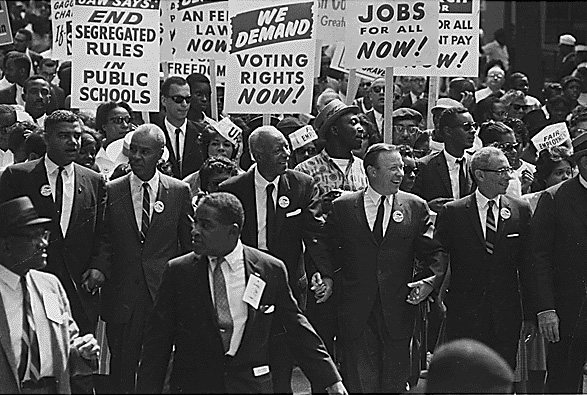
Distinguish protected peaceful advocacy from legal limitations on conduct.
Learning goal: Distinguish protected peaceful advocacy from legal limitations on conduct.
NAACP v. Claiborne Hardware Co. (1982) recognized strong First Amendment protection for peaceful political boycott activity; the ruling also discussed the distinction between protected advocacy and unlawful violent acts. It does not make every form of protest conduct immune from liability.
Brandenburg v. Ohio (1969) set an exacting standard for punishing advocacy as incitement: the advocacy must be directed to producing imminent lawless action and likely to produce it. This is a legal test, not a suggestion that hateful speech is ethically acceptable.
Ward v. Rock Against Racism (1989) illustrates that governments may impose certain content-neutral time, place, and manner rules in public forums. Permits, venue rules, and applicable local law therefore matter when planning real events.
Apply three opinions carefully
NAACP v. Claiborne Hardware Co. concerned a politically motivated boycott and related conduct. The Court protected nonviolent advocacy and association while distinguishing them from unlawful violence. The case does not create blanket immunity for property destruction, threats, or other unlawful acts.
Brandenburg v. Ohio established the familiar incitement test for advocacy directed to producing imminent lawless action and likely to produce such action. That test concerns when government may punish advocacy as incitement; it does not imply a responsible civic institution must celebrate hatred or intimidation.
Ward v. Rock Against Racism addressed content-neutral time, place, and manner restrictions in a public forum. It illustrates why context, government interests, and the availability of alternative channels can matter. Do not promise that every permit requirement is valid or that every restriction is unconstitutional.
Constitutional protection and ethical standards are distinct. The National Coalition may decide that its own moderated events will reject hateful conduct and threats while acknowledging that some offensive opinions may remain protected against government censorship. The point is to act lawfully and respectfully, not to blur those concepts.
Before a real protest or public event, organizers should check applicable local laws, venue requirements, accessibility, and safety guidance. A Supreme Court case supplies legal principles, not an event permit or individualized legal advice.
Connect with your experience (choose any example)
One student may be organizing a campus forum, another a neighborhood hearing, and another an accessibility rally. Ask which venue rules and participant protections apply; do not infer the answer from the organizer's age.
Analyze the primary source
Create three short case briefs, then review a hypothetical peaceful demonstration. Name one protected activity, one action that could carry legal risk, and a missing fact needed before deciding.
Learning contexts are optional: no age, biography, assessment score, or behavioral record is collected by this activity.
Think it through
What is the difference between saying speech may be constitutionally protected and saying it meets our Coalition’s standards of respectful engagement?
Practice
Compare the three decisions. Draft a peaceful public meeting plan that respects participants, nonparticipants, and any applicable local requirements.
Primary sources and further reading
- Official U.S. Reports: NAACP v. Claiborne Hardware Co.
- Official U.S. Reports: Brandenburg v. Ohio
- Official U.S. Reports: Ward v. Rock Against Racism
National Coalition draft educational material. Read the primary sources directly. This lesson is not legal advice; judicial doctrine and local rules can evolve. Personal disagreement is not graded as a failure of conscience.
Comments on Peaceful protest, political boycotts, and speech limits