
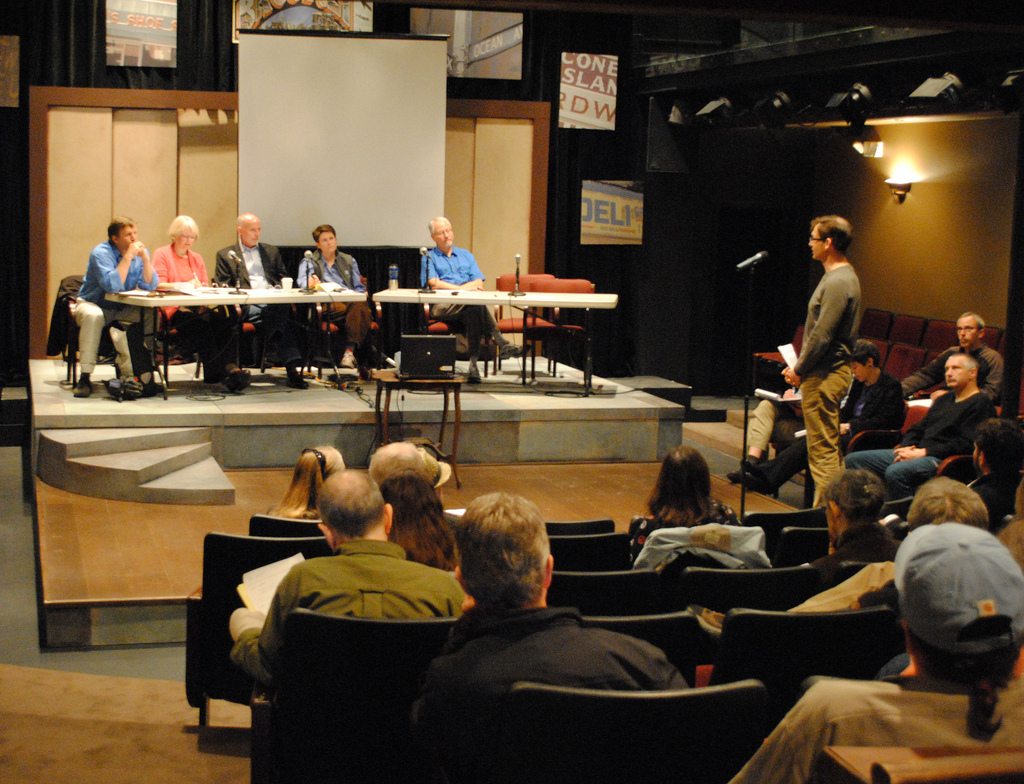
Identify legitimate channels for seeking civic reform.
Learning goal: Identify legitimate channels for seeking civic reform.
An effective reform proposal starts with a clearly defined public problem, reliable evidence, realistic alternatives, and an understanding of which institution has authority to act. Organizing, petitioning, contacting officials, attending public meetings, and participating in elections are examples of civic participation.
The First Amendment protects peaceful assembly and petition, subject to legal context. That does not guarantee that any particular official must agree, nor does it authorize threats, trespass, or violence.
Participants should verify current local meeting rules, permit requirements, and deadlines from official sources. This course provides a general educational framework, not location-specific legal advice.
Map the institution, then develop the ask
A useful reform proposal should name a concrete decision-maker. 'Government should fix this' is difficult to act on. 'Ask the town council to schedule an accessible public review of the crosswalk at Main and Oak' specifies who should act, the requested process, and a question the public can evaluate.
The evidence packet should include a clear problem statement, at least one primary source, an independent or corroborating source, relevant residents' experiences, a feasible option, a serious alternative, and known trade-offs. Represent an opposing argument fairly instead of treating all dissent as ignorance.
Political participation can include speaking at appropriate public meetings, respectfully contacting representatives, joining civic associations, helping neighbors access official information, lawful petitioning, and election participation according to applicable eligibility rules. Avoid implying that any one pathway is mandatory or appropriate for all students.
Respectful advocacy can be firm. Explain why a proposal matters, state what evidence supports it, distinguish the proposal from accusations about individuals, and invite a documented response. Acknowledging budget constraints or trade-offs helps officials and neighbors evaluate feasibility.
Define success honestly. Perhaps a public hearing is scheduled, an agency provides data, or a safety assessment is initiated. Those are measurable intermediate achievements even if the preferred policy is not ultimately adopted.
Connect with your experience (choose any example)
Choose a personal context: student transit access, caregiver needs, workplace-adjacent civic infrastructure, or accessible public facilities. Everyone may choose any context without disclosing personal history.
Analyze the primary source
Create a practical one-page issue brief and a two-minute statement for a public meeting. Include a civil invitation for someone who disagrees to identify evidence you have missed.
Learning contexts are optional: no age, biography, assessment score, or behavioral record is collected by this activity.
Think it through
How can you tell whether a proposed solution belongs at a city council meeting or before Congress?
Practice
Draft a one-page evidence-based civic proposal: problem, sources, responsible public body, proposed remedy, potential trade-offs, and a respectful request for action.
Primary sources and further reading
- USAGov: Find and contact elected officials
- USAGov: How laws are made
- National Archives: Bill of Rights transcript
National Coalition draft educational material. Read the primary sources directly. This lesson is not legal advice; judicial doctrine and local rules can evolve. Personal disagreement is not graded as a failure of conscience.
Comments on Research, petition, dialogue, and public institutions