
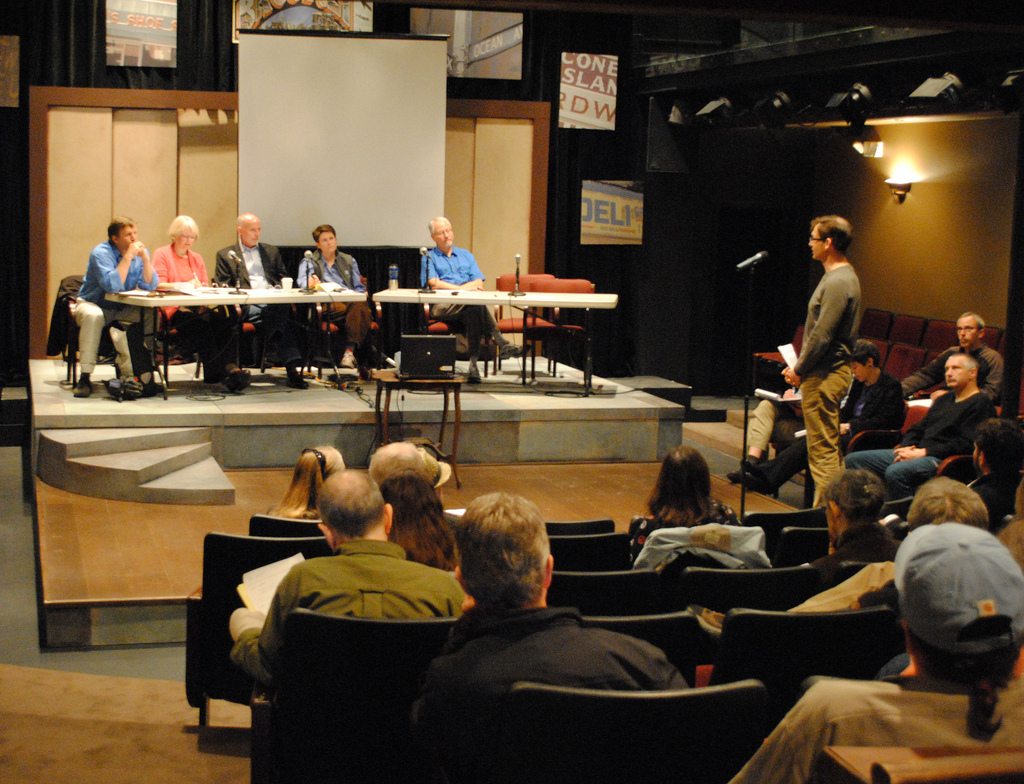
Distinguish protected expression from the Coalition's proposed standards for civil, nonviolent participation.
Learning objective: Distinguish protected expression from the Coalition's proposed standards for civil, nonviolent participation.
Explore the idea
The United States Constitution constrains government action in important ways, including through the First Amendment. It does not mean a private civic organization must endorse every lawful statement or permit abusive conduct in every program it operates. Participation rules should nonetheless be clearly communicated and applied consistently.
For its educational and organized civic activities, the Coalition proposes to reject violence, threats, intimidation, prejudicial mistreatment, and personal harassment. These principles are organizational standards about conduct. A person may continue to hold contrary political, religious, or philosophical ideas without being required to recite an approved belief.
An effective meeting rule can be specific: address the proposal rather than a speaker's identity; make space for others; disclose uncertainty; avoid personal insults; do not threaten; accept neutral moderation; and preserve a clear appeal or correction route when a moderator errs.
Nonviolence is more than the absence of physical harm. The educational goal is a manner of civic action that allows others to be heard, protects lawful participation, avoids dehumanization, and strengthens credible public reasoning. That can coexist with passionate criticism of institutions and officials.
Being respectful does not demand silence when discrimination, corruption, or misuse of authority is alleged. It demands careful sourcing and lawful methods for requesting change.
Reflect
Where should the line fall between strong criticism of a public policy and unacceptable treatment of the person who supports it?
Try it yourself
Draft a five-rule meeting charter. Test each rule against a scenario involving a passionate but lawful dissenting opinion. Explain how you would enforce rules fairly.
Read and verify
Educational draft under editorial review. This lesson discusses civic principles, not personal legal advice. Source materials remain with their publishers. No political, philosophical, or religious agreement is required.
Comments on The Coalition's Civic Conduct Standard