
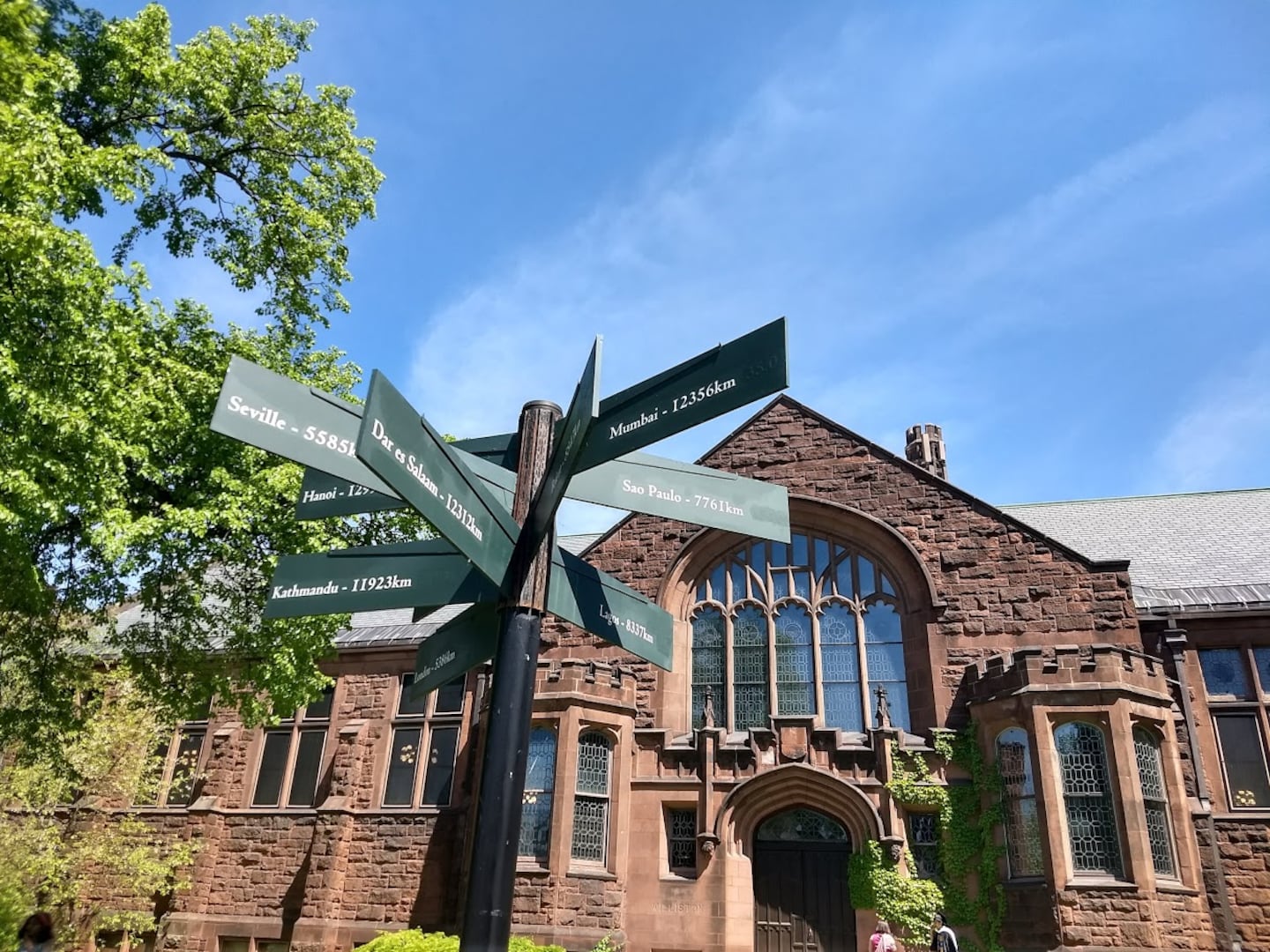
“Being told not to go home, and then also being forced to stay but not knowing exactly where to stay, while also being low-income and first-generation, it’s sort of destabilizing,” said Shrestha, 22, who is pursuing a double major in international relations and South Asian Studies and asked to use her last name only, to protect her privacy.
Advertisement
As commencement season comes to a close and campuses empty out across the region, many of the 80,000 or so international students enrolled at Massachusetts colleges and universities are grappling with anxiety and ambiguity. Many international students have stopped using social media in recent weeks and started using Signal, an encrypted messaging application. When they go out, they carry copies of their legal documents. While some are afraid to leave the country for fear they won’t be able to get back in, others who had their visa statuses temporarily terminated left and are now unable to return to resume their studies.
Advertisement
Massachusetts has the third-highest international student population in the United States, behind only California and New York, with foreign students comprising more than a quarter of the student populations at some universities, including Boston University and Northeastern. Economic and academic leaders have warned that losing those students could hurt the region’s economy, weaken universities that count on them to pay full tuition costs, and limit the kind of academic rigor that has fueled scientific discovery for decades.
Last week, the Trump administration moved to revoke Harvard University’s ability to enroll foreign students, a play that was immediately blocked by a federal judge. On Tuesday, the State Department ordered US embassies around the world to stop scheduling student visa interviews and announced plans to expand vetting of applicants’ social media profiles.
And on Wednesday night, Secretary of State Marco Rubio said the administration would seek to “aggressively revoke” visas of Chinese students in the United States, including those studying critical fields," or with connection to the nation’s ruling Communist Party, according to news accounts.
The message to international students everywhere: “ ‘America is not open for business, the best and brightest should stay home or go elsewhere‚’ ” said Ted Mitchell, president of the American Council on Education, which represents around 1,600 colleges and universities. The United States is essentially “saying to every other institution in the country: ‘You could be next,’ ” Mitchell added.
The unease is palpable, from Harvard Yard to the farm fields of the Five College Area in Western Massachusetts.
Advertisement
Amber, a junior at Harvard who is from Canada and asked to use her middle name for fear of retaliation from the Trump administration for speaking out, said she “couldn’t believe her eyes” last week when she read that President Trump was trying to ban foreign students at her university. A statistics major, Amber had secured her internship in the United States last fall and went home to Canada before starting her summer job. But now, she is unsure if she’ll even be allowed back in — for her internship, or for her senior year at Harvard.
The situation has brought back memories of when she was in high school during the height of the COVID-19 pandemic. “All of the hopes and dreams that you have for a really great senior year are now kind of in flux,” she said.
As president of the graduate student government at the University of Massachusetts Amherst, John Arigbede is constantly fielding emails from his international peers, and the questions haven’t stopped just because the semester is over.
In April, 13 UMass Amherst students had their legal statuses suddenly terminated by US Immigrations and Customs Enforcement, and though their records have since been reactivated along with thousands of others, there’s a “lingering fear” on campus, Arigbede said. “International students are worrying about even leaving their home, going to grocery stores . . . about what they can say, who they can associate with.”
“Education is about opening your mind to different things, right,” he said. “But in a situation where you cannot talk freely, or live freely, or travel freely within the safest part of the world — that is a psychological burden.”
Advertisement
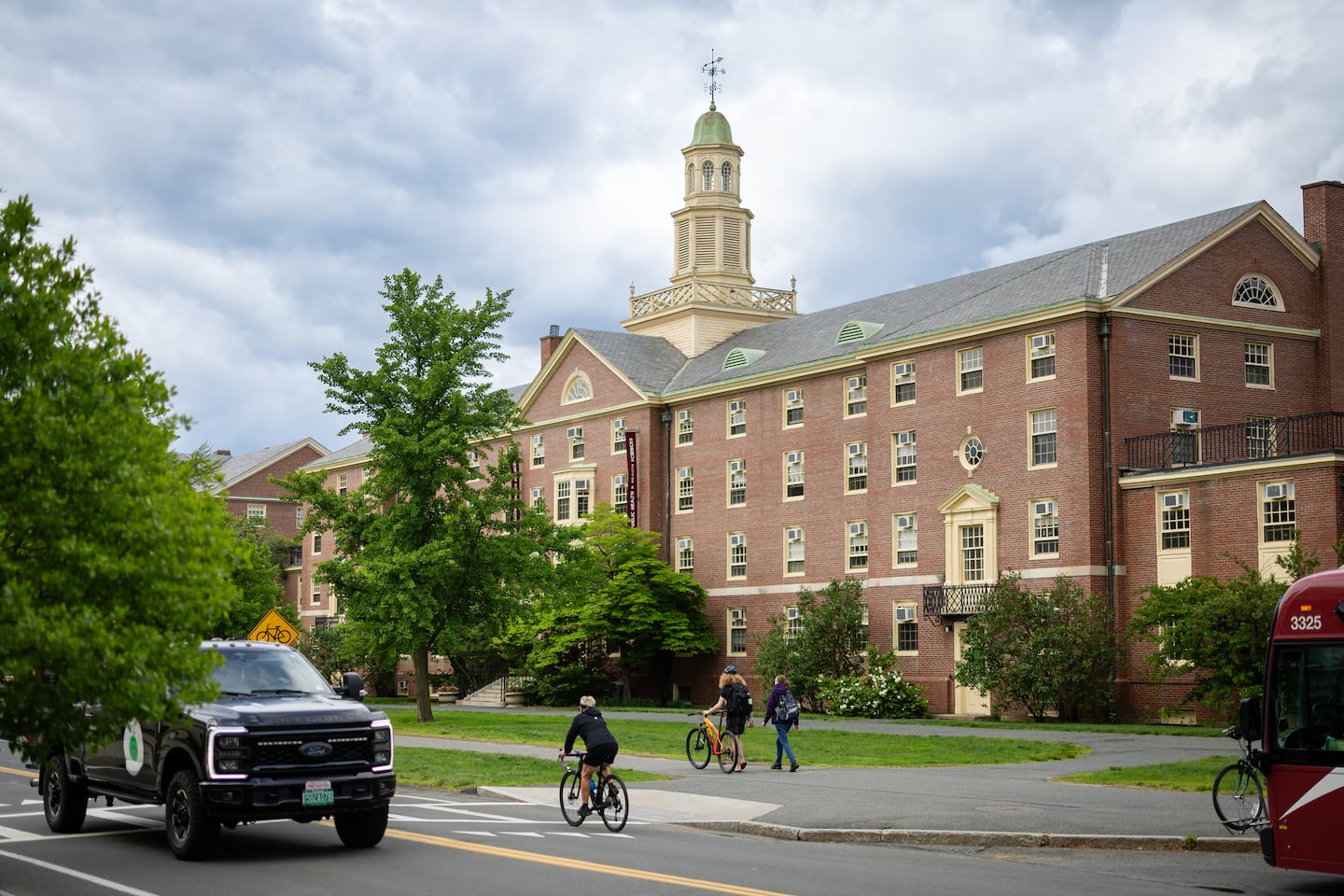
Arigbede’s position puts him in touch with nearly 8,000 graduate students, around 36 percent of whom are international, coming from 117 different countries, according to data from last fall. As a PhD candidate in chemical engineering, he relates to fellow scientists, domestic and international, worried about their futures as research opportunities vanish due to federal funding cuts and freezes. As a Nigerian, he has empathy for his foreign-born peers whose futures have suddenly become bleary.
“We get those emails day by day,” he said. “ ‘Can I travel?’ ‘What if I’m held up at the airport?’ ‘What if my status has been inactive and then I am arrested?’ Because these things happen in a split second.”
Josie, a rising sophomore from Bolivia who goes to college in Boston and asked to be identified only by her first name due to fear of retaliation, said she now avoids speaking Spanish in public and has memorized the phone numbers of her friends in case she’s apprehended. An aspiring journalist, she joined the school newspaper her freshman year and soon found herself writing about immigration policies that could affect her personally.
“It felt like, as the months went by, everything just kept getting more and more serious,” she said. “It’s been kind of intimidating to be in the US, and I feel like I’m not welcome [here] all the time.”
Some domestic students are rallying to support their international classmates.
Ian Tincknell, who is from Westford and was recently elected vice president of the graduate student government at UMass Amherst, earlier this month helped organize a solidarity campaign, “We Are One UMass,” “to show we are grateful to have international students here, and we’re very upset that they’re feeling at all threatened by our government,” he said. “That makes me feel just absolutely ashamed.”
Advertisement
Zhennan Yuan, a 24-year-old from China, is on track to earn his master’s degree in quantitative finance at Northeastern University in December. In April, he was among more than 4,700 international students across the country who had their legal statuses terminated in the Student and Exchange Visitor Information System, or SEVIS, without warning.
Yuan filed a suit in federal court in Boston and was granted a temporary restraining order barring the government from arresting or deporting him.
The Trump administration restored Yuan’s SEVIS record, but the status of his visa is unclear, and he remains concerned about what will happen next. His suit is pending, with a hearing scheduled for July.
“It is definitely still impacting my life,” said Yuan, who is afraid that if he leaves the country to visit his ailing grandparents in China this summer as planned he won’t be allowed to return.
“I spend more time researching and studying policies,” he said, and worries about “other curveballs” that will prevent him from finishing his studies in the United States. “It is hard to sleep now,” he said in an interview before Rubio announced the new visa actions.
Michael, who asked to be identified by his middle name, also has had trouble sleeping in recent months. Growing up in East Africa, he binge-watched the American TV series “Boston Legal.”
“I wanted to be a lawyer so bad because of that,” he said and laughed. “I developed a sense of justice.”
Advertisement
He just graduated from Bridgewater State University with a master’s degree and plans to pursue a PhD here. But after watching the Trump administration target international students while fanning the flames of anti-immigrant rhetoric, he’s thinking of settling in Europe.
“America’s not bad, if things will change,” he said, “but it needs to go back to a sense of justice.”
For now, despite all the fear and uncertainty this academic year has wrought, many students are holding on.
At the last minute, Shrestha, the Nepalese student from Mount Holyoke, landed an internship at a women’s organization in Washington, D.C. — a relief that’s left her “feeling positive about my summer now.”
Josie, the Bolivian student in Boston, wants more than anything to fulfill her dream of having a career in journalism in the United States.
“I still have hope, for some reason, that things will get better,” she said. “I’m just clinging on to that sense of hope.”
Brooke Hauser can be reached at