
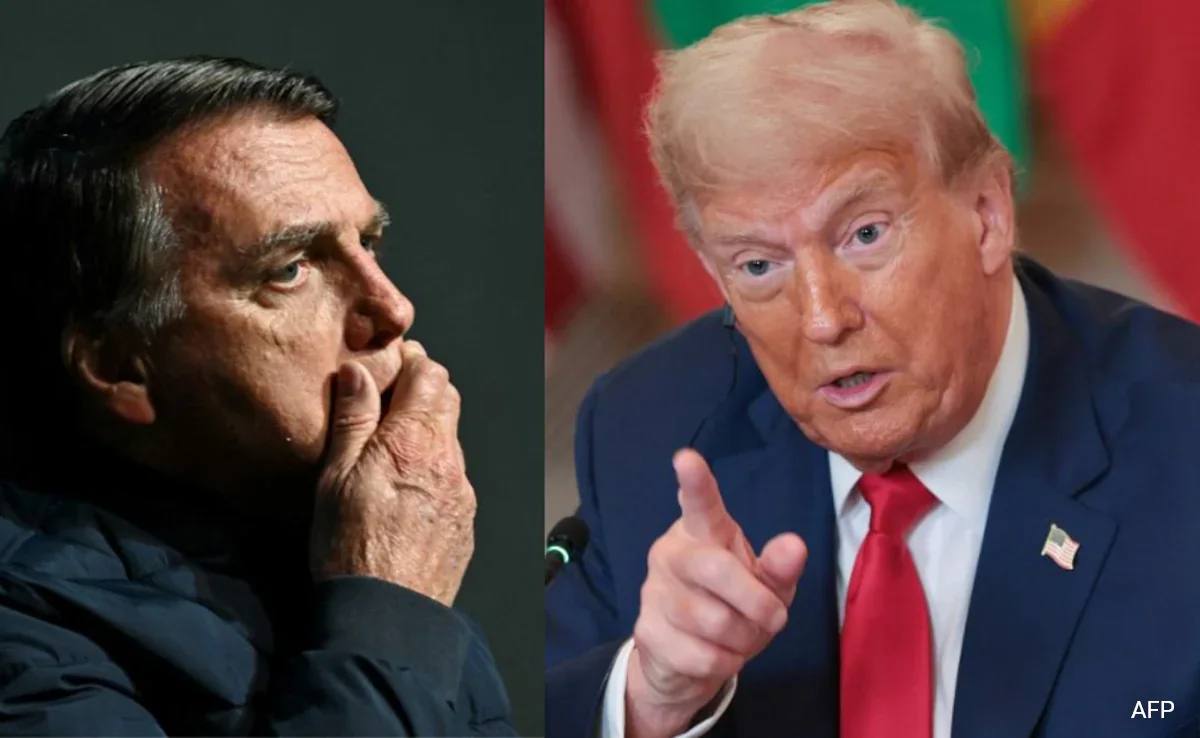
Brazilian President Lula da Silva announced that Brazil will respond to the U.S. imposing a 50% tariff on its exports with reciprocal measures, citing its economic law. The U.S. tariffs, announced by President Trump, target Brazilian exports partly due to political developments and accusations of unfair trade practices. The situation has heightened tensions between the two countries amidst broader U.S. trade strategies involving multiple nations.
Brazil to Respond to U.S. Tariff Increase with Reciprocity, Lula Says
Brazilian President Luiz Inacio Lula da Silva said Wednesday that his country will respond with reciprocity to U.S. President Donald Trump's newly announced 50% tariff rate on his country's exports, citing a recently adopted Brazilian law that authorizes the government to take proportional countermeasures.
Trump said Wednesday the U.S. will impose the tariff on imports from Brazil starting Aug. 1, partly in retaliation for the ongoing prosecution of the country's former president, Jair Bolsonaro.
Trump said in a letter that the new tariff — a significant jump from the 10% rate imposed in early April — is also a response to what he calls the "very unfair trade relationship" between the two countries.
Reactions and Responses
Da Silva replied to Trump's letter Wednesday, stating that Brazil would respond in accordance with its new economic reciprocity law.
"Brazil is a sovereign country with independent institutions that will not accept being lectured by anyone," wrote da Silva, according to a CNBC translation of his social media post. The value of Brazil's currency, the real, fell more than 2% against the U.S. dollar following Trump's announcement.
Trump previously criticized Brazil over its treatment of Bolsonaro, who is standing trial over his alleged role in an attempted coup following his 2022 electoral defeat.
He also criticized Brazil's political developments, including what he refers to as "insidious attacks on Free Elections, and the fundamental Free Speech Rights of Americans," referencing a Brazilian Supreme Court's recent ruling on social media liability.
Trade and Political Tensions
Trump claimed that Brazil's trade policies have led to "unsustainable Trade Deficits against the United States," which he says threaten U.S. economy and security, despite U.S. data showing a goods trade surplus with Brazil of $7.4 billion in 2024 (Office of the U.S. Trade Representative).
Da Silva dismissed Trump's false claims and cited official U.S. figures to support Brazil's trade position.
Trump announced an investigation into Brazil's trade practices, especially concerning digital trade activities of American companies.
He emphasized that the 50% tariff is less than what he considers necessary to create a level playing field, citing "grave injustices" under the current regime.
U.S. Tariff Strategy and International Impact
All of Trump's recent tariff letters to various countries specify that the new tariffs are separate from sectoral duties (such as on steel, aluminum, and cars). They also warn that if these countries raise their own tariffs on U.S. goods "for any reason," the U.S. will correspondingly increase tariffs.
In total, 21 countries including Japan, South Korea, Moldova, and Brunei received these tariff notices, which will take effect on August 1. Trump has insisted that no extensions will be granted.