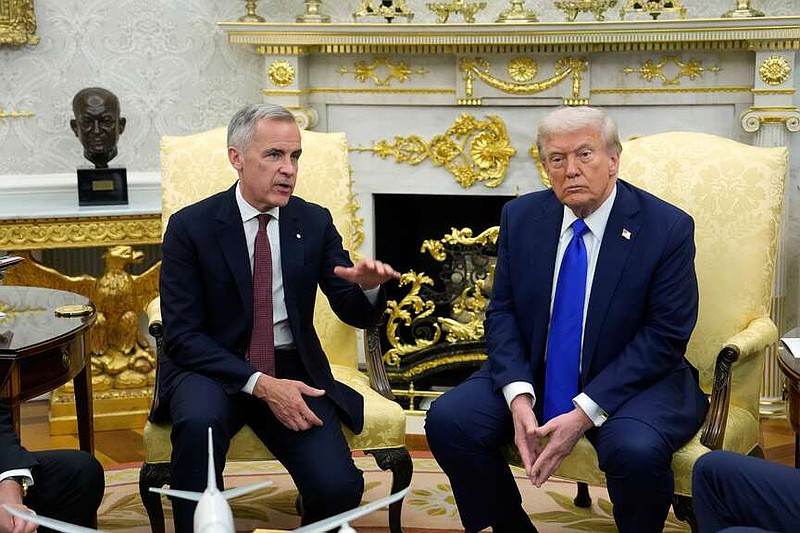
TORONTO -- Canada will announce retaliatory tariffs against the United States on Tuesday after relations deteriorated sharply Monday, with President Donald Trump telling Canadian leaders to "fall in line" or face consequences "far WORSE" than existing tariffs and Prime Minister Mark Carney accusing Washington of trying to subordinate Canada.
Trump's warning on social media came as he threatened new 50% tariffs on Canadian vehicles, auto parts and steel amid escalating tensions between the two countries.
Finance Minister François-Philippe Champagne and three other Cabinet ministers are scheduled to unveil Canada's response Tuesday morning. Carney said earlier Monday that Canada may need to move away from matching U.S. tariffs dollar for dollar and instead use more targeted retaliation aimed at protecting Canadian workers and businesses.
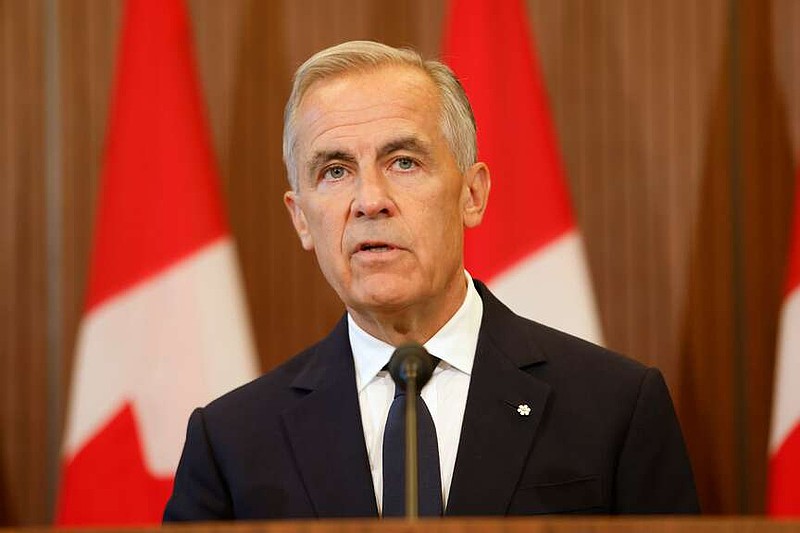
"An attitude at the negotiation table that Canada is a subsidiary of the United States" is "not something we're going to accept," Carney said.
Carney was even more blunt in French.
"We learned during the negotiations that the Americans want to destroy our major industries, including autos, steel and aluminum," Carney said. "That was one of the main reasons we said no. It was a bad deal."
The fiery words from both sides show how U.S.-Canada relations have deteriorated since Carney walked away from trade negotiations with the Trump administration late Friday, triggering the president's threatened 50% tariffs the next day on about $20 billion worth of Canadian goods. In response, Carney announced dollar-for-dollar retaliation beginning Sept. 8.
Carney cast doubt on the U.S.'s reliability as a partner, saying Canada was finding reliable partners "everywhere in the world, except in the United States. Except in the United States. And Russia."
On Monday, Trump came back with even more tariffs, warning that he would impose them on Canada's auto industry beginning next year.
"Canada has been ripping off the United States of America for years," Trump wrote on social media, criticizing what he called Canada's "ridiculously high tariffs" on American farmers.
Carney said Washington's auto-sector proposals would gradually have the effect of dismantling Canadian production.
"This is the most successful automotive partnership in history," Carney said, referring to the deeply integrated Canada-U.S. industry.
"Build in the U.S. and there are ZERO TARIFFS. Canada will be treated like a State no longer!" Trump wrote in further social media comments.
Trump wants Canada to come to the table and negotiate in good faith, U.S. Treasury Secretary Scott Bessent told reporters on Monday.
At a news conference in Quebec on Monday, Carney said a "mutually beneficial deal" with the U.S. was possible, but only if Americans respect Canada's sovereignty.
"When the Americans go to the negotiating table first with the right attitude toward our industry and a true partnership, of course we'll come to the negotiating table," Carney said at a briefing announcing an investment in six new Canadian icebreaker ships.
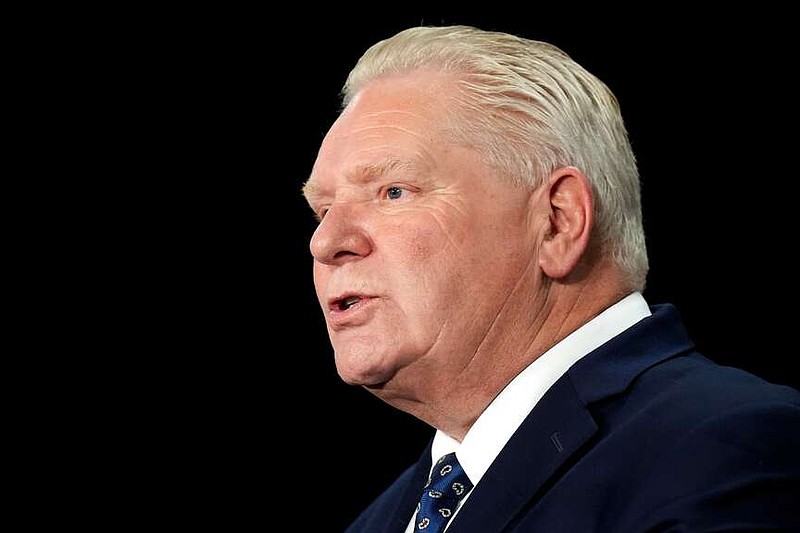
Meanwhile, Ontario Premier Doug Ford unleashed his own tirade on Trump. Speaking in an interview with The Associated Press, he said Trump had underestimated Canadians' willingness to endure economic pain rather than give in to U.S. pressure.
"We're all in," Ford said. "Up here, we're at a fever pitch, everyone's in for an economic war. They know they're going to have to sacrifice."
Trump responded in a different social media post by attacking Ford personally, calling him "the less charismatic, intelligent, and overall unimpressive brother of the late, great, Rob Ford," and once again referring to Canada's prime minister as "Governor Carney."
Ford dismissed the insults: "If you think an insult from him hurts me? Well, bring it on, buddy, I'm ready."
Ford is a Progressive Conservative whose party is different than that of Carney, a Liberal, but the two underscore the broad political unity in Canada over the trade fight with Trump.
Ford said "everything is on the table" if the dispute worsens, including cutting off electricity and critical minerals from Ontario.
Critical minerals are increasingly important to U.S. national security and manufacturing. The Pentagon has sought more secure supplies of minerals used in military aircraft, missiles, munitions and electronics as Washington tries to reduce reliance on China, which dominates the mining or processing of several strategically important minerals.
AUTOMOTIVE FOCUS
Ford accused Trump of not simply seeking a better trade deal but aiming to hollow out Canadian industries and move production south.
Ford said Trump wants to make Canada a vassal state.
"He wants to bleed out every single sector and bring them down to the U.S.," Ford said.
The auto sector is especially important to Ontario, the center of Canada's vehicle manufacturing industry. Plants and suppliers in Ontario are tightly integrated with factories in Michigan and other U.S. states, with parts routinely crossing the border multiple times during production.
Automakers including Ford, General Motors and Stellantis operate major assembly plants in Ontario, and the wider supply chain supports tens of thousands of jobs. Trump's new threat of a 50% tariff on Canadian vehicles and parts puts that sector directly at the center of the escalating dispute.
U.S. Trade Representative Jamieson Greer said Monday that "the only reason Canada has auto production in the first place" was because of the 1960s Auto Pact, under which Canada used access to its market to encourage vehicle production north of the border.
Many automakers have announced or are considering plans to scale back Canadian auto production and the trade standoff has led to a 22% reduction in Canadian imports of U.S. vehicles, according to the White House.
Major automakers did not immediately comment on Trump's announcement.
Auto executives, speaking to Reuters on condition of anonymity, raised skepticism about Trump's threat, noting that he has previously announced tariffs that were later scaled back or delayed.
They also noted that January was months after the upcoming U.S. midterm elections in November, and that Trump's threat could be aimed at restarting talks.
In January of this year, Trump said the U.S. would decertify Bombardier Global Express business jets and threatened 50% import tariffs on all aircraft made in Canada until the country's regulator certified a number of planes produced by U.S. rival Gulfstream.
Neither occurred, but the following month Canada certified several Gulfstream planes.
At one point in his AP interview, Ford said Trump had "declared war, economic war against his closest friend and ally" before invoking Ronald Reagan, whose opposition to tariffs Ford previously featured in a television advertising campaign aimed at Americans.
Ford noted that Trump keeps a portrait of the late president near his desk.
"He'd be throwing up on him from the picture if he knew what was going on, spinning around in his grave right now," Ford said. "He should maybe take that picture off the wall and move it somewhere else. Because right now, Ronald Reagan would be disgusted with President Trump."
CHINA MOVES
Trump is also moving toward levying a new tariff on China that would penalize the world's second-largest economy for flooding the global market with underpriced goods, according to three people familiar with the matter.
Two of the people, who spoke on condition of anonymity to discuss internal deliberations still being finalized, said Trump is considering setting the new tariff at 7.5%. It's a level administration officials believe would not endanger the one-year trade truce between Washington and Beijing or a planned White House meeting between Trump and Chinese President Xi Jinping expected to take place in late September.
The move, if finalized, appears to be a calibrated effort by the White House to work around a Supreme Court decision earlier this year that struck down Trump's plan to implement a sweeping, high-tariff scheme not seen since the 1930s.
It isn't clear if the U.S. administration is also nearing a decision in its probes of the other economies that it announced it was investigating for unfair trade practices.
The White House and the U.S. Trade Representative's office did not respond to requests for comment on the tariff deliberations, which Bloomberg News reported earlier Monday. The Chinese Embassy in Washington also did not immediately respond to a request for comment.
Information for this article was contributed by Rob Gillies, Seung Min Kim, Aamer Madhani and Paul Wiseman of The Associated Press and by Katharine Jackson, Daphne Psaledakis, David Shepardson and Maria Cheng of Reuters.