
William Hylton never stops thinking about his 26-year-old son, Conor Hylton, who died in August 2024 at Bridgeport Hospital Milford Campus.
Hylton filed a lawsuit against Yale New Haven Health, which owns Bridgeport Hospital Milford Campus, alleging the ICU unit lacked a physical doctor to monitor patients. Instead, the lawsuit alleges it relied on a provider overseeing them virtually.
“At no time was Conor really under the care of an ICU or critical care doctor after he was transferred to the tele-ICU,” Hylton said. “The tele-ICU doctor only became involved after my son coded.”
Tele-ICU is a model used in some hospitals allowing intensivists, physicians, and critical care providers to remotely monitor patients in intensive care units. The Connecticut Hospital Association said in such a model, the remote care adds another layer of oversight for patients but does not replace bedside care. William Hylton said that was not the case with his son.
While not all hospitals employ telehealth in the ICU, the overall use of telehealth is commonplace, with the American Hospital Association reporting that 86% of hospitals use the technology.
The CHA said it did not have data on what percentage of hospitals provide tele-ICU services in the state, but said nationally 13% of hospitals offer such services. Hartford HealthCare and Stamford Healthcare said they do not offer tele-ICU services, but said they offer telehealth in a variety of areas. Despite repeated attempts, Trinity Health of New England and UConn Health did not respond to questions.
Hospital officials, lawmakers, and psychologists say telehealth increases access to healthcare, especially for patients who don’t have transportation. Research shows telehealth outcomes are comparable to in-person care in the treatment of many psychological conditions, depending on the severity of the case, according to psychologists. But doctors, lawyers, and some lawmakers warned that telehealth has also led to faulty medical decisions that negatively impacted patient care and that the practice undermines the human connection in physician-patient relationships.
Paul Kidwell, senior vice president for the CHA, said “telehealth can help patients address health concerns before they become more serious or require a hospital visit, while also supporting bedside teams and patients throughout recovery.”
The AMA reported in 2024, “71.4% of physicians reported using telehealth in their practices weekly, up from the 25.1% … in 2018.”
While Sen. Jeff Gordon, a Woodstock Republican and a physician who serves on the Public Health Committee, has observed where telehealth is effective, he said it is often overused and at times abused.
“I think a lot of systems, including big hospitals, are running it more as businesses,” he said. “When you start using telehealth to make an efficient assembly line of medical care, that’s not good. I’ve seen a lot of examples where it is ineffective care and wrong medical decisions are being made, and things are being missed. If you actually meet with someone, you can get a better idea of what is going on.”
Gordon said he observed incidents where surgeons see patients only via telehealth before surgery.
“No one does an exam before surgery, and I see people doing it for post-op care,” he said. “There was one case where I was asked to see a patient and the patient had advanced-stage prostate cancer with symptoms. And nobody saw him in person in six years.”
He said he saw another patient who could hardly get out of a wheelchair, and presented with significant swelling in their legs.
“Yet, when they did telehealth, they didn’t assess any of that,” he said. “How do you even know how frail this patient is when you didn’t even examine their legs and their legs are full of fluid?”
Gordon said he observed the growth of telehealth in ICUs in the state.
“Some of the bad aspects that I’ve seen have been when we have people that are being cared for in an ICU, and we don’t necessarily have a doctor seeing them,” he said. “But yet we have doctors by telehealth do it. That raises a serious question and concern.”
Rep. Cristin McCarthy Vahey and Sen. Saud Anwar, co-chairs of the Public Health Committee, said that telehealth has proven beneficial.
“We did work in the Public Health Committee a couple years ago to make sure that telehealth remained a viable option and accessible to the people of the state,” McCarthy Vahey said. “We want healthcare to be affordable. And definitely more people seem to be taking advantage of telehealth.”
McCarthy Vahey said that while telehealth is not ideal in certain cases, “it is sometimes better than no access to care.”
“I do think that there are times and places when telehealth is being used in a way that is not necessarily connected to the same in-person access when necessary,” she said.
Risk & Insurance, which reports on risk management and commercial insurance, said “the growth in digital diagnostic tools and telehealth since the pandemic has also raised new questions and risks for medical malpractice insurers.”
Brian King, health care practice leader for Trucordia, a national group of insurance brokerage firms, told Risk & Insurance that “in telehealth you’re trying to make the same diagnostic decisions without the same inputs. There’s potential for misdiagnosis just because of what you can’t see or do in person.”
In the national spotlight, telehealth came under scrutiny in the trial of Lindsay Clancy, the Massachusetts mother charged with murder in the deaths of her three children. Clancy never saw her psychiatrist in person, according to testimony from her psychiatrist. Clancy’s lawyer probed her psychiatrist’s expertise, prescribing decisions and overall treatment as the defense sought to suggest that the mental healthcare system mishandled the Massachusetts mother’s decline.
The judge declared a mistrial Sept. 4. Eleven of 12 jurors were ready to clear Clancy of criminal responsibility, with the majority feeling that she was in the grip of a rare condition called postpartum psychosis when she strangled her kids.
‘Treating’ multiple patients simultaneously’
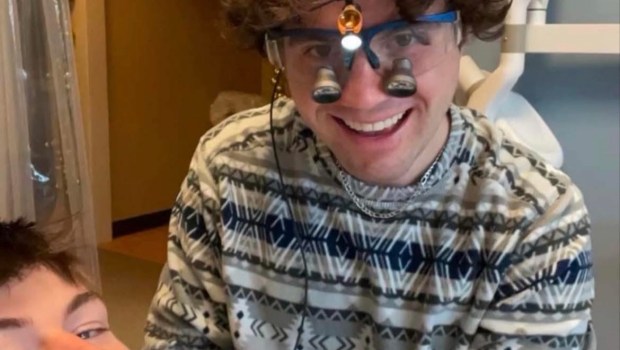
Speaking about the last day he spoke to his son, William Hylton said that two days before his death, Conor Hylton, a dental student at UConn, was preparing to go to school when he started feeling bad.
“We thought it was the stomach bug as it was going around,” William Hylton said. “He felt worse and worse and couldn’t keep anything down, so he called me at work asking me to take him to the hospital on the morning of Aug. 14, 2024.
“He was very dehydrated because he had been throwing up and not able to keep down liquids,” he said. “He was diagnosed with metabolic acidosis and an acute kidney injury as a result.”
The lawsuit, which was filed in March, said Conor Hylton’s diagnosis included “pancreatitis and alcohol withdrawal.”
The lawsuit said that Conor Hylton’s condition worsened and he was transferred to the ICU where his condition “continued to deteriorate.”
At approximately 4:30 a.m. on Aug. 15, 2024, Conor Hylton slid down in his bed, “his eyes rolled back, and he became unresponsive.”
The lawsuit said efforts to resuscitate Conor were erroneously attributed to Dr. Frances Denu. “But in reality, Dr. Denu did nothing,” and that a telehealth provider announced the young man’s death on a video screen, according to the lawsuit.
The lawsuit follows an investigation from the state Department of Public Health in July 2025 that found the “hospital failed to ensure quality medical care was provided,” concerning Hylton’s care at the hospital.
Joel Faxon of Faxon Law Group, who is representing the Hylton family, said tele-ICU practices are occurring all over the country based on his conversations with colleagues, attorneys, and physicians in the field.
“The commercialization of the medical industry has led to a much greater reliance on doctors or practitioners being able to ‘treat’ multiple patients simultaneously. “They can treat 10 screens simultaneously, and these people could be in different parts of the world.”
William Hylton said he believes if a doctor were managing his son in person and securing his airway earlier, he would be alive.
“When he got to the ICU after midnight, he was there for four hours and never saw a physician,” he said.
Amanda Raus, director of media relations for Yale New Haven Health, said, “Our priority has always been, and remains, providing safe, high-quality care to our patients.
“We remain committed to continuous review and improvement of patient safety practices,” Raus said. “Because this is active litigation, we cannot comment on specific allegations and will address the claims in the appropriate legal forum.”
‘Telehealth offers an effective, convenient option for patients’
Tina Varona, senior director of media relations for Hartford HealthCare, said telehealth is “available within all our specialties, and our clinicians always assess each patient individually.
“If there are any concerns that telehealth is not adequate to address patient concerns or care for them appropriately, we promptly see the patient in person to complete their assessment,” she said.
Varona said in-person physicians, clinicians and team members typically provide care for hospitalized patients.
“Telehealth is primarily for ambulatory/office-based care,” she said. “Telehealth doesn’t replace doctors; it’s a different way for the same licensed physicians and clinicians to deliver care.”
Varona said the physical exam is limited in telehealth settings, as it is done via videoconferencing.
“Our clinicians are skilled at recognizing where a physical exam is critical and such patients are seen in-person,” she said.
Varona said telehealth “helps patients in areas with specialist shortages reach expertise that would otherwise be hours away.
“It also reduces missed appointments and makes quick follow-ups easier, which helps patients with chronic conditions stay on track,” she said.
Asked if telehealth can result in misdiagnosis, Dr. Mandeep Kumar, medical director, advanced specialties and revenue cycle at Hartford HealthCare said, “it is a fair question” and that the hospital closely monitors care provided across all care settings, without elaborating if it has occurred, except to note the nonprofit healthcare network’s “high safety ratings from Leapfrog among others.”
“Telehealth works best when clinicians know its limits and bring patients in person when a hands-on exam, testing, or imaging is needed,” Kumar said.
Liz Longmore, Stamford Health’s executive vice president and chief operating officer, said telehealth “offers an effective, convenient option for patients that may otherwise delay or even avoid care altogether.”
Longmore did not specify where telehealth is used in Stamford Hospital, except to say it is offered in a variety of areas.
Asked about challenges to the practice, Longmore said, “Patients have unequal technology access, and it can be difficult to connect with patients in long-term care facilities.
“There are also complex legal rules,” she said. “We must ensure patients are in the state where the provider is licensed to practice, and there is some uncertainty about CMS reimbursement. Additionally, telehealth has limitations and cannot always take the place of an in-person evaluation or treatment.”
Longmore said, in general, its physicians will conduct an initial visit in person and proceed with telehealth for follow-ups.
The Yale School of Medicine reported in a study in 2024 that “one of the largest randomized clinical trials to directly compare telehealth and in-person care has found they are equally effective in improving quality of life in patients seeking palliative care- specialized care focused on managing the symptoms of serious illness.”
Dr. Katrina Furey, a board-certified adult psychiatrist specializing in women’s mental health, said that “telehealth has genuinely expanded access to psychiatric care in ways that matter enormously in the postpartum period specifically.
“New parents often can’t easily leave the house with a newborn, childcare is scarce, and driving to appointments is a real barrier when you’re sleep-deprived and recovering physically,” she said in an email.
Furey added that virtual visits offer clinicians the ability to “observe a patient in their actual home environment, including how they interact with their baby or other children in real time, which can be clinically informative in its own way.”
“Research generally shows telehealth outcomes are comparable to in-person care across most conditions, and it clearly increases access, but it can also mean missing certain physical or environmental cues,” she said. “Nonverbal signals like affect, psychomotor activity, hygiene, grooming, and engagement with the provider are part of a full psychiatric exam and can be harder to fully assess over video.”
The Associated Press contributed to this report.