
Sign up for the Slatest to get the most insightful analysis, criticism, and advice out there, delivered to your inbox daily.
The morning before Hurricane Katrina made landfall in 2005, I helped my parents batten down their house in uptown New Orleans. The last step was tending to my dad’s home offices, plural. His overflow of books, journals, and files from the history department of the University of New Orleans filled my brother’s former bedroom and an enclosed porch, both lined with exposed windows on the second floor.
My dad couldn’t do much to protect his work himself. Seven years after being diagnosed with Parkinson’s disease, he moved haltingly, like each limb weighed a ton. With traffic on the evacuation route worsening by the minute, I didn’t have time to do much either. He pointed to four cardboard boxes dense with loose papers and asked me to put them in a windowless foyer at the top of the stairs. As soon as I did, we hit the road.
I gave no thought to what was in those boxes, or why my dad prioritized them, until he retired five years later. While helping him organize his files, I found some old correspondence with an editor. (My dad, never at ease with computers, had printed an email thread and put it in a manila folder.) When I asked him what it was about, he said off-handedly they’d been discussing a companion to the first book of his career, from 1983.
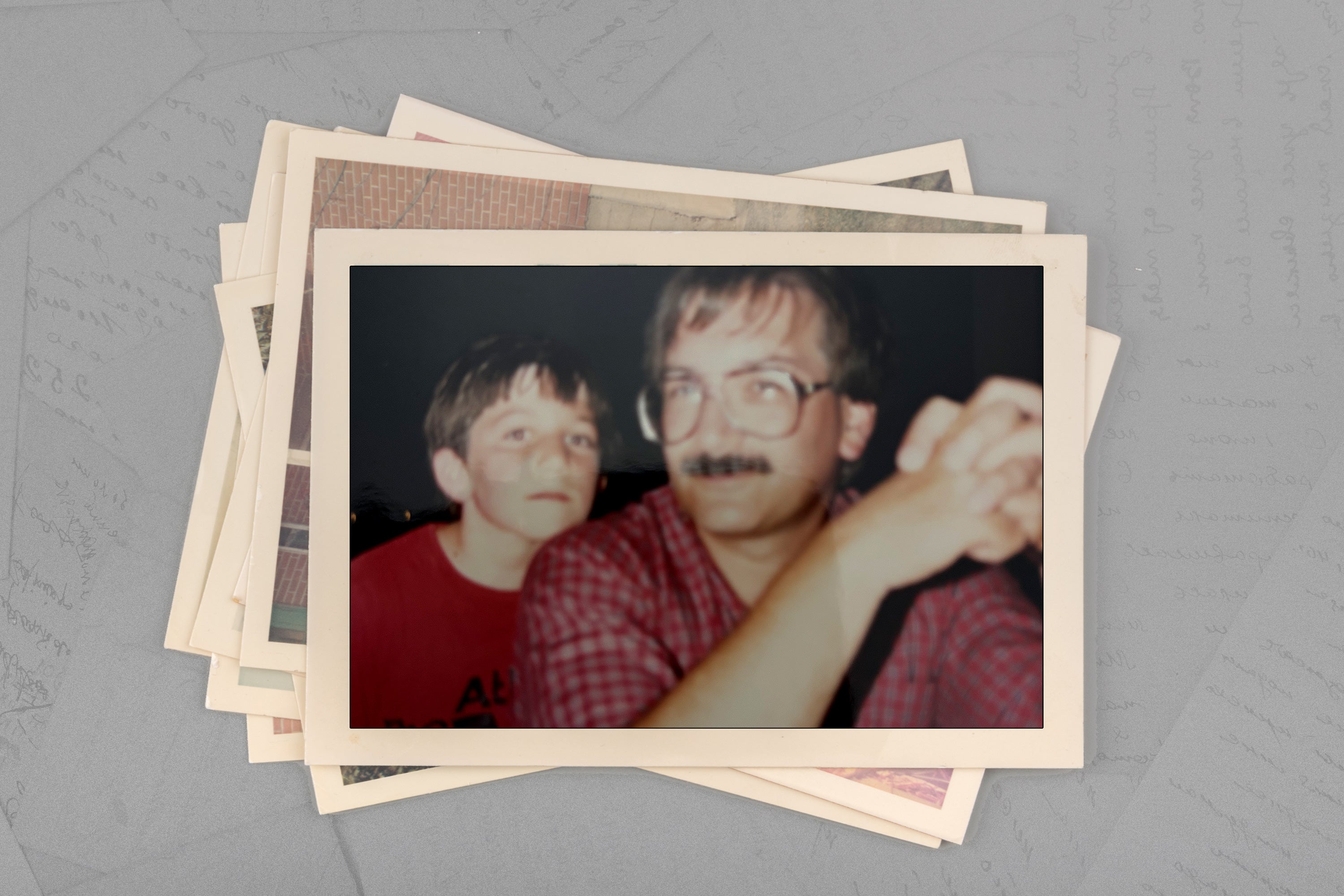
I never saw my dad comport himself like someone whose work was of greater consequence than anyone else’s. Short and round, with the eyeglasses and mustache of seemingly every Jewish dad from Chicago, he didn’t cut a prominent figure. He didn’t display any awards, or talk about any accolades. So when we started going through his files, I had no idea that he was considered one of the preeminent scholars of 20th-century American history.
We spoke so easily and often that it never occurred to me he held anything back. But the casual way he mentioned a follow-up to the 1983 book Making the Second Ghetto: Race and Housing in Chicago, 1940–1960 didn’t match the energized tone of his email to the editor. He described finding archival documents with “explosive potential.” The University of Chicago Press was excited for a manuscript.
The new material came from the papers of Frank Horne (the uncle of late actress and singer Lena Horne), who was the leader of an obscure midcentury federal office called the Racial Relations Service. As the government designed programs like urban renewal, Horne saw their potential to displace and isolate Black communities and pushed back at every turn. His resistance showed that segregation wasn’t an unforeseen byproduct of federal policy but the result of a deliberate, arduous effort.
My dad wrote to the editor that a book centering Horne, “when read in conjunction with Making the Second Ghetto,” would offer “the most complete picture we have of the formation and implementation of housing policy in the United States.” He was swinging for the fences, even as the Parkinson’s was dragging him down.
He’d worked on the project, often with a Cubs game in the background, from the time I was 15 until Katrina hit, when I was 24. Yet no one, not his colleagues or even my mom, knew exactly what he was up to. I eventually pieced together that the four boxes of Horne’s papers represented the last piece of research for a book that would round out my dad’s account, decades in the making, of how the country built white supremacy into its cities. On the heels of that realization came another one: that his health might keep him from finishing it.
A few months after my dad’s bar mitzvah, his father suffered a fatal heart attack. His mother, left with no money, moved with her two sons into a one-bedroom apartment. My dad stayed there, working at McDonald’s and commuting to the University of Illinois at Chicago, the only school he could afford, until he married my mom. He found this less compelling to discuss with me than, say, the Bears’ Super Bowl run in 1985.
His dissertation at UIC began as an investigation of what led to the riots he’d witnessed in the city in the ’60s and grew into a dissection of how racism was codified in public policy. After moving to New Orleans for the UNO job, he adapted the project into Making the Second Ghetto.
Published in 1983, the book detailed how white people across all segments of society, from violent mobs to public officials, worked to contain Black residents in the inner city. Applied beyond Chicago, my dad’s analysis laid bare how metropolitan America had been segregated by design. In the words of historian Heather Ann Thompson, his book “fundamentally reshap[ed] how we study and understand our nation’s cities.” Ta-Nehisi Coates said that when he read it, “the core of my reparations argument began to form.”
When the book came out, I was 2 years old, and my parents, my older brother, and I lived in a shotgun house in a predominantly Black, working-class part of the 13th Ward. Mr. Bell, a brickmason, rehearsed his gospel family band two doors down. Mr. McIntyre across the street was a community organizer who worked on the river. On the corner, Big Man sold drugs with a shower cap over his Jheri curl.
Growing up there in the ’80s and early ’90s, I was unaware that my dad’s work could help explain the world around me. The book spines and furniture in his office at UNO looked old and dusty, suggesting that he’d been engaged in some long, slow labor since before my time. I gathered that it had to do with calling out racism, but my dad didn’t lecture me about it. At home, he related to me as if his job were like my school—an obligation to be dispatched in order to get back to what mattered.
As I got older, crack came to Big Man’s corner, and blue police lights played on our window shades at night. In the four years it took my parents to sell the house, my brother got jumped and witnessed a drive-by shooting from our front porch, our front gate was stolen and sold as architectural salvage, and a failed attempt to hot-wire my mom’s station wagon made the windshield wipers go back and forth whenever she used the turn signal.
My dad spent much of this time researching the history of New Orleans’ racial politics, including months of interviews with Ernest “Dutch” Morial, New Orleans’ first Black mayor. My dad came to see him as the last embodiment of a Creole tradition of radical politics that saw beyond America’s black–white duality. Morial helped bring down Jim Crow in the city but was unable to dismantle the prevailing “segmented, highly race-conscious social order.”
In 1992 my dad wrote about this in a book called Creole New Orleans: Race and Americanization. I was 11, and the book went over my head, but at the release party he introduced me to the jazz musician Danny Barker. A dapper Creole man with a pencil-thin mustache and a hollow-body guitar, at 83 he seemed like he’d invented cool. I was clueless about Black New Orleans politics but becoming obsessed with Black New Orleans culture.
We moved to a whiter neighborhood the next year, but I went to a mostly Black school, stomping my feet in class while the kid next to me, Shante, freestyled. He became the rapper Curren$y. Dwayne, in the grade below me, so small he disappeared inside his Starter jacket, became Lil Wayne. By high school I was listening to the classic R&B shows on WWOZ with a pen in my hand.
During those years, my dad refocused on housing policy, this time at the federal level. The research that would lead him to the Horne papers began in 1996 with trips to the National Archives and a couple of presidential libraries. When he sat down to delve into the records, though, his torso started to slump and his handwriting became cramped. In the year he spent seeing specialists to figure out what was happening, I didn’t notice anything was wrong.
My dad’s Parkinson’s diagnosis made his work the least important thing about him. When my parents told my brother and me, all I cared about was how long he had to live. My mom said later that this had been my dad’s first question too, at every doctor’s appointment until he secured his pension. He was determined to reach 25 years of state employment for us.
No one could say what would happen—the disease took different courses with different people. My dad didn’t tremor like Muhammad Ali or writhe like Michael J. Fox. He was developing a kind of stiffness, and flaky skin between his eyebrows. Our only expectation from his doctor, and my only consolation, was that it wouldn’t affect his mind. I went through the motions of finishing high school with one eye looking over my shoulder, easing up only after seeing the disease progress rather slowly.
My dad managed to maintain his work routine for several years without telling anyone at UNO he was sick. His symptoms, coupled with his meds, kept him from sleeping more than a few hours at a time, so he’d get foggy from fatigue. But he’d still toss off analysis of the New Orleans City Council or quote W.E.B. Du Bois while straining to get his keys out of his pocket.
Then, while driving home from campus one night in 2001, he nodded off behind the wheel of his Pontiac and slammed into a telephone pole. Even after he started catching rides to work, he kept his diagnosis as quiet as possible. When his walk became a shuffle and his posture deteriorated, my mom encouraged him to tell people what was going on so they wouldn’t think he was drunk.
One summer when I was in college in Austin, my dad recruited me to trawl for archival documents at the Johnson Presidential Library, without mentioning they’d be for a new book. I asked him about what to look for but not his plans for what I found. My main interest was the animatronic LBJ statue in the attached museum, which leaned on a fence post, dispensing folksy zingers. I managed to read Making the Second Ghetto for the first time, at least, and take in the broad strokes, but I didn’t fully grasp its implications, for myself or anyone else.
My dad was still poring over records he’d gathered elsewhere, but the degeneration of the muscles behind his eyes made reading difficult—for a while he tried using a magnifying glass, hunching over documents like Sherlock Holmes. He managed to write a few articles about federal housing policy, which touched on Frank Horne’s advocacy for nondiscrimination leading to his ouster from the Racial Relations Service, and the subsequent gutting of the agency.
My dad thought that these articles, combined with some pieces about the implementation of federal housing laws in various cities, could be collected in a book. But he told a friend at UNO that he wanted to look into Horne’s personal papers. The problem was he couldn’t find them, and, in any case, traveling to archives around the country was getting too hard for him physically. The friend made a few calls and found that Horne’s archive was at the Amistad Research Center on Tulane’s campus, five minutes from my parents’ house.
My dad’s correspondence with the book editor picked up when the Horne papers suggested a new way to tell the story. “Detailing the role and perspective of [Horne and] the RRS,” my dad enthused, would “reveal an undetected tap root of the civil rights revolution and allow us to bear witness to some of the great changes of the twentieth century.” He was off and running for six months. Then Katrina approached.
Before the levees failed, I was writing a novel involving Ernie K-Doe, a singer who topped the charts in 1961, later in life referred to himself as the Emperor of the Universe, and was feted with a seismic jazz funeral in 2001 that reoriented my personal cosmology. Sitting next to my dad after we evacuated, seeing images on television of people apparently left for dead outside the Convention Center, I felt a mix of horror and rage, followed by dread that I would never experience another second line. I dropped the novel and started running a relief fund for local musicians.
The flood didn’t reach my parents’ house—they bought it after my dad determined that it stood on a finger of relatively high ground. Still, he wouldn’t see the Horne papers for months, when the house had utilities again. In the meantime, he hunkered down in an apartment outside Chicago and fielded calls from journalists asking him to contextualize the history playing out in the news.
Public officials discussed whether some parts of New Orleans—mostly Black neighborhoods—should be rebuilt. As the debate raged, groups of white residents, business leaders, and elected officials, like their counterparts in midcentury Chicago, sought to dictate where Black people lived. The Times-Picayune columnist Lolis Eric Elie spoke to my dad about a major policy proposal to accomplish this, the demolition of public housing. “If I interpret Hirsch correctly,” Elie wrote, “the plans have more to do with real estate speculation than with providing housing for poor citizens.” The same agendas that once contained Black residents in the core of the metro area were now dispersing them to its periphery.
My dad saw that the city’s future would turn on issues he’d devoted his career to elucidating. After moving home and resuming work at UNO, he redirected his writing time to produce articles and commentary about how the city’s racial politics hampered its recovery.
While he did that, I became the director of a nonprofit that helped people in the music community—which was mostly low-income and Black—deal with the gamut of obstacles they faced when trying to come home. There was the tuba player barred from retrieving his family’s belongings from an unflooded apartment in a housing project; the veteran saxophonist denied lease after lease by white property managers; the matriarch of a second-lining organization shorted by the federally funded program to pay for home repairs. Artists displaced across the country reached out to us looking for someplace, anyplace to rent in town.
I asked my dad a bit about housing, but still didn’t realize how much he could help. While I raised money for artists to get back to their neighborhoods, he had, unbeknownst to me, been on CNN talking about the cultural implications of the city’s housing shortage. At that point, I was working 70 hours a week, and he was carrying a full load at UNO while everything from taking a shower to putting on shoes became a trial. We caught up mainly at Sunday dinners at my parents’ house. In retrospect, we may have shared a genetic aversion to recounting our workweek at the table. We talked plenty about how things were going in the city, but little about ourselves. Mostly I remember watching football and cracking jokes while clocking how he struggled to get out of his chair.
After setting aside the Horne papers to respond to the flood, he took a sabbatical in the summer and fall of 2007 to get back into them. He made some progress, but then, in 2008, he and my mom went to the National Institutes of Health as part of a study for a new Parkinson’s treatment. My dad was handed a pen and a printout of an analog clock face and told to draw hour and minute hands corresponding to a particular time. He couldn’t do it. He was stunned.
With his pension secure, he could have dropped everything and devoted himself to completing the Horne manuscript. But he had Katrina articles in process, graduate students he had committed to advising. He might have hoped his mental decline would be as gradual as the physical one, which he’d withstood for a decade by then. He kept those deliberations to himself, but, clearly, he wanted to do what he’d always done, to be who he’d always been.
Graduate seminars at UNO ran from 6 to 9 at night. It was a grueling format, but practical for students with day jobs, and my dad wasn’t going to seek special dispensation for himself. He compelled students to carry the discussion as usual but now sometimes dozed off while they spoke. Even then, he could snap to and synthesize a lifetime of research to make a point that advanced the conversation. That knowledge seemed to be stored in an inner sanctum of his mind, a foyer at the top of the stairs.
After a few years, I started using data the nonprofit gathered to write reports about the music community—which parts of town people were displaced from, where they were resettling, how much they paid for housing. I didn’t have a background in that sort of thing, but I didn’t ask my dad about it; I worked with a sociologist at Louisiana State University. When I presented some findings on the fifth anniversary of Katrina, my dad shuffled in with a cane, and a former student of his in the crowd greeted him reverently. It occurred to me that I should be the one listening to him address a roomful of people about mass displacement.
That presentation doubled as my departure from the nonprofit. I was burned out, and while writing all those checks to artists did some good, I knew they were no match for the larger economic and political forces determining who would be able to reestablish themselves in New Orleans. My dad retired later in 2010, giving both us free time, so I started taking him out to lunch and asking him to help me make sense of what was happening to the city.
When I suggested we organize his papers, my dad’s mental archive was still intact, but he could focus for only an hour or so at a time. His eyes had gotten worse, so I’d pull out a manila folder, tell him what he’d written on the tab, and ask what to do with it. We sorted thousands of files over the next couple of years, and he was happy to talk about his research along the way. As I became a more eager student, though, he was losing his capacity to teach. He could still offer some insight, but to learn more I turned to his writing, where he never flagged.
Every piece seemed to explain something about my life. My dad wrote about how European immigrants embraced a “white” identity (which he put, pointedly, in quotation marks), giving them access to federally subsidized housing away from aging city centers. That was why most of our neighbors in the 13th Ward were Black—they’d moved into houses vacated by white flight, and we’d arrived against that current. My dad’s description of deindustrialization recast a childhood memory of the implosion of a grain elevator a few blocks from us, where our street ran into the riverfront. Now I connected that spectacle, which delighted me at 9, to the downturn in the neighborhood.
Then I read my dad’s account of how segregation in the city “structured interracial contacts within an uncompromising paternalistic framework” that persisted into the post–Civil Rights era. It helped me understand the flow of resources in the nonprofit sector after Katrina, when personal relationships across racial lines often steered support to pockets of Black New Orleans without changing the dynamic between haves and have-nots.
Draft chapters from the Frank Horne book offered more revelations. One laid out the origin of the federal program used in the 1960s to demolish a swath of downtown New Orleans across the street from the nonprofit’s office, displacing some artists who became our clients after Katrina.
As we worked through my dad’s files together, I looked for openings to ask about what he wanted to do with the book pages he’d already written. Was there a colleague he could collaborate with to complete the manuscript? A grad student to hand everything off to? Every time he deflected, and the likelihood of getting an answer diminished.
One afternoon I got to the house and found him on the dining room floor, stuck on his back, arms in the air like Gregor Samsa. Another time, while my mom was out, he wandered into the street and had to be corralled by a neighbor. His druggy, interrupted sleep and involuntary dozing had long softened the border between his dreams and reality; now waking delusions emerged too. He was lucid enough to be aware of where things were headed but still wouldn’t talk about the Horne book. Reading deeper into the files, I learned more about why.
Making Horne the main character in a book about housing policy would speak to the most prevalent critique of Making the Second Ghetto: that it failed to account for the agency of Black people. (My dad wrote that questions of agency should be considered alongside questions of power; his goal had been to assess responsibility for making the “ghetto,” and he found that it lay with white people who had the leverage, especially through public policy, to cordon off Black neighborhoods.) The Horne book would foreground Black resistance, which won some concessions from federal officials, while also showing how white people who wielded more power in the system ultimately imposed segregation.
The story would develop a theme that my dad had been exploring since the ’80s. Horne’s fight in Washington, like Morial’s in New Orleans, demonstrated that America’s racial hierarchy was constructed with political muscle and suggested that it could be deconstructed through the same means. The Horne book would be the culmination of my dad’s life’s work.
All he had to do was integrate his findings from the Horne papers into writing he’d already done. But then the levees failed, and his cognitive decline took him by surprise. By the time he retired, he didn’t trust himself to execute the Horne book to his standards. Or so I surmised from the fact that he didn’t try.
What could he do? Bringing in another historian would sign away the interpretation of his painstaking research. Telling me explicitly that he was abandoning the project would entail admitting that his vision would never be realized, and, perhaps, that he’d mismanaged the situation. He knew that his mind was slipping and any decision would have consequences he couldn’t be sure to understand. He was trapped.
When my mom retired and became a full-time caregiver, she decided to move with my dad onto a property with my brother and sister-in-law in Oak Park, a suburb bordering the West Side of Chicago. By that time, in 2013, we’d separated my dad’s papers into categories. I kept the New Orleans stuff for myself, and my dad insisted on bringing all of the housing files to Oak Park—he couldn’t do anything with them, but he couldn’t let them go.
Whenever I visited over the next few years, I’d duck into a closet next to the garage to continue sifting through the files. I was starting to do my own research and writing and thought about finishing the Horne book myself. But no. When my dad had most of his wits about him, he didn’t want another expert involved. Now that he was more compromised, I wouldn’t ask him to leave it to a layperson. I figured that leaving the book undone despite my prodding had been his answer, and I stopped bringing it up.
I couldn’t stop thinking about it, though, especially as the influence of Making the Second Ghetto reached further than ever. In his landmark 2014 reparations essay, Ta-Nehisi Coates had made segregated housing in Chicago the focal point of his case that the government should redress the harms it has inflicted on African Americans. Making the Second Ghetto was also foundational to Richard Rothstein’s 2017 book The Color of Law, which told the broader story of government-sponsored segregation to a mainstream audience. (It would be on the bestseller list for most of 2020, following the murder of George Floyd.)
Coates and Rothstein each reached out to my dad before publishing, but he wasn’t well enough to offer anything beyond what he’d already written. I wanted more from him too. As Black Lives Matter gained momentum and Donald Trump descended his faux-gold escalator, I asked my dad about the news, but he had less and less to say. His short-term memory was disintegrating, and he seemed to live in a perpetual present, broken by hallucinatory detours into the deeper past. Sometimes he brought up Frank Horne. Once he grabbed an old leather satchel and legal pad because he was on his way to a history conference in his mind.
Visiting Oak Park as he declined, I’d change the channel from MSNBC to a Cubs game or an old movie and hold my dad’s hand while we watched. One of our favorites was The Cincinnati Kid, which opens with a jazz funeral in New Orleans and ends when the hero, a card sharp, makes the right moves in a high-stakes poker game but still loses. Those were days of pajama pants and spill-proof plastic cups, assisted trips to the bathroom and strapping the wheelchair into a van to go get blood drawn.
He was in and out of hospice for a year and a half. By then he went longer stretches without speaking, and his voice came out croaky. But sometimes, between silences and delusions, he’d get out a few cogent sentences. One afternoon he turned to me and, out of the blue, brought up his work. “You can do something with it,” he said. Caught off guard, all I could do was nod and see him register my affirmation. Soon after, he died.
“Something” could mean anything, but I figured the first step was pulling together all of the potential building blocks of the Horne book. I made a spreadsheet of those, along with other work, published and unpublished, that I’d found in his files.
He must have kept printing drafts after he lost the executive function to keep track of them, because there were dozens of mostly undated hard copies of every possible chapter. I also found six different proposed tables of contents. My dad tinkered with the title but leaned toward alliteration: Race, Residence, and Resistance: Frank S. Horne, the Racial Relations Service, and State-Sponsored Segregation at Mid-Century.
I recruited my mom and my partner to help read versions of each chapter side by side to identify the most evolved draft. (When in doubt, I chose the one with fewer adverbs.) Checking the printouts against my dad’s correspondence with the editor offered a decent sense of his intent; it was like listening to demo tapes for an album that an artist never got to make.
Meanwhile, a different editor, also at the University of Chicago Press, reached out to my mom: They wanted to issue a new edition of Making the Second Ghetto, which had garnered a wave of attention when my dad died. Along with that volume, the press was game to publish a compilation of my dad’s work that gestured toward Race, Residence, and Resistance, without venturing to complete it. Thomas Sugrue, an early mentee of my dad who became a trusted colleague, agreed to be the editor.
One of the first orders of business was figuring out how to handle my dad’s unpublished work. I thought about how interested I’d be to read a favorite author’s unreleased drafts; surely other scholars could make use of my dad’s writing, even if it wasn’t polished. Then I thought about all the years my dad chose to keep those pieces to himself. Should that be erased by what I took to be a moment of lucidity amid advanced dementia? After discussing it with my mom, I told Tom that we wanted to include only material we knew my dad considered to be well on its way to public view.
We settled on two unpublished pieces that would have been chapters in the Horne book. I wanted to present the last draft of each as my dad had left them, to ensure the text reflected only his judgment, clouded as it may have been. If we included a note about his condition, I imagined that readers would cut him some slack. Tom thought he should edit them for clarity’s sake, while leaving the substance of my dad’s arguments intact. I agreed, reluctantly.
Evaluating Tom’s changes made me read my dad in a new way, gauging the intent of every word choice and punctuation mark. Behind his formal voice on the page, I could sense his full self, which had begun to break down as my own was solidifying. In the few places where I thought the edits diverged from what he was after, I suggested how my dad might respond. It was as close as I could get to another conversation with him. A semicolon Tom had cut read to me like one of my dad’s knowing deadpan looks, the way it brought together a brazen act by local segregationists and the acquiescence of federal officials to form a coherent whole. (Tom agreed to keep it.)
Getting my dad’s work ready for publication made me think about how I’d take him out to lunch before we’d go over his files—helping him get dressed so he could face the world as himself and then watching his steps, to protect his path.
In the meantime, over 100,000 Black residents had been displaced from post-Katrina New Orleans. As much of its “second ghettos” gentrified away in the 2010s, I started working on a long-term project to map the city’s music history neighborhood by neighborhood. A lot of that history involved Black communities resisting the indignities of segregation. Without intending to, I’d embarked on an offshoot of my dad’s work. I’m about a decade into the research for a book of my own.