
By Michele Sterlace-Accorsi Executive Director, Feminists Choosing Life of New YorkNewsweek Is A Trust Project MemberSpeed: 0.5xSpeed: 1xSpeed: 1.5xSpeed: 2x🎙️ Voice is AI-generated. Inconsistencies may occur.New York state's proposed Medical Aid in Dying Act (MAID) is gaining momentum. The ...
By Michele Sterlace-Accorsi
Executive Director, Feminists Choosing Life of New York
 Newsweek Is A Trust Project Member
🎙️ Voice is AI-generated. Inconsistencies may occur.
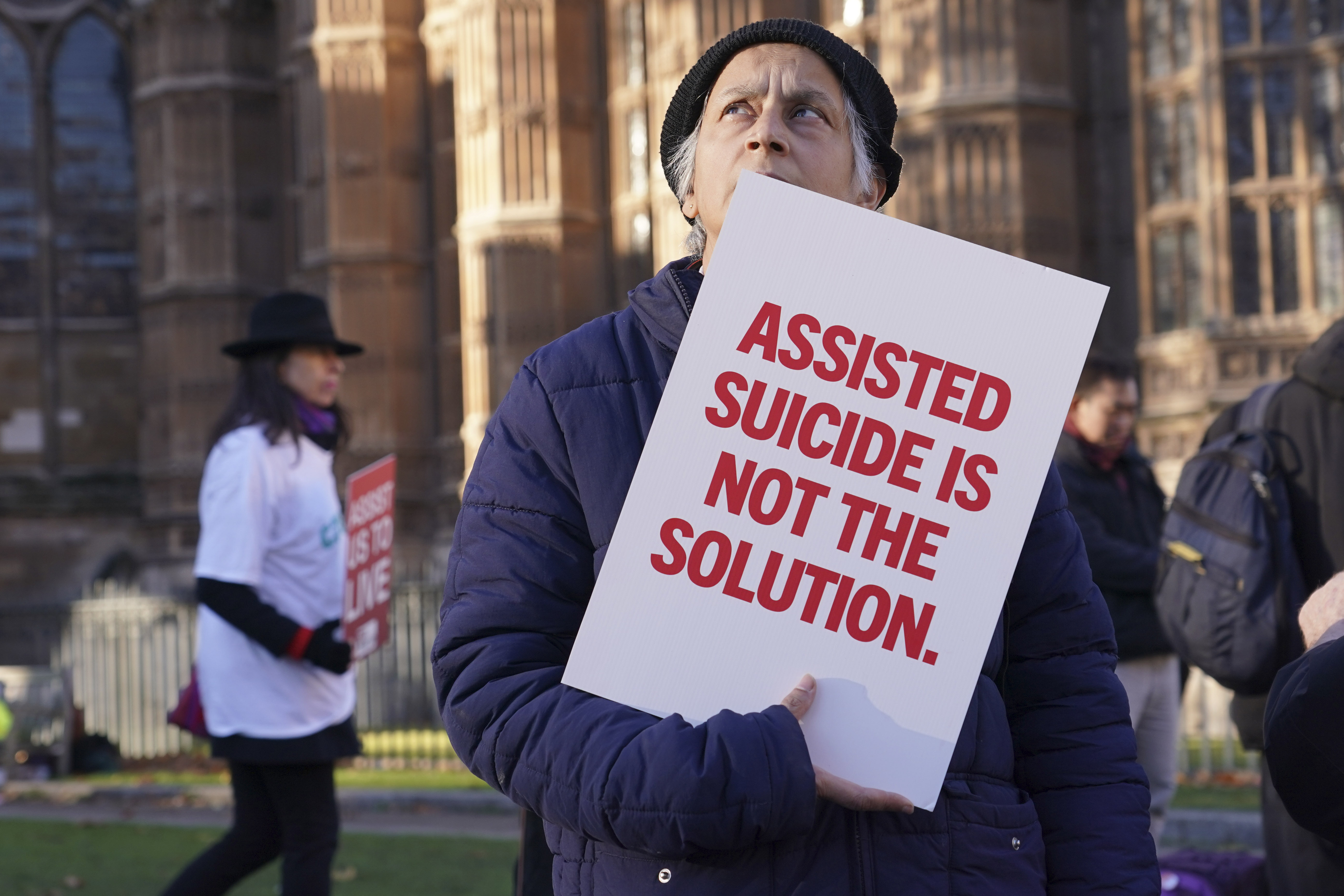
New York state's proposed Medical Aid in Dying Act (MAID) is gaining momentum. The state assembly passed the bill last week, sending it to the state senate for a vote. If signed into law, the bill will make the state of New York one of 12 U.S. jurisdictions to have legalized assisted suicide. Among other things, it permits doctors to give mentally competent, terminally ill people projected to die within six months, including teenagers (18 and 19 year olds), a lethal overdose of drugs to self-administer.
Kind-hearted people do not want any human being to suffer, and many who support assisted suicide say they do so out of compassion and adherence to principles of autonomy. But at what cost? Modern medicine has stellar pain-management regimens to avoid pain for the sick and dying. And no person in the U.S has an unfettered right to do whatever they want, even to themselves, when it impacts others.
In the name of compassion and self governance, MAID threatens to violate human rights, increase overall suicide rates, including non-assisted suicide rates, and jeopardize suicide prevention efforts. All of these consequences disproportionately affect women, the disabled, and low-income populations. Feminists like me decry MAID. Every major national disability organization that has taken a stance on assisted suicide laws stands in opposition to them. The American Medical Association also opposes MAID.
Empirical evidence demonstrates that when assisted suicide is legalized, total suicide rates significantly increase, including non-assisted suicide rates in some cases. No study has found any reduction in non-assisted suicide rates where MAID is legal. Data outlined by the Centre for Economic Policy Research show that assisted suicide laws increase total suicide rates by 18 percent overall and by 40 percent for women, with non-assisted suicide rates rising by 6 percent overall and 13 percent for women.

Suicide is sadly all too common, both in New York and across the country. According to a recent statistical analysis on suicide in the United States, U.S. suicide rates reached "record highs" in 2024, "levels not seen since 1941." The Centers for Disease Control and Prevention (CDC) report suicide deaths among 10-24 year olds increased by 62 percent from 2007 to 2021. Research released during the summer of 2024 by the Yale School of Medicine "found that suicide is rising dramatically in preteens as young as 8 years old," with an "8.2% annual increase from 2008 to 2022." The CDC also found that the suicide rate in New York has increased by "34.9% over the past 20 years." New York's Office of Mental Health states suicide is the "2nd leading cause of death for ages 25-34" and the "3rd leading cause of death for ages 10-24."
As thinking, loving people, how can we do anything but work to decrease rates of suicide? How could we possibly enact laws that serve to increase lethal harm to our brothers and sisters?
The Journal of Palliative Care reports that request rates for assisted suicide are greater for patients of lower socio-economic status than for those with higher incomes. The National Council on Disability (NCD) provides ample evidence indicating "that patients, including people with disabilities, are being denied treatment by insurers and offered assisted suicide instead," where it's legal. NCD claims that when assisted suicide is legalized "it immediately becomes the cheapest treatment," suggesting that assisted suicide laws increase the risk of coerced self-initiated deaths for not only the disabled, but for economically disadvantaged patients diagnosed with terminal ailments.
If the state enacts MAID, it is reasonable to imagine that, someday, a person's disability or low economic status alone could be sufficient for New York to permit and fund assisted suicide. The slippery slope is real. Canada's MAID laws initially allowed assisted suicide only for physically terminally ill adults, but now permits it for individuals with physical illnesses that are not terminal. Several countries, including Spain, Belgium, the Netherlands, and Switzerland already allow people with mental illnesses, but no terminal condition, to qualify for state-funded assisted suicide.
On behalf of the weakest and most vulnerable among us, we should reject legalizing assisted suicide.
Michele Sterlace-Accorsi is the Executive Director of Feminists Choosing Life of New York and an attorney for children.
The views expressed in this article are the writer's own.
\
Newsweek is committed to challenging conventional wisdom and finding connections in the search for common ground.