
If there’s a saloon between Bar Harbor and Bora Bora, KT Sullivan has probably sung there.
That goes for swank supper clubs, intimate cabarets, posh concert halls, and legitimate theaters, too.
Among KT’s next stops is Philadelphia’s ranking cabaret, one that fits firmly in the swank category, The Rittenhouse Grill, located in the Warwick Hotel, where she will be host of a patriotic sing-along called “This is My Country,” to celebrate the 250th anniversary of the United States.
With her will be one of Philadelphia’s most durable and versatile entertainers, Eddie Bruce, for two shows: 5 and 7:30 p.m. on Tuesday, July 7.
Both KT and Bruce will do solo numbers, Leonard Bernstein and Alan Jay Lerner’s lovely “Take Care of This House” from the 1976 musical, “1600 Pennsylvania Avenue” being among KT’s, a new song, “Philly is the City,” a hometown anthem to rival, while paying homage to “New York, New York”, for Bruce, one of the song’s co-authors.
These will be interspersed amid pure sing-along with the Rittenhouse Grill audience.
KT has prepared song sheets so all will attend will have the lyrics to classics by Irving Berlin and George M. Cohan as well as the usual patriotic rabble-rousers that have become engrained within American culture.
On the telephone from her 40th floor Manhattan apartment — a Cole Porter lyric just made a home in my head — KT croons to me a delightful Irish tune, brogue and all, about a young girl leaving her hometown and saying she’ll “be in Philadelphia in the morning.”
It’s cheering, and one of the thousands of songs KT knows, many of which she’s crammed into notebooks, especially since the COVID outbreak when she began accompanying herself on the piano.
Eddie Bruce has as extensive a repertoire of years of performing all kinds of music in all kinds of venues from bar mitzvahs and weddings to cabarets and concert halls.
He will be accompanied by of the top pianists and arrangers in the area, Dean Schneider.

Talking to KT and Bruce kindles affection for the Great American Songbook, assembled from the late 19th century to today’s newest hit, but focusing particularly on the popular tunes written from the 1920s to about the 1990s by composer like Irving Berlin, George Gershwin, Richard Rodgers, Cole Porter, Jerome Kern, Harold Arlen, Oscar Hammerstein II, Lorenz Hart, Yip Harburg and others, including teams like Kander and Ebb, Lerner and Loewe, and anyone with Betty Comden and Adolph Green.
“These songs are a part of America’s heritage. They told stories,” KT says.
KT has a lot of experience sharing these songs with younger performers she meets through the Mabel Mercer Foundation’s education program.
Artistic director of the foundation since 2012, KT says, “These young people are talented, but they don’t know the history of American music or the wealth of songs that have come from several decades and never lose their timeliness or ability to entertain.
“We introduce them to these songs, and as we do, we see their eyes light up in recognition of their range and appeal. They’re awakening to music, to songs that are different to most of what they heard and know.
“As they do, they realize that these songs tell stories, that they have a beginning, middle and end and don’t repeat the same group of words over and over again to melodies that sound a lot like several other tunes.
“Reviving great songs, especially those that might be forgotten because they come from failed, neglected, or rarely produced musicals, is among the favorite things cabaret performers do.
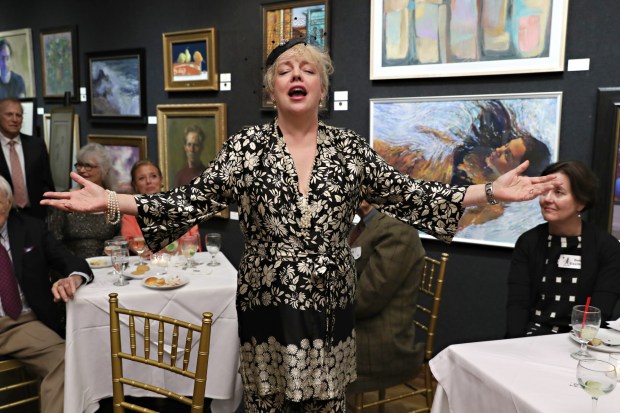
“Mabel Mercer is a great example of that. She would take a song that was obscure, put it in her act, and watch that song gain popularity and become included in other singers’ acts.
“A case in point is ‘Once Upon a Time,’ a beautiful song from ‘All American,’ a 1962 musical that had fewer than 100 performances.
“The song was destined to be lost, but once Mabel sang it, others heard it, and sang it, ‘Once Upon a Time’ went from lost to beloved and is now sung regularly.”
“Once Upon a Time” is one of my personal favorites, one I listen to and sing frequently. “All American” is the first musical that had a book by Mel Brooks, who turns 100 on June 28. Its score was by Charles Strouse and Lee Adams.
Songs KT and Bruce have planned for the “This is My Country” sing-along have a wide range. KT will change pace with “The Boston Beguine,” a comic number by Sheldon Harnick wrote for Alice Ghostley in “The New Faces of 1952.”
Bruce, known as much for his long-running radio talk show and being the original host of Channel 17’s “Dancing on Air” as forhis various live music concerts, will do theme song of the show that inspired “Dancing,” “Bandstand,” the tune of which can be hummed by every Philadelphian, if not every American, alive in the ’50s and ’60s, the lyrics for which were added by Barry Manilow in the ’90s.
Both KT and Bruce have close to 50 years experience in entertaining.
KT says, “Variety and vaudeville is part of me. The range of the Great American Songbook” is amazing, and I use it to show how many kinds of songs they are. I vary them. I don’t do two ballads or two comic numbers in a row. I use one kind of song to offset another. I want to give the audience a taste of everything.
The pair are also mindful of the people who write the songs they sing.
“Frank Sinatra always mentioned the composer, lyricist, and arranger of the numbers he sang,” Bruce says. “I do that as well. I think of its as an obligation.”
“I also do that,” KT says.
Both say the practice not only gives credit where it’s do, but lets people know the song they think is by Michael Bublé or Nina Simone is by Peggy Lee or Anthony Newley and Leslie Bricusse.
Eddie Bruce released a new album, “For Dreamers and Their Dreams” in late 2025. It features “Philly is The City” as one of 14 songs that feature a big-band sound provided by Ed Vezinho and Jim Ward Big Band.
Bruce and a 17-piece big band will be doing a concert of their songs 3 p.m. Sunday, June 21, at the Fringe Theatre, Columbus Avenue and Race Street in Philadelphia.
Bruce says he enjoys bringing this style of music to new audiences, especially younger audiences. He adds he does not mind renting a venue and producing his show to gain the exposure he thinks the music deserves.
As for KT Sullivan traveling hither and yon, both as a singer and on behalf of the Mabel Mercer Foundation, before she comes to Philadelphia on July 7, she will have left her 40th floor apartment with its view of the Empire State Building, which she revels in seeing lit in the royal blue and orange to honor the NBA champion New York Knicks, traveled to Australia, then to Lisbon, from there to London, from which she will arrive in Philly.
Don’t worry about it. She loves it.
Two other cabaret programs worth noting are Friday, June 19’s tribute, The Great ladies of Jazz — Ella Fitzgerald, Sarah Vaughn, etc. — with Capathia Jenkins and Aisha DeHaas and Sunday, June 21’s “American Fanfare” with Julie Benko and the PrincetonSymphony Orchestra at The Princeton Festival.
Also on Friday, June 19, Broadway luminary Kelli O’Hara comes to Wilmington’s Grand Opera House for a concert.
Co-anchor named at Channel 3
Jan Carabeo was recently named as Janelle Burrell’s co-anchor on Channel 3’s morning newscasts, but only for three weekdays, Wednesday through Friday.
On Saturdays and Sundays, Carabeo will continue to helm Channel 3’s weekend news programs.
The situation is unusual in this market. Carabeo is, in effect, the replacement for Burrell’s longtime micmate, Jim Donovan, who retired in December.
But she splits her time between weekdays and weekends, Monday and Tuesday being her obvious days off.
The arrangement stirs interest in how things may develop at Channel 3 News.
Carabao’s assignment to the 4:30 to 7 a.m./9 to 10 a.m. anchor desk is a promotion. Her staying at weekends may be a sign Channel 3 likes her there.
Still, the split-week anchor situation is curious, which might be a good thing because I doubt there’s been much wonder about what’s going on at Channel 3 for a long while.
Delco murder featured in play
The Delaware County Daily Times has a prominent role in a Broadway play, one that began life on the London stage.
“The Fear of 13,” at Manhattan’s James Earl Jones Theatre through July 12, delves into a prominent Delaware County murder case from 1982.
The Daily Times reports in December 1981 that a Delaware woman Linda Craig was raped and murdered soon after she left work.
The crime becomes an immediate mystery.
It remains a mystery because the assailant(s) of Craig have never been found.
“The Fear of 13” is about the young man who was convicted of the violence, Nick Yarris, who served 22 years on Pennsylvania’s Death Row at Huntington State Correctional Institution, until he was exonerated in the first use of DNA to overturn a capital case.
Lindsay Ferrentino’s play, based on a documentary in which Yarris speaks of his experience as an innocent man sentenced to die, covers a lot of ground.
It deals with Yarris’ youth, his involvement in drugs and petty crimes, his multiple arrests, then veers to Yarris, years into his incarceration, meeting someone who listens to his story and believes in the innocence he never wavered in claiming.
This woman’s belief and the struggle for exoneration, delayed for years via administrative nonsense, move “The Fear of 13” to a different level. Faith and tackling the state’s bureaucracy, cracked by an unexpected move by Yarris’ sentencing judge, create both suspense and a rooting factor.
You can feel the audience wanting Yarris’ case to be overturned as much as he does.
A scene involving the Daily Times turns the tide.
“The Fear of 13” is interesting but pat and searching for an aim before Yarris is taken to a police station to answer accusations the audience knows are true and bound to lead a wayward kid to years in prison.
Trying to outsmart investigators, Yarris seizes on an article he reads about Linda Craig’s murder in the Daily Times. He claims to know something about the crime and even mentions the person he thinks committed it.
Rather than gratitude for such information leading to Yarris being set free, as he envisions, his invented knowledge about the Craig case triggers suspicion.
Circumstantial evidence is gathered. With a court-appointed attorney between him and the county’s criminal justice system’s star prosecutors, that evidence is enough to get Yarris convicted by a jury.
It is the realization in the interrogation scene that Yarris could not have killed Linda Craig that moves the theater audience to his side.
Yarris’ railroading, his need to accept jail, including a rule that all Death Row inmates must remain silent — because “dead men can’t talk” — and the roller coaster ride after Yarris learns, again through a news publication, about DNA evidence turns the pat and matter-of-fact into compelling drama.
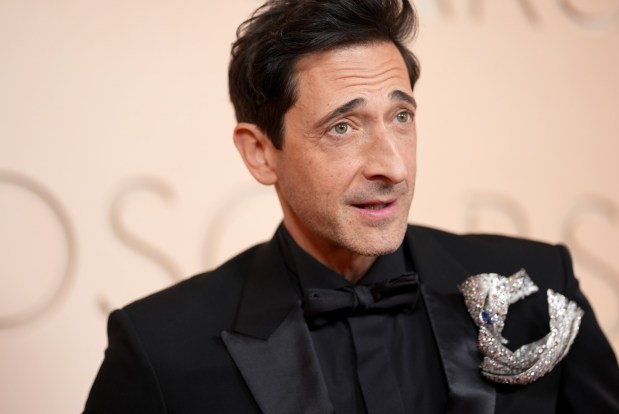
Yarris is played by two-time Oscar recipient Adrien Brody, who adds to the emotional heft of “The Fear of 13” is some intense solo speeches in the play’s final 15 minutes.
The story of expedient conviction, clinging to a plea of innocence after a court has rejected that plea, finding an ally, and finding the one bit of evidence that could be conclusive begins slow but becomes increasingly riveting.
Tessa Thompson, as a woman who volunteers to interview condemned prisoners for a nonprofit project, is even more stirring than Brody, especially as her belief in Yarris becomes a mission, then love, and then a call to action.
I remember the Yarris case from when it happened, a year before I began writing for the Daily Times. It was fulfilling to see recalled details enacted and hear familiar names, including Gov. Ed Rendell, to whom Yarris must apply for exoneration.
World Cup, its TV viewing unfolding
I have been navigating the World Cup via the tools at my disposal from being an Xfinity subscriber.
I promised to share the way I maneuver from saying “World Cup” to my remote to the game, stat, or player profile I want to see.
I repeat the promise. Especially because I’m getting better at the process.
Once more, stay tuned.