
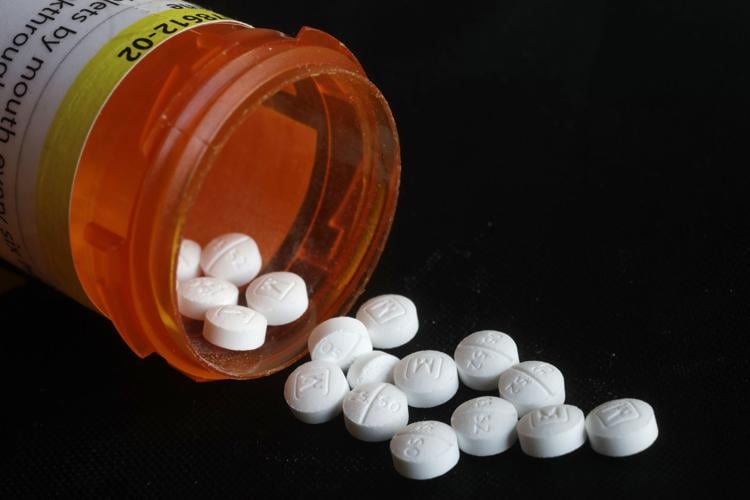
The nation's three dominant drug distributors and a big drugmaker have reached a $260 million deal to settle a lawsuit related to the opioid just as the first federal trial over the crisis was due to begin Monday.(AP Photo/Mark Lennihan, File)
For the last three years, methadone has been one of the biggest reasons I am still here, still sober and still fighting for my family. Since October 2023, I have not missed a single day of my medication. But proposed federal and state law changes could threaten that access — and the existence of health care providers who help patients like me and everyone hurt by the the opioid crisis.
My wife and I recently moved from Texas to Louisiana after losing my mother to cancer. I am currently uninsured and waiting for my Medicaid application to be approved. Until then, I pay out of pocket for methadone.
There is much wrong with our health care system: Cost, bureaucracy and paperwork are high on the list. But for victims of the opioid epidemic, one thing that is working is a drug discount program called 340B.
Most people have never heard of it, but 340B is incredibly important. It requires drug manufacturers to sell certain outpatient medications at a discount to health care providers that serve vulnerable communities. Those include HIV and AIDS clinics that operate throughout the opioid crisis that ravaged South and Appalachia. It allows many HIV and AIDS clinics to dispense medications to patients for free or at a discount. It also allows providers to sell medications to better-off patients at normal prices and use the differential to stay open and treat people like me
340B covers methadone. But the main benefit to those hit hard by the opioid crisis is on the HIV, AIDS and hepatitis C medication side of the ledger. That includes people like my six-month-pregnant wife, who is hepatitis C positive from IV needle use years ago, before her recovery. With timely access to testing, treatment and affordable medication, she could have had a chance to cure her hepatitis C before becoming pregnant. Instead, like too many families, we are carrying the consequences of delayed care into one of the most important moments of our lives.
340B is more robust in Louisiana, one of the first states to legislate protections to the program, than in Texas, from which we recently moved following my mother’s death. Louisiana passed a law to stop drug companies from undermining access to 340B discounts through pharmacy arrangements. Texas has no such law. This matters because it’s already tough enough for patients like me to fund a $400 a month methadone expense where insurance or Medicaid hasn’t kicked in. Without access via providers who rely on the program, patients risk dangerous, potentially life-threatening withdrawal or worse: a relapse. And society risks plenty, too: More injectable drug addiction, more hepatitis C, HIV and AIDS transmission, more homelessness and taxpayers having to bail out rural providers and clinics who hold the line every day against these ills and tragedies.
All of this comes at no cost to the hardworking American taxpayer.
Unfortunately, drug companies are trying to dismantle 340B, despite its importance in helping uninsured and under-insured parents, workers, sons, daughters -- people rebuilding their lives one day at a time. Those companies and their congressional allies in Washington, D.C., plus their legislative pals in Baton Rouge, want to “reform” it away by switching the program to a rebate, not a discount, model — the functional equivalent of you or me being forced to ditch grocery store coupons and instead pay the full cost of goods upfront and maybe, possibly, get a partial refund from Walmart later. Not only will this force providers to take on tons of debt, it will force those fighting the opioid epidemic to divert staff, slash budgets and curtail operations.
Recovery is hard enough. We tell people to get help. We tell them to stay in treatment. We tell them to do the right thing. It’s bad enough that transportation, insurance delays, clinic policies and out-of-pocket costs can knock a stable patient off track.
We should not make it harder by hammering one of the only health care solutions that currently exists.
Thomas Roddy lives in Kinder, Louisiana.