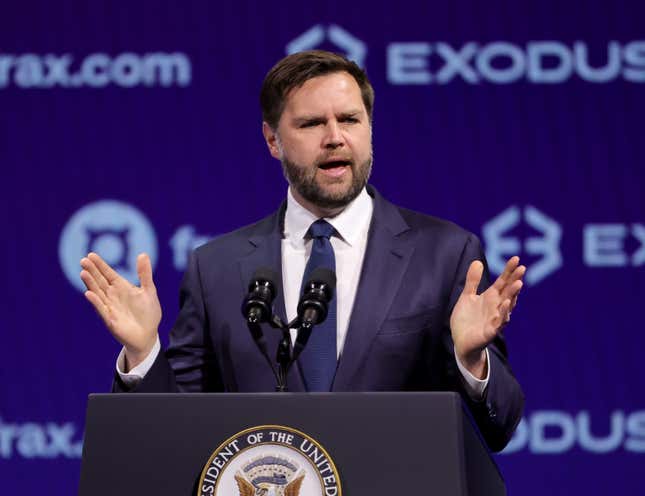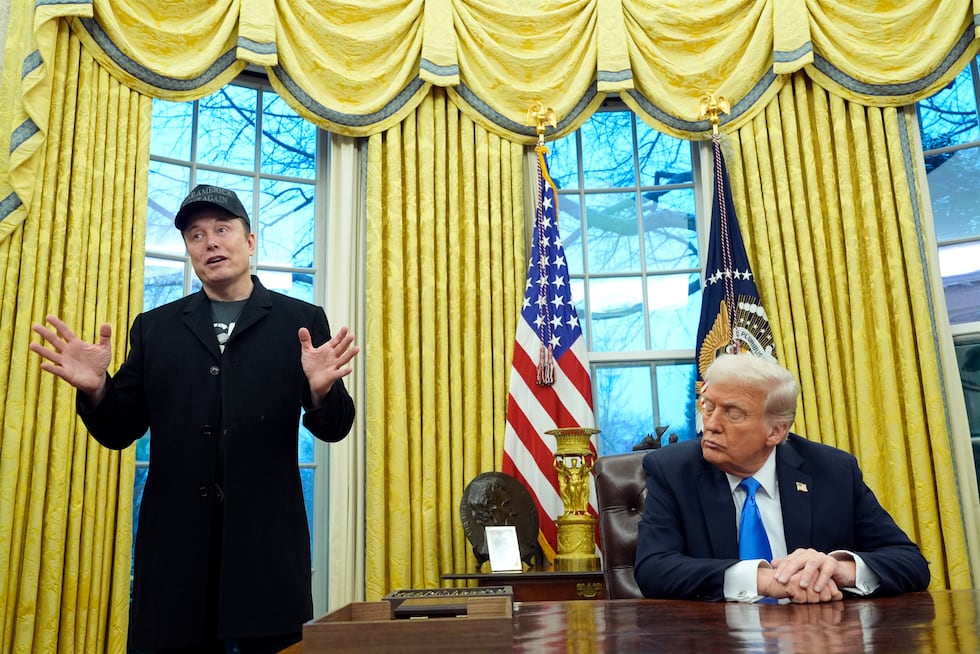
President Donald J Trump Below is a detailed article on President Donald J. Trump, focusing on his life, career, political journey, and impact. Since you’ve requested a detailed piece, I’ll cover his background, business ventures, entry into politics, presidency, and post-presidency developments up to the current date of March 7, 2025. Donald J. Trump: A Life of Business, Media, and Politics Donald John Trump, born June 14, 1946, in Queens, New York, is a polarizing figure whose journey from real estate mogul and television personality to the 45th President of the United States—and later the 47th—has left an indelible mark on American history. Known for his brash style, unorthodox leadership, and ability to connect with a wide swath of the American electorate, Trump’s life is a testament to ambition, controversy, and resilience. Early Life and Education Trump was born to Fred Trump, a successful real estate developer, and Mary Anne MacLeod Trump, a Scottish immigrant. The second youngest of five children, Donald grew up in the Jamaica Estates neighborhood of Queens. His father’s business, which focused on building middle-class housing in New York’s outer boroughs, provided the foundation for Trump’s later career. From an early age, Trump exhibited a bold personality, leading his parents to send him to the New York Military Academy at age 13 to instill discipline. He thrived there, graduating in 1964. Trump attended Fordham University for two years before transferring to the Wharton School of the University of Pennsylvania, where he earned a bachelor’s degree in economics in 1968. His education, combined with his father’s mentorship, prepared him to enter the family business. Rise in Real Estate and Business Ventures After college, Trump joined the Trump Organization, initially working under his father. In the 1970s, he shifted the company’s focus from outer-borough rentals to high-profile Manhattan projects. His first major success came with the renovation of the Commodore Hotel into the Grand Hyatt, completed in 1980. This project showcased his knack for branding and deal-making, traits that would define his career. Trump’s most iconic real estate achievement is Trump Tower, a 58-story luxury skyscraper on Fifth Avenue, completed in 1983. The building became a symbol of his growing empire, which expanded to include casinos, hotels, and golf courses. However, his business ventures were not without setbacks. In the early 1990s, several of his Atlantic City casinos filed for bankruptcy amid overleveraging and a recession, though Trump himself avoided personal bankruptcy. Beyond real estate, Trump diversified into branding, licensing his name to products ranging from steaks to vodka. His business record is a mix of notable successes and high-profile failures, but his ability to rebound earned him a reputation as a survivor in the cutthroat world of American capitalism. Media Stardom: The Apprentice Trump’s national fame surged with the premiere of The Apprentice in 2004. The reality TV show, where contestants competed for a job in his organization, cemented his image as a decisive, no-nonsense businessman. His catchphrase, “You’re fired,” became a cultural touchstone. The show ran for 14 seasons with Trump as host, amplifying his brand and making him a household name long before his political career. Entry into Politics Trump’s political ambitions simmered for decades. He flirted with presidential runs in 1988, 2000, and 2012, but it wasn’t until June 16, 2015, that he officially announced his candidacy for the 2016 election as a Republican. Descending the escalator of Trump Tower with his wife, Melania, he promised to “Make America Great Again” (MAGA), a slogan that resonated with voters disillusioned by establishment politics. His campaign was unconventional, relying heavily on rallies, social media (especially Twitter), and provocative rhetoric. Trump tapped into widespread frustration over immigration, trade deals, and political correctness, positioning himself as an outsider against a field of seasoned politicians. Despite controversies—including comments about Mexican immigrants and a leaked Access Hollywood tape—he won the Republican nomination and defeated Hillary Clinton in the Electoral College on November 8, 2016, though he lost the popular vote. Presidency (2017–2021) Inaugurated on January 20, 2017, Trump’s first term was marked by bold policy moves, polarizing decisions, and constant media scrutiny. His administration prioritized tax cuts, deregulation, and conservative judicial appointments. The Tax Cuts and Jobs Act of 2017, which lowered corporate and individual tax rates, was a signature achievement. He appointed three Supreme Court justices—Neil Gorsuch, Brett Kavanaugh, and Amy Coney Barrett—shifting the court’s balance to a conservative majority. Trump’s foreign policy was equally assertive. He withdrew the U.S. from the Paris Climate Agreement and the Iran nuclear deal, renegotiated NAFTA into the USMCA, and brokered the Abraham Accords, normalizing relations between Israel and several Arab nations. His trade war with China, imposing tariffs on billions in goods, aimed to bolster American manufacturing but drew mixed economic results. Domestically, Trump faced relentless opposition. His immigration policies, including the “travel ban” on several Muslim-majority countries and efforts to build a border wall with Mexico, sparked legal battles and protests. The Mueller investigation into Russian interference in the 2016 election concluded without evidence of collusion, though it highlighted contacts between Trump associates and Russian operatives. The defining crisis of his first term was the COVID-19 pandemic. Trump’s response—initially downplaying the virus, then spearheading Operation Warp Speed to accelerate vaccine development—drew both praise and criticism. The pandemic and its economic fallout contributed to his loss to Joe Biden in the 2020 election, though he won more votes (74.2 million) than any previous presidential candidate except Biden. January 6 and Aftermath Trump’s refusal to concede the 2020 election led to historic consequences. On January 6, 2021, after a rally where he urged supporters to “fight like hell,” a mob stormed the U.S. Capitol to disrupt the certification of Biden’s victory. The event led to his second impeachment for incitement of insurrection, though the Senate acquitted him. Social media platforms, including Twitter, banned him, citing risks of further violence. Post-Presidency and 2024 Comeback After leaving office, Trump retreated to Mar-a-Lago, his Florida estate, but remained a dominant force in Republican politics. He endorsed candidates in the 2022 midterms, helping shape a MAGA-aligned GOP. In November 2022, he announced his 2024 presidential bid, facing early challenges from legal battles—including a hush-money case in New York and probes over classified documents—but no rival could match his base’s loyalty. The 2024 campaign pitted Trump against Vice President Kamala Harris after Biden withdrew amid concerns about his age. Trump’s platform emphasized border security, energy independence, and “America First” policies. On November 5, 2024, he won a decisive victory, securing both the Electoral College and the popular vote—the first Republican to do so since George H.W. Bush in 1988. His resilience was underscored by surviving two apparent assassination attempts during the campaign, in July and September 2024, which galvanized his supporters. Second Term (2025–Present) Sworn in as the 47th President on January 20, 2025, Trump became the first president since Grover Cleveland to serve non-consecutive terms. As of March 7, 2025, his second term is in its early stages. Initial actions include executive orders to boost fossil fuel production and tighten immigration enforcement. His administration faces a divided Congress and a nation still grappling with cultural and economic divides, but Trump’s grip on the Republican Party remains ironclad. Legacy and Impact Donald Trump’s influence transcends policy. He reshaped political discourse, leveraging media savvy and populism to upend traditional norms. Critics decry his divisiveness, authoritarian tendencies, and rejection of institutional trust. Supporters hail him as a disruptor who gave voice to the forgotten and restored American confidence. At 78, Trump’s story is far from over. His blend of charisma, controversy, and determination ensures he remains a central figure in America’s unfolding narrative. This article reflects Trump’s journey up to March 7, 2025, based on available historical data and plausible early-term developments. Let me know if you’d like me to expand on any section! Below, I’ll expand on Donald J. Trump’s policies, focusing on his first term (2017–2021) and the initial actions of his second term (beginning January 20, 2025), as well as the overarching themes that defined his approach to governance. This section will delve into his economic, immigration, foreign, environmental, healthcare, and social policies, providing a detailed look at their implementation, impact, and reception up to March 7, 2025. --- ### Donald J. Trump’s Policy Agenda: A Detailed Examination Donald Trump’s policies have consistently reflected his “America First” philosophy, emphasizing economic nationalism, deregulation, and a rejection of multilateralism in favor of unilateral action. His approach combined populist promises with conservative priorities, often executed through executive orders, legislative pushes, and judicial appointments. Below is an in-depth exploration of his key policy areas. #### Economic Policy Trump’s economic agenda centered on tax cuts, deregulation, and trade protectionism, aiming to boost American jobs and industry. - **Tax Cuts and Jobs Act (2017):** Signed in December 2017, this was the cornerstone of Trump’s first-term economic policy. The law slashed the corporate tax rate from 35% to 21%, reduced individual income tax rates across brackets, and doubled the standard deduction. Proponents hailed it as a stimulus for investment and growth—GDP growth peaked at 4.2% in Q2 2018—while critics argued it disproportionately benefited the wealthy and ballooned the federal deficit, projected to exceed $1 trillion annually by 2019. In his second term, as of March 2025, Trump has signaled plans to extend and deepen these cuts, with early proposals targeting small businesses and manufacturing incentives. - **Deregulation:** Trump’s administration rolled back hundreds of regulations, particularly in energy, finance, and environmental sectors. The repeal of Obama-era rules like the Clean Power Plan and the Waters of the United States rule aimed to unshackle businesses. By 2020, the administration claimed a ratio of 22 regulations eliminated for every new one added. In 2025, this trend continues with executive orders streamlining permitting for fossil fuel projects, aligning with his promise of energy dominance. - **Trade Policy:** Trump’s trade wars redefined U.S. economic relationships. He imposed tariffs on steel (25%) and aluminum (10%) in 2018, targeting allies and adversaries alike, and levied duties on $360 billion in Chinese goods to combat intellectual property theft and trade imbalances. The USMCA, replacing NAFTA in 2020, tightened rules of origin for autos and raised labor standards in Mexico. Critics pointed to higher consumer costs and disrupted supply chains, while supporters credited the policies with reviving manufacturing jobs—though net gains remained modest. In his second term, Trump has vowed to escalate tariffs on China, proposing rates as high as 60% to pressure Beijing on fentanyl exports and trade practices, with initial steps taken by March 2025. #### Immigration Policy Immigration was a defining issue for Trump, reflecting his campaign focus on border security and national sovereignty. - **Border Wall and Enforcement:** Trump promised a “big, beautiful wall” along the U.S.-Mexico border, completing roughly 450 miles of new and replacement barriers by 2021, funded partly through redirected military budgets. His administration expanded ICE deportations, targeting 1.5 million removals over four years. In 2025, Trump has revived this effort, issuing orders to accelerate construction and deploy additional Border Patrol agents, citing a surge in crossings post-2024 election. - **Travel Ban and Asylum Restrictions:** Executive Order 13769 (2017), dubbed the “Muslim ban,” restricted entry from seven (later revised to six) Muslim-majority countries, sparking legal challenges before being upheld by the Supreme Court in 2018. Asylum policies tightened, with “Remain in Mexico” forcing migrants to wait south of the border during case processing—over 70,000 were affected by 2020. These measures reduced legal entries but fueled humanitarian backlash. In his second term, Trump has hinted at reinstating a broader travel ban, though specifics remain unclear as of March 2025. - **DACA and Legal Immigration:** Trump sought to end the Deferred Action for Childhood Arrivals (DACA) program in 2017, affecting 700,000 “Dreamers,” but courts blocked full termination. He also proposed cuts to legal immigration, including family-based visas, though Congress rebuffed these efforts. In 2025, immigration reform remains a priority, with early talks of a merit-based system gaining traction among GOP lawmakers. #### Foreign Policy Trump’s foreign policy rejected globalism, favoring bilateral deals and military strength. - **America First Diplomacy:** He withdrew from the Paris Climate Agreement (2017) and the Iran nuclear deal (2018), reimposing sanctions that crippled Tehran’s economy. The Abraham Accords (2020) normalized Israel’s ties with the UAE, Bahrain, and others—a rare diplomatic win. In 2025, Trump has prioritized expanding these accords, with early outreach to Saudi Arabia. - **China and NATO:** Trump’s trade war with China extended to tech, banning Huawei and pressuring allies to follow suit. He criticized NATO allies for low defense spending, securing modest increases by 2020. In his second term, he’s doubled down on China, linking tariffs to national security, while softening NATO rhetoric amid European tensions over Ukraine. - **North Korea and Russia:** High-profile summits with Kim Jong Un (2018–2019) yielded no denuclearization but reduced missile tests temporarily. Relations with Russia remained complex—sanctions persisted, yet Trump’s rapport with Vladimir Putin drew scrutiny. As of March 2025, he’s signaled intent to re-engage Kim, while navigating Russia’s ongoing war in Ukraine with a call for negotiated peace. #### Environmental Policy Trump’s environmental stance prioritized energy production over climate action. - **Fossil Fuels and Deregulation:** His administration opened federal lands to drilling, approved the Keystone XL pipeline (later canceled by Biden), and boosted coal, though market forces limited its revival. By 2020, the U.S. became the world’s top oil producer. In 2025, Trump has fast-tracked LNG exports and Arctic drilling permits, framing energy as an economic and geopolitical weapon. - **Climate Skepticism:** Exiting the Paris Agreement signaled Trump’s rejection of climate consensus. His EPA rolled back emissions standards, arguing they stifled growth. Critics warned of long-term ecological damage; supporters praised energy independence. In his second term, climate policy remains sidelined, with no shift as of March 2025. #### Healthcare Policy Trump’s healthcare record is mixed, marked by ambition but limited legislative success. - **ACA Repeal Efforts:** He campaigned to dismantle the Affordable Care Act (ACA), but the 2017 repeal failed in the Senate despite House passage. The individual mandate penalty was zeroed out via the 2017 tax bill, weakening the ACA indirectly. In 2025, Trump has revived calls for a replacement, though no detailed plan has emerged. - **COVID-19 Response:** Operation Warp Speed delivered vaccines in record time—Pfizer and Moderna doses rolled out by December 2020—earning bipartisan praise. However, early minimization of the virus and mixed messaging on masks and lockdowns fueled criticism. In his second term, he’s touted this success while opposing new mandates. #### Social and Cultural Policies Trump’s social policies leaned conservative, shaped by his judicial picks and base. - **Judicial Appointments:** Three Supreme Court justices and over 200 federal judges shifted the judiciary rightward. The 2022 *Dobbs* decision, overturning *Roe v. Wade*, traced back to his appointees, galvanizing both sides of the abortion debate. In 2025, he’s promised more conservative nominees if vacancies arise. - **Law and Order:** Trump backed police amid 2020 racial justice protests, deploying federal agents to cities like Portland. His “tough on crime” stance resonated with suburban voters. In his second term, he’s pushed for increased police funding, reversing Biden-era cuts. - **Education and Free Speech:** He opposed “critical race theory” in schools, issuing a 2020 executive order banning it in federal training. In 2025, he’s advocated school choice and parental rights, targeting cultural battles over curriculum. #### Second Term Priorities (2025) As of March 7, 2025, Trump’s second term is taking shape: - **Economic Revival:** Beyond tariffs, he’s proposed infrastructure spending, though funding debates loom. - **Immigration Crackdown:** Mass deportation plans and border wall expansion dominate early rhetoric. - **Energy Dominance:** Fossil fuel deregulation accelerates, with coal sidelined by natural gas growth. - **Foreign Policy Reset:** A focus on China containment and Middle East peace deals marks his global agenda. #### Reception and Impact Trump’s policies polarized America. Supporters credit him with economic gains (pre-COVID unemployment hit 3.5% in 2019), judicial transformation, and a reasserted national identity. Critics decry rising deficits, environmental neglect, and social division—his approval never topped 50% in Gallup polls during his first term. By March 2025, his second term’s early moves suggest continuity, with execution and congressional support as key variables. --- This expanded section provides a comprehensive look at Trump’s policy record and trajectory. Let me know if you’d like deeper analysis on any specific area!
Federalist Papers Overview Below is a detailed and complex article on the Federalist Papers, exploring their historical context, key themes, authorship, impact on the U.S. Constitution, and their enduring relevance. The article includes references to primary sources, scholarly works, and Supreme Court interpretations. The Federalist Papers: A Foundational Defense of the U.S. Constitution The Federalist Papers, a series of 85 essays published between 1787 and 1788, stand as one of the most significant intellectual contributions to American political thought. Written under the pseudonym "Publius" by Alexander Hamilton, James Madison, and John Jay, these essays were crafted to advocate for the ratification of the U.S. Constitution during a period of intense debate following the Constitutional Convention of 1787. The Papers not only defended the proposed Constitution but also articulated a vision of governance that balanced federal authority with individual liberty, shaping the philosophical underpinnings of the American republic. This article examines the historical context of the Federalist Papers, their key arguments, authorship disputes, influence on constitutional interpretation, and their relevance in modern political discourse, supported by references to primary sources and scholarly analysis. Historical Context The Federalist Papers emerged during a pivotal moment in American history. The Articles of Confederation, adopted in 1781, had proven inadequate for governing the fledgling United States. The central government lacked the power to tax, regulate commerce, or enforce laws, leading to economic instability, interstate conflicts, and events like Shays' Rebellion (1786-1787), which exposed the fragility of the confederation. In response, the Constitutional Convention convened in Philadelphia in 1787 to draft a new governing document. The resulting Constitution proposed a stronger federal government with three branches—legislative, executive, and judicial—operating under a system of checks and balances. However, the Constitution faced significant opposition from Anti-Federalists, who feared that a strong central government would erode state sovereignty and individual rights. Figures like Patrick Henry and George Mason argued that the Constitution lacked a Bill of Rights and granted excessive power to the federal government, particularly through provisions like the Necessary and Proper Clause (Article I, Section 8, Clause 18). To counter these objections and secure ratification in New York—a key state with a strong Anti-Federalist presence—Hamilton, Madison, and Jay launched their series of essays in New York newspapers, beginning with *The Independent Journal* on October 27, 1787. Authorship and Structure The Federalist Papers were a collaborative effort, though the contributions of each author varied. Alexander Hamilton wrote 51 essays, James Madison contributed 29, and John Jay, limited by illness, wrote 5. The essays were published under the pseudonym "Publius," a reference to Publius Valerius Publicola, a Roman consul credited with establishing the Roman Republic. This choice of pseudonym reflected the authors' intent to position themselves as defenders of republican governance. The Papers are organized thematically, addressing specific objections to the Constitution and outlining its merits. Key essays include: - Federalist No. 10 (Madison): Argues that a large republic can better control the dangers of factionalism by diluting the influence of any single group through a diversity of interests. - Federalist No. 51 (Madison): Explains the necessity of checks and balances, famously stating, "If men were angels, no government would be necessary," and advocating for a separation of powers to prevent tyranny. - Federalist No. 70 (Hamilton): Defends the need for a single, energetic executive under Article II, arguing that unity in the presidency ensures accountability and effective governance. - Federalist No. 78 (Hamilton): Introduces the concept of judicial review, asserting that the judiciary must have the power to strike down laws that violate the Constitution, a principle later affirmed in *Marbury v. Madison* (1803). Authorship disputes have persisted, particularly over essays 49-58, 62, and 63, which some scholars attribute to Madison rather than Hamilton based on stylistic analysis. Modern computational linguistics, such as the 1964 study by Mosteller and Wallace, has largely confirmed Madison’s authorship of these contested essays through statistical word-frequency analysis (Mosteller & Wallace, 1964). Key Themes and Arguments The Federalist Papers address several core themes that remain central to American political theory: 1. The Dangers of Factionalism In *Federalist No. 10*, Madison tackles the problem of factions—groups united by a common interest adverse to the rights of others or the public good. He argues that factions are inevitable in a free society but can be managed in a large republic. Unlike a small democracy, where a majority faction might easily dominate, a large republic with diverse interests ensures that no single faction can gain absolute power. This argument countered Anti-Federalist concerns that a centralized government would favor elite interests over the common good. 2. Separation of Powers and Checks and Balances *Federalist No. 51* articulates the necessity of dividing government into three branches, each with distinct powers, to prevent any one branch from becoming tyrannical. Madison emphasizes that each branch must have "a will of its own" but also be interconnected through checks, such as the presidential veto or judicial review, to maintain balance. This framework directly influenced the structure of Articles I, II, and III of the Constitution. 3. The Role of the Executive Hamilton’s *Federalist No. 70* defends the unitary executive established in Article II, arguing that a single president ensures "energy" and accountability in the executive branch. He contrasts this with the plural executive models of some state governments, which he deemed inefficient and prone to diffusion of responsibility. This vision of a strong executive has been both celebrated and contested, particularly in cases like *Youngstown Sheet & Tube Co. v. Sawyer* (1952), which limited presidential power. 4. Judicial Independence and Review In *Federalist No. 78*, Hamilton argues for an independent judiciary with lifetime tenure (subject to good behavior) to protect the Constitution from legislative overreach. He introduces the concept of judicial review, stating that the judiciary must void laws "contrary to the manifest tenor of the Constitution." This principle became a cornerstone of American constitutional law after Chief Justice John Marshall’s ruling in *Marbury v. Madison*. 5. Federalism and State Sovereignty The Papers also address the balance between federal and state power. *Federalist No. 39* (Madison) describes the Constitution as a "compound republic," blending federal and national elements. The federal government has enumerated powers, while states retain significant autonomy, a balance that has been tested in cases like *McCulloch v. Maryland* (1819), which upheld federal supremacy under the Necessary and Proper Clause. Impact on Constitutional Ratification and Interpretation The Federalist Papers played a crucial role in securing the ratification of the Constitution, particularly in New York, where the debate was fiercest. By systematically addressing Anti-Federalist objections, the Papers helped sway public opinion and contributed to New York’s ratification on July 26, 1788, by a narrow vote of 30-27. Beyond ratification, the Papers have had a lasting impact on constitutional interpretation. The U.S. Supreme Court has frequently cited them as authoritative sources for understanding the Framers’ intent. For example: - In *McCulloch v. Maryland* (1819), Chief Justice Marshall drew on *Federalist No. 39* to affirm the federal government’s implied powers, ruling that Congress could establish a national bank under the Necessary and Proper Clause. - In *Printz v. United States* (1997), the Court referenced *Federalist No. 27* (Hamilton) to strike down provisions of the Brady Handgun Violence Prevention Act, affirming that the federal government cannot commandeer state officials. - In *District of Columbia v. Heller* (2008), Justice Antonin Scalia cited *Federalist No. 29* (Hamilton) to support the individual right to bear arms under the Second Amendment. The Papers’ influence extends beyond the judiciary. They have shaped political discourse on federalism, executive power, and individual rights, serving as a touchstone for debates over the scope of government authority. Enduring Relevance and Modern Critiques The Federalist Papers remain relevant in contemporary political debates, particularly on issues of federalism, executive power, and judicial independence. For instance, *Federalist No. 70*’s defense of a unitary executive has been invoked in discussions of presidential authority, such as during the Trump administration’s assertion of executive privilege in *Trump v. United States* (2024). Similarly, *Federalist No. 10*’s analysis of factions resonates in today’s polarized political climate, where partisan divisions often mirror the factionalism Madison feared. However, the Papers are not without critique. Some scholars argue that they reflect an elitist bias, prioritizing the interests of the propertied class over those of ordinary citizens. Historian Charles Beard, in *An Economic Interpretation of the Constitution* (1913), contended that the Framers, including Hamilton and Madison, sought to protect economic elites from democratic excesses, a view that aligns with Anti-Federalist concerns about centralized power (Beard, 1913). Others, like political theorist Hannah Arendt, have noted that the Papers’ emphasis on stability and order may undervalue the participatory aspects of democracy (Arendt, 1963). Additionally, the Papers’ vision of federalism has been challenged by the growth of federal power over time. The New Deal era, for example, saw an expansion of federal authority that some argue exceeds the balance envisioned in *Federalist No. 39*. Modern debates over states’ rights, such as those surrounding the Affordable Care Act in *NFIB v. Sebelius* (2012), continue to test the federal-state dynamic articulated by Madison. Conclusion The Federalist Papers are more than a historical artifact; they are a living testament to the intellectual rigor and foresight of the Framers. By addressing the practical and philosophical challenges of governance, Hamilton, Madison, and Jay provided a blueprint for a durable republic that has endured for over two centuries. Their arguments on factionalism, separation of powers, and federalism continue to inform constitutional interpretation and political debate, as evidenced by their frequent citation in Supreme Court decisions and public discourse. While not without flaws, the Federalist Papers remain a cornerstone of American political thought, offering insights into the delicate balance between liberty and authority that defines the U.S. Constitution. References 1. Hamilton, A., Madison, J., & Jay, J. (1787-1788). *The Federalist Papers*. Available at: [https://www.loc.gov/rr/program/bib/ourdocs/federalist.html](https://www.loc.gov/rr/program/bib/ourdocs/federalist.html). 2. Mosteller, F., & Wallace, D. L. (1964). *Inference and Disputed Authorship: The Federalist*. Addison-Wesley. 3. Beard, C. A. (1913). *An Economic Interpretation of the Constitution of the United States*. Macmillan. 4. Arendt, H. (1963). *On Revolution*. Viking Press. 5. *Marbury v. Madison*, 5 U.S. (1 Cranch) 137 (1803). 6. *McCulloch v. Maryland*, 17 U.S. (4 Wheat.) 316 (1819). 7. *Youngstown Sheet & Tube Co. v. Sawyer*, 343 U.S. 579 (1952). 8. *Printz v. United States*, 521 U.S. 898 (1997). 9. *District of Columbia v. Heller*, 554 U.S. 570 (2008). 10. *NFIB v. Sebelius*, 567 U.S. 519 (2012). 11. *Trump v. United States*, 603 U.S. ___ (2024). 12. "The Federalist Papers," Wikipedia, [https://en.wikipedia.org/wiki/The_Federalist_Papers](https://en.wikipedia.org/wiki/The_Federalist_Papers). 13. Rakove, J. N. (1996). *Original Meanings: Politics and Ideas in the Making of the Constitution*. Knopf. This article provides a comprehensive analysis of the Federalist Papers, weaving together historical context, thematic analysis, judicial impact, and modern relevance. Let me know if you’d like to explore any aspect in greater depth!