
Here at the midpoint of 2026, it’s become even more impossible to look away from artificial intelligence. The headlines are constant – AI-driven layoffs, mandates to adopt AI at work, community backlash over data center buildouts, advertisements for AI at every turn. But beneath the noise, the conversation itself has changed. Not long ago, the discourse swung between narratives of utopia and doom: AI would either solve our greatest problems or render us obsolete. In both stories, humans were an afterthought.
Today, humans are moving to the center of the story. Brands have begun
, we heard from you: you told us about how AI is showing up in your own life, touching the things that make you and the people you love who you are. Responses from people like you and other members of the public confirmed what we suspected: people do not need convincing that something essential is at stake with AI. What they need is language for it, and a path forward.
Since the launch, we’ve been working on both. CHT convened a working group of leading experts across law, technology, and philosophy – from institutions including Harvard, Oxford, Brookings, Columbia, and Duke – to define and explore what kinds of legal protections we’ll need to preserve our humanity in the age of AI. We also continued to bring these ideas to new audiences. Camille Carlton, our Senior Director of Strategy and Impact, took to the TEDx stage in Miami to lay out how AI is eroding the pillars of our humanity, how we are reckoning with the “messy middle” of the AI revolution, and what we can do to protect the important parts of human experience. We look forward to sharing that talk with you soon.
And this is just the beginning.
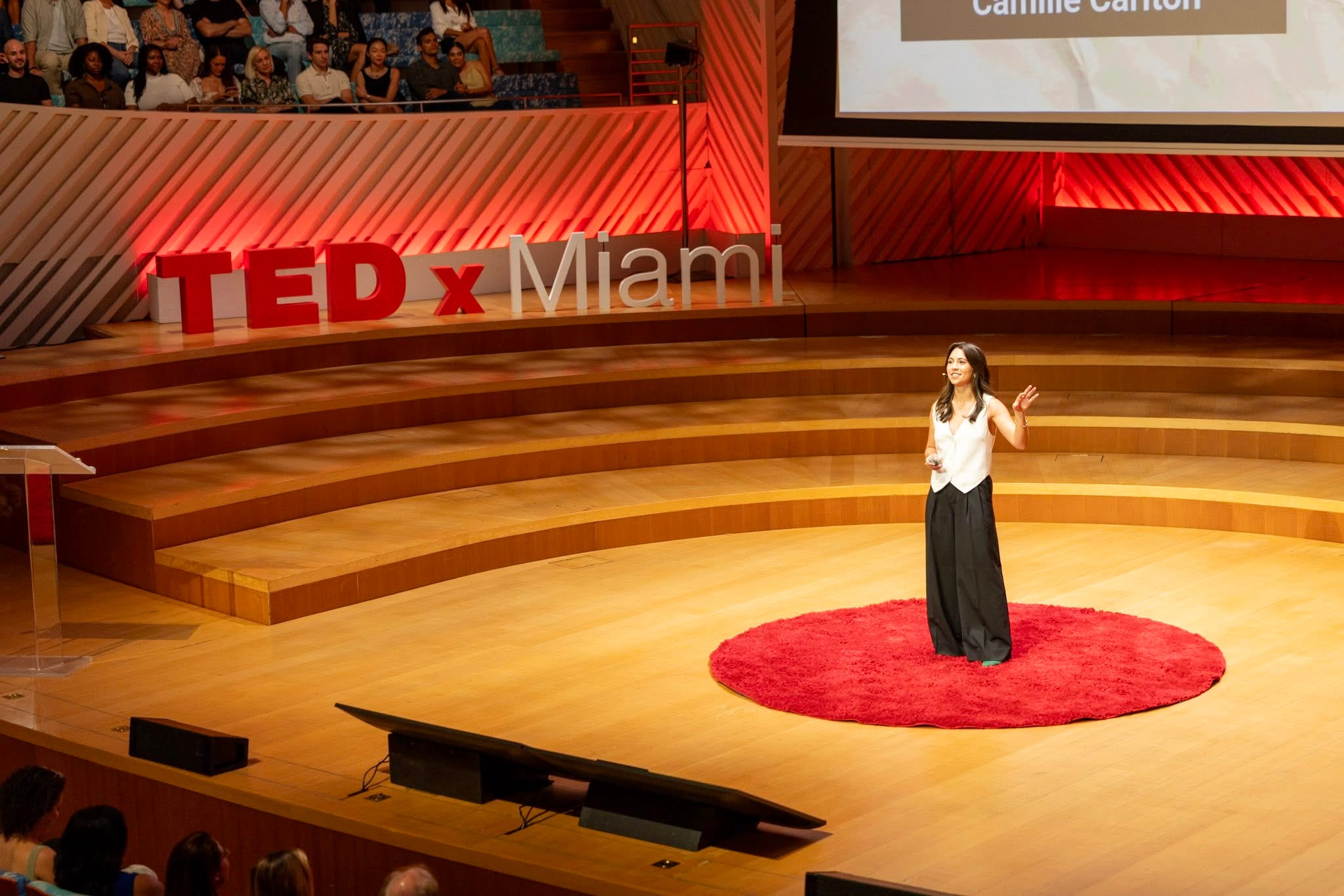
CHT Senior Director of Strategy and Impact Camille Carlton on the TEDx stage.
In the coming months, you’ll see “AI and What Makes Us Human” out in the world: on streets and on screens, through voices you’re familiar with and some you might not expect. Through this campaign, we will give this feeling you’re having around AI a name so that it can be better understood, shared, and pushed back on. We will remind you that these uncanny feelings you’re having around AI are not your fault, or something you must muscle through; they’re a byproduct of how this technology is designed. And those designs can be changed. In fact, they must be changed. So alongside naming the problem, we will give you a path: ways to protect yourself and your family now, and ways to demand the structural change this moment requires.
We will also publish research from our working group that defines what must be protected in the age of AI. Every technological revolution has spurred society to develop new protections. When the Industrial Revolution transformed labor, we didn’t just inspect factories. We enshrined workers’ rights. Naming the right to privacy in the late 1800s turned scattered concerns around the Kodak camera into a set of laws and protections. AI demands the same depth of response. That’s why our working group has spent the last several months asking the deeper questions: what is the foundational right of this era, and what should the first laws built around it look like? The report from our working group will lay the groundwork for a longer exploration to turn what must be protected into actionable protections themselves. This will be a shared foundation that scholars, policymakers, and the public can build on.
And we will keep getting these cutting-edge frameworks to where decisions get made. In the months ahead, we’ll brief policymakers and regulators on what protecting our humanity requires. We’ll work with technologists on humane design. And we’ll equip partners across communities to carry this work into their own world.
This is an effort that involves all of us, and through “AI and What Makes Us Human,” we intend to give as many people as possible the language, the evidence, and the tools to take part.
Since our founding in 2018, CHT’s role has largely been about translation – taking what’s complex in technology and making it clear enough to ignite transformation. Here in the middle of 2026, we can feel a surge of momentum to protect what makes us human, as the public awakens to what’s at risk with AI. AI threatens to erode our humanity, yes; but as we are seeing in state capitols, community town halls, impassioned speeches, company meetings, and our day-to-day conversations with each other, people are waking up to what’s at stake and demanding something better. The future is still ours to shape.
So stay close. Share this work with someone who’s sensing the same things you’re sensing. And in the meantime, trust that uneasy feeling around AI. It’s telling you something important.
We’re working to empower policymakers, technologists, and everyday people to guide technology toward the public good. If you value our work and want to support it, consider donating.