
More than 400 attendees will arrive from 27 states, setting a record for participation since the event began in 2014. To scholars, tourism officials, and others in the history world, History Camp is just one example of growing public interest in the past, particularly during the ongoing kickoff of an eight-year commemoration of the Revolution.

Advertisement
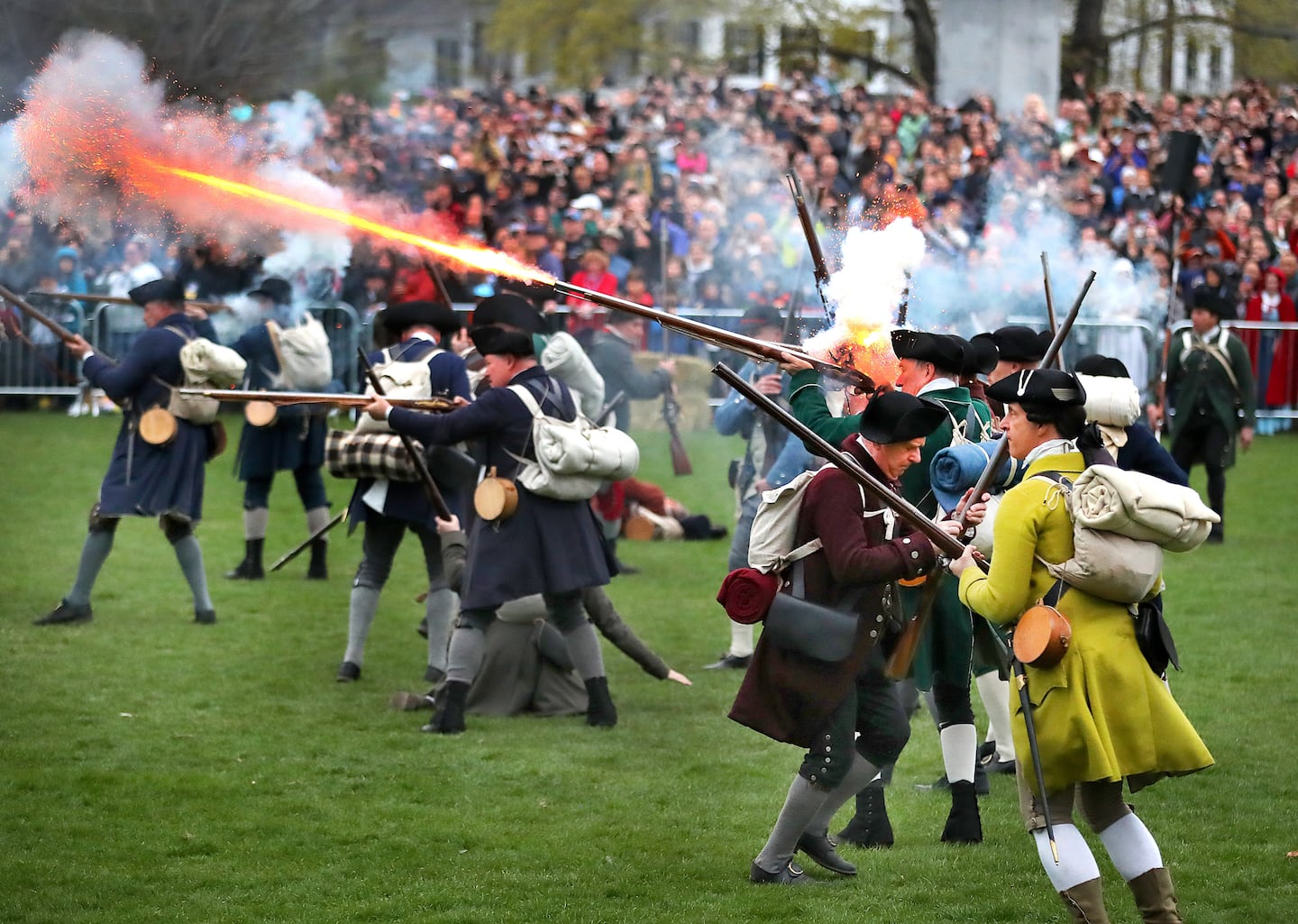
The Paul Revere House, for example, just recorded a post-COVID high for July of 40,000 visitors. A reenactment of the Battle of Bunker Hill in June drew an estimated 20,000 spectators to Gloucester over two days. A two-day Revolutionary tour this week from History Camp’s organizers sold out despite a price tag of nearly $1,000, which does not include lodging or transportation to Boston.
And a video program filmed at Old North Church for third-to-fifth-graders, centered on the mystery of who hung its famous lanterns, reached nearly 8,000 students in 39 states in the 2024-25 school year, more than double the previous year, said Nikki Stewart, executive director of Old North Illuminated, which operates and interprets the historic site.
Advertisement
“There is a market for history — something we in the academy have done our best to stifle,” said Robert Allison, a Suffolk University history professor and chair of Revolution 250, a Massachusetts nonprofit group.
“People are genuinely curious about the past and want to know about people who lived in a tumultuous and fractious time — uncertain about the future, making choices for their and their children’s lives — and want to see the places where these things happened,” Allison said.
Unlike many history conferences, History Camp’s organizers say, the gathering shuns the stodginess that sometimes cloaks formal academic get-togethers.
Presenters at History Camp don’t need a PhD after their names, academic language is discouraged, and the historically curious from a plethora of professions — attorneys, retired military officers, museum officials, and burgeoning novelists — are welcome to declaim on any topic that fascinates them to an audience of anyone who cares to listen.
“What History Camp looks for in presenters is the passion,” said Rebecca Flynt, the Texas author of “American Harlot,” who will be discussing Alexander Hamilton’s scandalous affair with Maria Reynolds.
“I have not run into anything else like History Camp. Most academic conferences are not open to people like me,” said Flynt, who has an undergraduate degree, but not in history.
To Wright, who lives in an 18th-century house, history can be a 360-degree experience of learning, touring, hobnobbing with experts, and interacting with other armchair amateurs.
Advertisement
“If you’re the person in your group who is really fascinated with history, where do you go to share your passion?” said Wright, 65, a native of Des Moines. “The one common denominator we have is a deep interest and deep appreciation for our nation’s history.“
Unsurprisingly, the Revolution will have a star turn at History Camp, from discussions about why the war began in 1775, to battlefield archeology at Saratoga, N.Y., to General George Washington’s ability to hold the Continental Army together during its brutal winter encampment at Valley Forge, Pa.
Victoria Underhill, 41, of Poolesville, Md., is hooked.
“I love to get behind the scenes with like-minded people, not just the fussy academic types. You learn from each other,” said Underhill, who has attended nearly every History Camp since 2017.
The camp falls under the umbrella of Pursuit of History, a national nonprofit organization that will operate the two-day Revolutionary tour this week. Limited to 40 time-travelers led by Newton author J.L. Bell, the tour will explore the siege and liberation of Boston, including visits to the sites of rebel fortifications in Somerville and Roxbury.

Despite their hefty bill, Underhill said, the tours are a fascinating chance to dig behind the scenes.
“I’ll do any of them if I don’t have a pre-commitment,” said Underhill, who joined an earlier tour in Santa Fe.
Pursuit of History is strictly apolitical, Wright said, and funded entirely through private, individual donations with no government funding.
Earlier this year, Bell led a small band of the historically curious through Lexington, Concord, and along the trail of the bloody British retreat to Boston following the “shot heard ‘round the world.”
Advertisement
At one stop in Lexington, they trudged up Belfry Hill to view a replica of the bell tower that warned the town’s militia of the British advance on April 19, 1775.
They did it in the rain. Cheerfully. Stepping carefully. And listening to sound bites of local history connected with the start of the Revolutionary War.
The climb was the dirty work. Much of that tour served up the Revolution with a touch of glam — an elegant dinner, deep-dive lectures, a chauffeured minibus, guided tours.

“It was just fascinating to learn part of the story that goes beyond ‘the British are coming,’ ” said Jim O’Shaughnessy of Wilbraham.
Wright said he is developing an ambitious series of Revolutionary tours to explore other milestones of the rebellion through the 250th anniversary of the 1783 Treaty of Paris, which ended the war.
“It was a long slog after the Declaration,” Wright said.
Pursuit of History is developing tours in Philadelphia; Trenton, N.J.; Saratoga, N.Y.; Valley Forge, Pa.; and Yorktown, Va. Potential offerings include, among others, Charleston, S.C.; Annapolis, Md.; Halifax, Nova Scotia; and potentially Fort Stanwix, N.Y., near upstate Utica, to shine a light on the Revolution in the overlooked interior.
But that’s for another time. At History Camp Boston, presentations on other eras are available, such as the forgotten story of NASA’s electronics research center in Cambridge, to the 19th-century “Fenian invasion” of Canada by Irish nationalists.
Wright draws his historical line at Richard Nixon’s presidency, however, meaning that more current, potentially divisive topics can’t be found.
“I chose the Nixon administration because it gets us to Vietnam and Watergate, and discussions about it today can be more objective,” Wright said.
Advertisement
“I’ve never had a political agenda or a social agenda or anything like that,” with History Camp, he said. “I firmly believe that more people knowing more about history is an inherently good thing.”
More than 400 campers seem inclined to agree.
Brian MacQuarrie can be reached at