
The movie is one of the latest from Angel Studios, which is devoted to TV shows and movies that “amplify light.” It successfully caters to a growing market of Americans who want values-driven entertainment and are dismayed with what they consider Hollywood’s nihilism and tired storytelling.
Advertisement
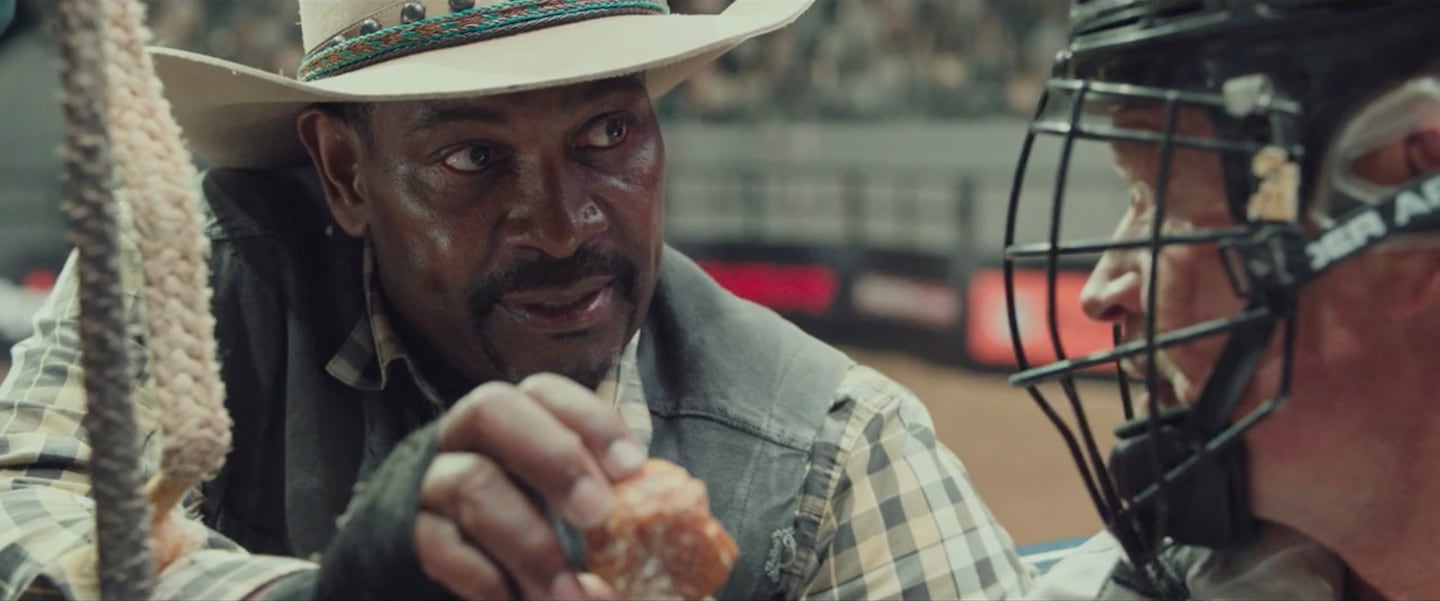
As the lights dimmed for the screening of “The Last Rodeo,” McDonough told a whooping crowd of family, friends, and fans that they’d see him kissing Ruvé in his portrayal of Joe Wainwright, a retired rodeo legend who has to return to bull riding in hopes of winning enough money for his ailing grandson’s cancer treatment.
Advertisement
Neal and Ruvé McDonough were coproducers on the film, giving them the creative freedom to shape the casting. But McDonough told me that it can be a gamble for major studios to sign off on such maneuvers. He believes his project only made it to the big screen because he worked with a studio that shares his values.
“They said, ‘Who do you want to play your wife in the film?’ And I said, ‘There’s only one person’s gonna play it; it’s my wife, Ruvé,’” McDonough told me. “And [Angel] said, ‘Well, that makes sense.’”
The differences between Angel Studios and Hollywood were apparent at the Texas premiere of “The Last Rodeo,” starting with the suggested dress code on the invitation: boots and bowties. A Stetson-sporting McDonough beamed with his gaggle of five children while Ruvé stunned in a floor-length gown of denim patchwork.
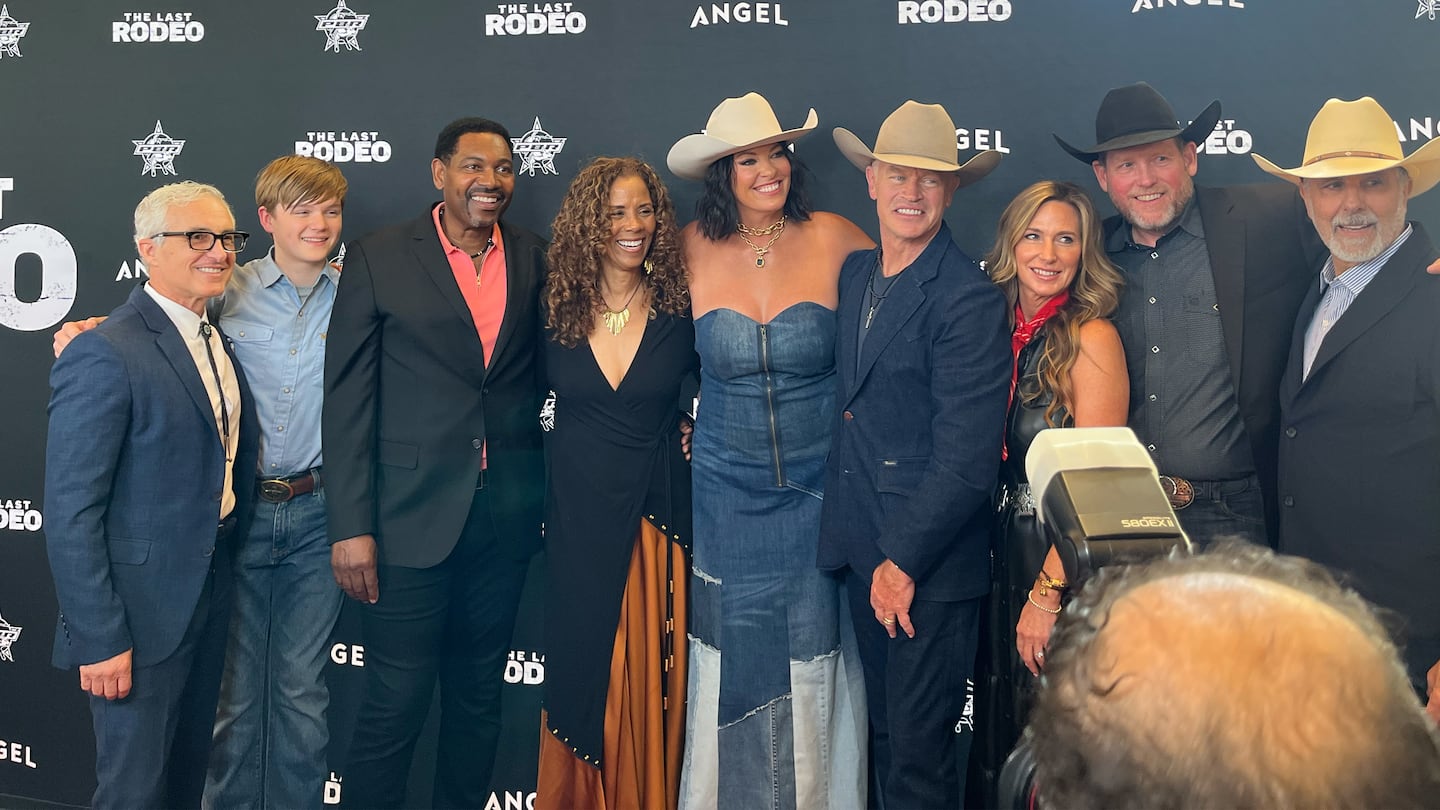
But the overall vibe was decidedly less about couture than culture. Speaking to a mix of press, country influencers, and Southwestern personalities lining the red carpet, people involved with the film were open about how “The Last Rodeo” deals with themes that aren’t popular in the Hollywood circles they know well.
The movie’s director, Jon Avnett, who directed “Fried Green Tomatoes” and produced “Black Swan,” told me about the film’s emphasis on “the power of family.” Mykelti Williamson, who portrayed Private Benjamin Buford “Bubba” Blue in “Forrest Gump” and plays Wainwright’s old friend in “The Last Rodeo,” said the movie tells a story of an America that’s “actually a good place, with a lot of good people in it.” He added: “She’s not perfect, but she’s worth it.”
Advertisement
Instead of a glitzy after-party, Angel put on a barbecue for fans and benefactors and their families. Parents holding hot dogs looked on with half terror, half amusement as little boys fought for the next turn on an electric bull. Rodeo queens in fringed red leather and rhinestone cowgirl hats took selfies, while toddlers took wobbly steps around the various field games. If you wanted to wash it down with a beer from the drink stand, you’d have to settle for a Coke.
It was unlike Hollywood in every way. And that’s been the key to Angel’s success.
Avoiding cringe and outrage
The American mainstream is in turmoil — and it’s not just the “liberal media” or lefty universities. It’s many of the cultural institutions that have been swallowed up by the progressive crazes of the last decade. From art museums to fashion magazines, popular culture has become less about the pursuit of beauty and excellence and more about railing against sexism and racism.
Actors have always had a knack for publicly fawning over progressive causes and shaking their fists at Republicans. But those progressive sensibilities have spilled over to the way films are made, too. Now it seems as if every movie that portrays a white or male protagonist needs a remake. (I’m looking at you, “She-Hulk: Attorney at Law.”)
It’s safe to assume that Americans who are sick of having progressive politics shoved down their throats might also feel as if it’s being stuffed into their popcorn buckets. That creates an opportunity for a studio like Angel to make entertainment for a market underserved by the mainstream.
Advertisement
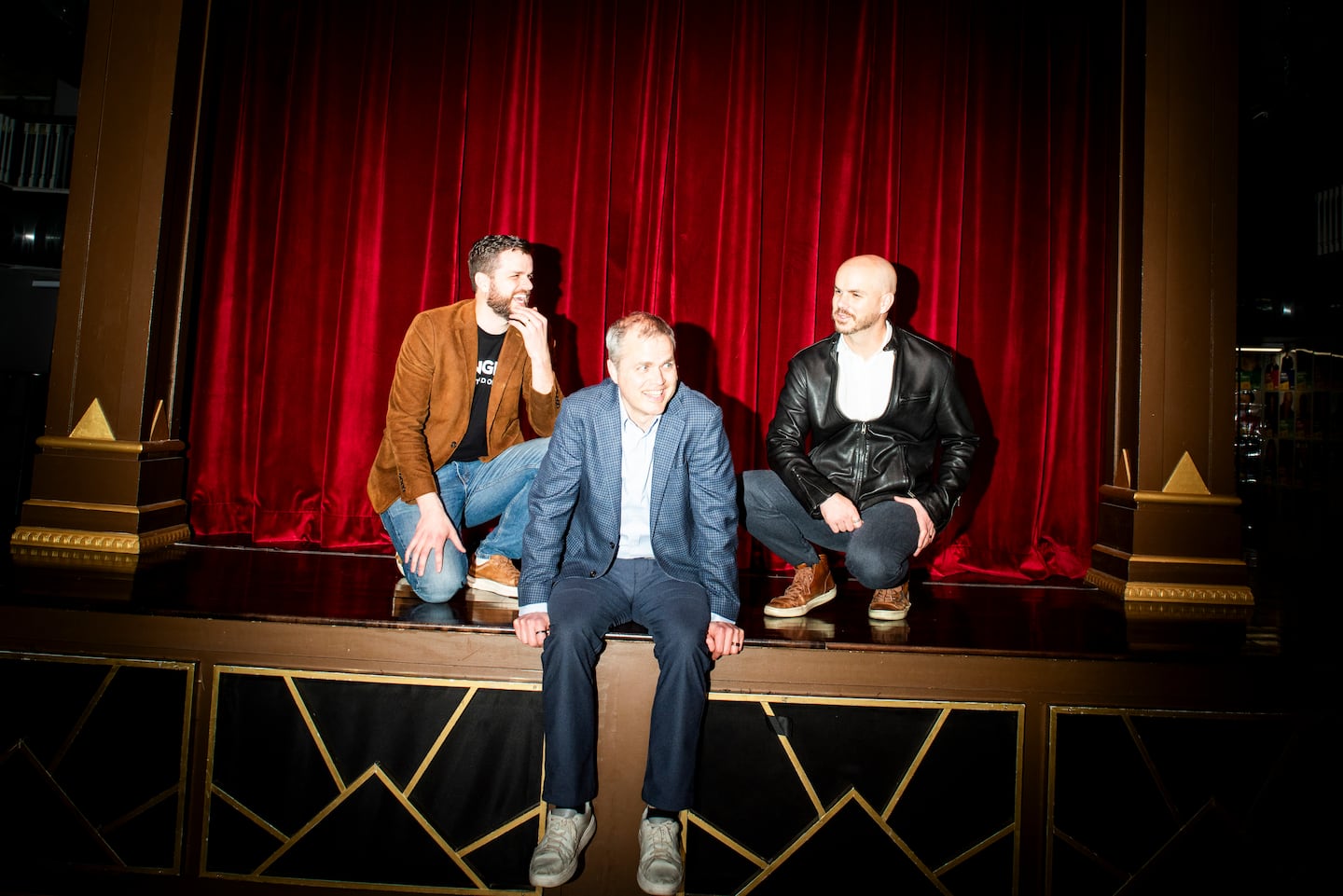
Starting with families. Angel’s cofounder Jeff Harmon says the studio began as the answer to a Harmon family problem. For him and his three brothers, Neal, Daniel, and Jordan, that problem was the erosion of values portrayed by Hollywood.
“I think for all of us as fathers, we were looking with our families at how quickly the entertainment was accelerating toward nihilism,” Jordan told me, sitting next to Jeff. Naming examples like “House of Cards” and “Game of Thrones,” he bemoaned the fact that “you watch a great movie, the whole thing’s great. And at the very end, the whole moral of the story is, ‘Everybody’s bad.’” The brothers figured that addressing this problem could make for a good business.
At the Fort Worth barbecue, I met Brittany Graves, a 36-year-old mother of four and member of the Angel Guild, whose roughly 1.2 million members pay a monthly fee for access to Angel’s content. She told me that “it’s a lot more refreshing to watch [Angel’s] movies than kind of the predictable Hollywood norm.” She describes herself as a Christian and homesteader, saying that she agrees more with “the values that are portrayed in [Angel’s] movies” than “just being hit with cussing and soft-core and sometimes even hard-core porn” that you get from Hollywood.
Nearby, Shandelyn Spadke told me that she and her husband, Trae, invest in Angel because they are “very firm believers in conservative ideas.” As she bounced a baby on her knee, the mother of five said, “Most of the time we have to censor and preview what they watch. But she doesn’t have that problem with “Tuttle Twins,” a children’s show that teaches lessons about “liberty, freedom, and economics.”
Advertisement
The Harmons say that Angel is essentially replacing the traditional tastemakers who turn up their noses at values-infused entertainment. “Filmmakers have no issue making great family content; they don’t have an issue making faith content, as long as it resonates and it’s good storytelling, and it’s done with craftsmanship,” Jeff Harmon says. What’s missing are studio executives who want this kind of entertainment. “You replace those gatekeepers — these executives that are out of touch, generally don’t have normal families, don’t look like Middle America; they don’t look like the rest of the world — and you replace those people with the people who are the rest of the world.”
That’s where the idea for the Angel Guild came from. The members pay $12 and up per month for access to the programming at home — and the ability to shape it. Angel only produces films that the guild members want to see.
First they vote on a “torch,” or a proof of concept from filmmakers, like a short clip or a pilot episode. If the torch passes the guild, filmmakers can go on to produce their projects. But members also get to vote on final cuts and even provide feedback. Jordan Harmon says Angel Studios filmmakers have gotten more than 100,000 comments from guild members over the last 18 months.
The Harmons believe that this is the key to Angel’s high audience ratings. Angel reports an average 93 percent Rotten Tomatoes audience score, beating out all the top 10 studios. In 2023, Angel’s “Sound of Freedom,” a film about a child trafficking rescue starring Jim Caviezel, got Rotten Tomatoes’ highest audience score at 99 percent, even beating out “Taylor Swift: The Eras Tour.” At the box office, Angel is currently ranked the ninth-highest-grossing movie distributor in 2025, up from number 14 in 2024.
Advertisement
Some of Angel’s films deal with conservative themes or religious subjects, but it would be a mistake to lump them in with overtly conservative entertainment projects — like those produced by the entertainment studio that the Daily Wire, a conservative news outlet, announced in 2021. If titles like “Am I a Racist?” and “What Is a Woman?” don’t give it away, many Daily Wire productions are an attempt to make entertainment out of owning the libs. Other conservative productions can be driven overtly by religion and are less concerned with production values and storytelling.
Angel avoids earnest cringe and political outrage.
That’s because its projects aren’t ever just characterized by a political or religious message. Even the New York Times review of “The Last Rodeo” conceded that the movie kept “religious prodding to a minimum.” The bull rider’s renewal of faith during a time of hardship is an aside. Instead, the movie mostly deals with the challenges of cancer, grief, and, most of all, how difficult a father-daughter relationship can be when life gets tough.
The deference to storytelling over pontificating hasn’t stopped critics from trying to label Angel conservative ideologues. “Sound of Freedom,” for example, was bashed by liberals for apparently indulging QAnon conspiracy theories about child trafficking rings. The movie’s star, Jim Caviezel, has been associated with QAnon, though Angel explicitly distanced itself from the conspiracy group’s viewpoints. Does creating a movie based on a true story about the horrors of child trafficking mean the studio is peddling conspiracies?
The Harmons, who belong to the Church of Jesus Christ of Latter-day Saints, call Angel a “faith-friendly” studio and don’t allow their productions to take the lord’s name in vain. But the themes and stories they help produce are determined by the Angel Guild, and will evolve as it grows.
And since it is serving an underserved market, an initial rightward tilt is to be expected. What’s surprising is just how large that market seems to be. “Our hypothesis is that we’re actually going for the biggest segment of the entire entertainment world,” Jordan told me.
In collaboration with the Faith and Media Initiative, Harris X conducted a study of 10,000 consumers across 11 countries and found that 63 percent felt that “entertainment perpetuates religious stereotypes.” Another 68 percent said they want entertainment that shows “more diverse perspectives about various faiths.” For the Harmons, it’s a sign that there’s a demand for dynamic storytelling about religion.
Like the film “Cabrini,” which tells the story of Mother Francis Xavier Cabrini’s life and ministry to poor immigrants, especially orphaned Italian children in New York City. On the surface this is a story about a Catholic saint. But it deals with themes like standing up to the male-dominated church leadership and overcoming racism through her work for the poor and scorned migrants in America. The film earned a Rotten Tomatoes audience score of 98 percent and did well with critics. One wrote that the film is less about faith and more about “Mother Cabrini’s unshakable determination.”
Some Angel productions aren’t religious at all. Tony Hale, known for his role as Buster Bluth in the hit show “Arrested Development,” is starring in a movie about the adventure a single dad and his daughter have when her drawings come to life.
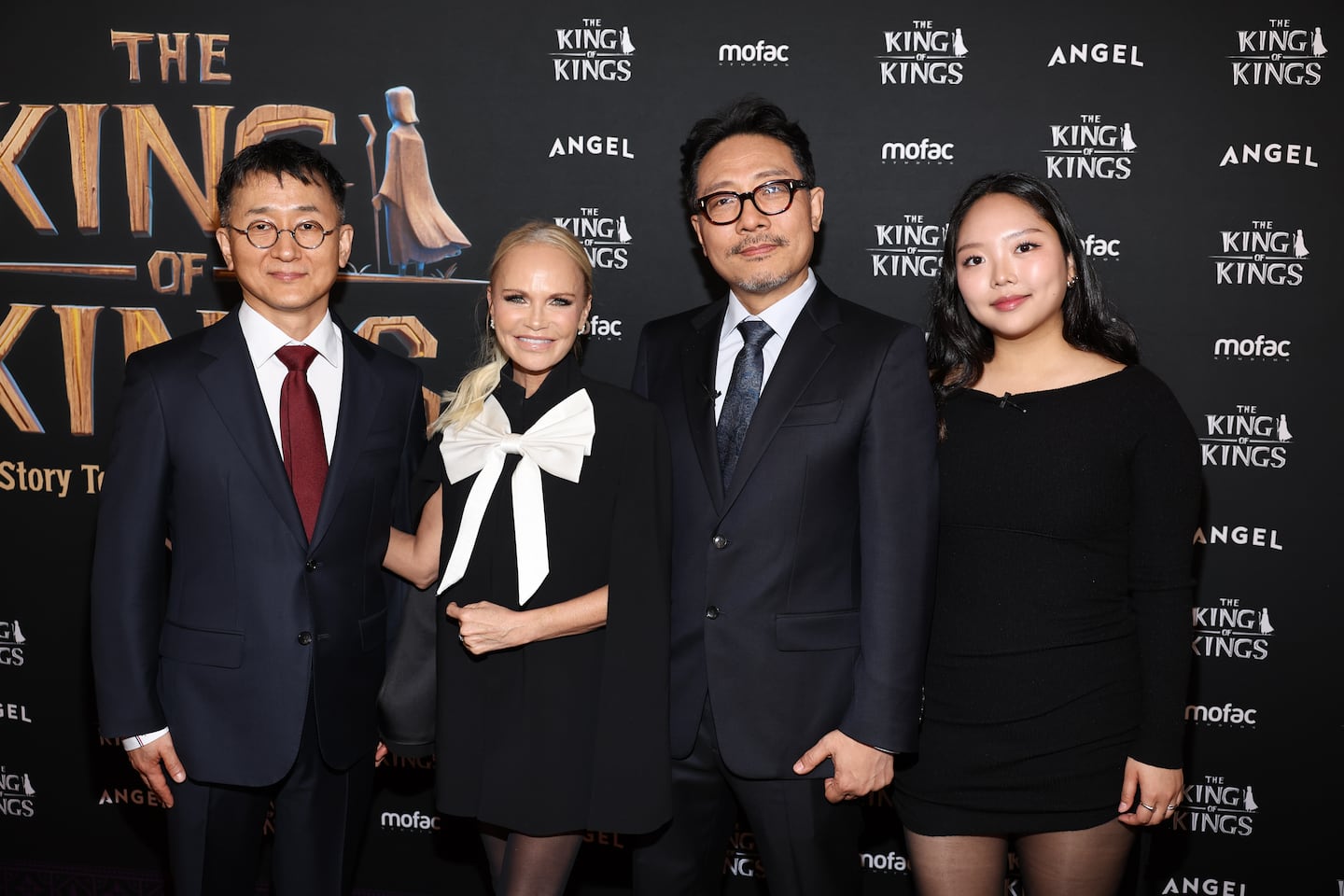
Even though the Harmons have kept to the sidelines of the raging culture wars, they have clearly benefited from conservative victories. Like Donald Trump’s gutting of what he calls the “woke” and “terrible” Kennedy Center, which has been a weathervane for American entertainment for decades. There won’t be a repeat of the drag show it hosted for children last year. This summer, the Kennedy Center’s Concert Hall in Washington is screening Angel’s “The King of Kings,” which depicts an animated Charles Dickens sharing the story of Jesus’ life with his son.
But Angel isn’t interested in sticking it to the mainstream — its intention is to become the mainstream. “Stories are upstream from culture,” Jordan Harmon says. And Angel intends to produce “some of the most timeless stories throughout history.”
Carine Hajjar is a Globe Opinion writer. She can be reached at