
How Republican Endowment Tax Targeted Yale, Princeton, and MIT (and Missed Harvard and Others)
Sign up for the Slatest to get the most insightful analysis, criticism, and advice out there, delivered to your inbox daily.
Congressional Republicans and their White House overlords hate American higher education, but that may just be resentment at having flunked their college math courses. They gleefully included a punishment on elite universities in the One Big Beautiful Bill: a new 8 percent tax rate on the investment income earned by wealthy schools’ endowment funds. However, in their rush to pass the bill, they seem to have failed to comprehend that this top rate would apply to essentially no institutions—just three, two of which can easily wiggle out of it.
Maybe it makes sense that the endowment tax has amounted to little more than old-fashioned grandstanding. It’s possible the bill’s architects fully understood that the tax would be narrow, and only wanted to pretend that they are enacting Donald Trump’s vendetta against America’s top universities. It’s also possible that Republican senators, who watered down the tax from a much more aggressive rate in the House of Representatives’ version of the OBBB, were operating at the behest of a well-funded lobbying campaign from the higher-education sector itself. But the most likely scenario seems to be a Republican caucus whose eagerness for blood from elite schools outran its ability to perform some pretty simple equations.
The man most likely responsible for introducing the idea of this spiteful tax is Vice President J.D. Vance, who as a U.S. senator proposed a tax of 35 percent on the endowments of the nation’s wealthiest universities. Speaking in support of his 2023 bill (which had no co-sponsors and never got a committee hearing), Vance explained himself: “America’s colleges seem less and less interested in education and more and more interested in teaching things like racial hatred and various forms of far-left ideology. … University endowments [have] grown incredibly large on the backs of subsidies from the taxpayers, and they have made these universities completely independent of any political, financial, or other pressure. That is why the university system in this country has gone so insane.”
The House version of the OBBB contained a 21 percent rate on the endowments, a provision that, Ways and Means Committee Chair Jason Smith crowed, “holds woke, elite universities that operate more like major corporations … accountable, ensuring they can no longer abuse generous benefits provided through the tax code.” Then the Senate, in its apocryphal “cooling saucer” role, brought the rate down to a mere 8 percent, which still represents a nearly sixfold increase over the existing 1.4 percent endowment tax—the first of its kind in U.S. history—that was part of the Republican tax bill passed in 2017.
But that high 8 percent rate is essentially meaningless, because the enacted OBBB applies that rate only to private institutions with student bodies over 3,000 and with endowments that average more than $2 million per enrolled student. To determine the number of affected schools, I ran the numbers using the latest available data—a ratio of self-reported endowments (in public end-of-year reports) as of 2024 to full-time-equivalent student counts for the 2022–23 school year, as documented on the federal IPEDS website. The enrollment totals that the legislation uses to calculate the average include both undergraduates and graduates, in the form of “the daily average number of full-time students attending such institution (with part-time students taken into account on a full-time student equivalent basis).”
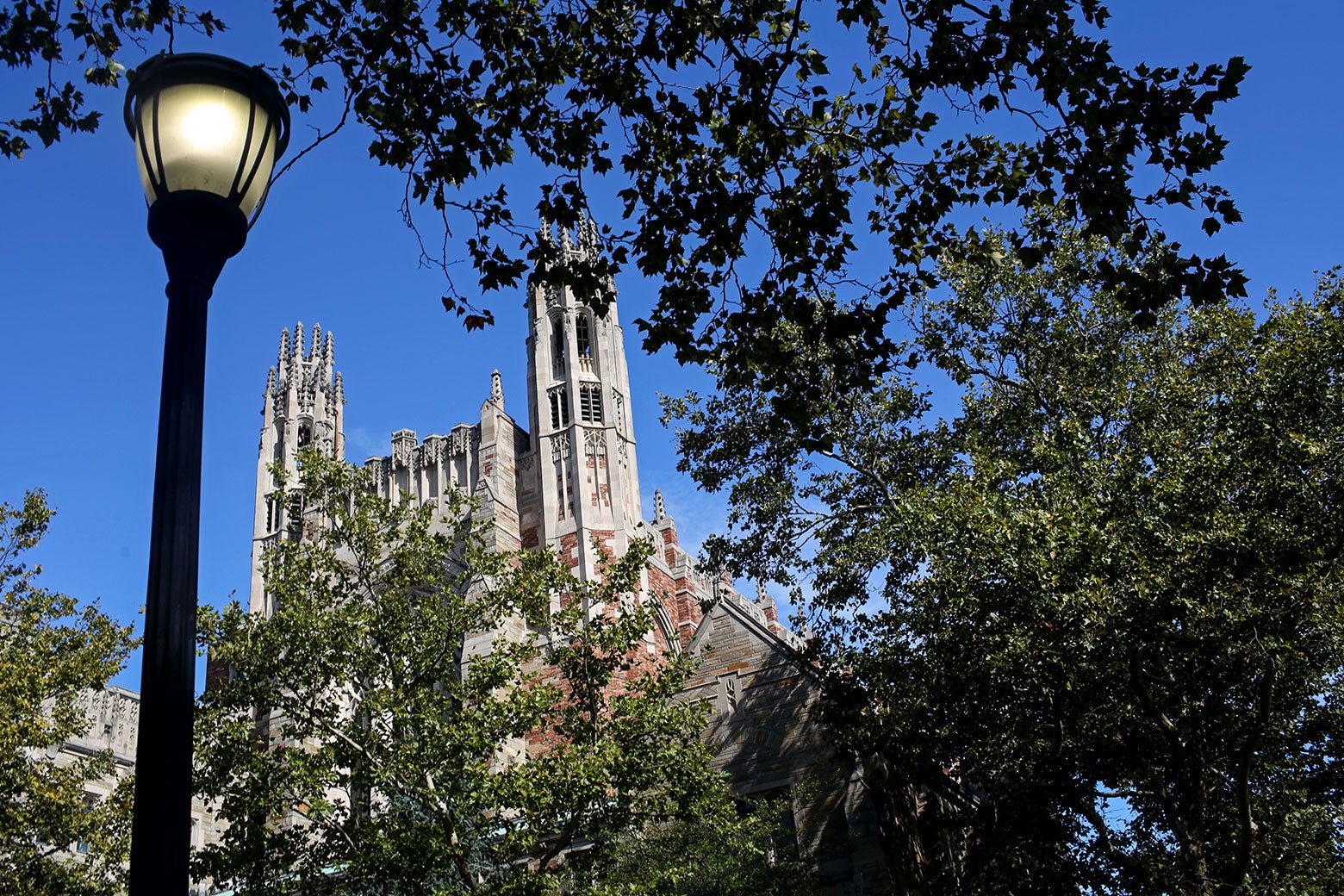
The grand total of institutions that will have to pay the highest rate, in my analysis? Three. Not a typo. They are Yale, Princeton, and MIT. Not Harvard, which the Trump administration has painted as an enemy of the people, whose endowment averages out at $1.7 million per full-time-equivalent student. Harvard will now have to pay a 4 percent rate—certainly not nothing, but just half of the top rate in the Republicans’ inexplicably noncontinuous marginal scheme. Not Columbia, the “woke” bugaboo that clocks in at a measly $445,000 per FTE student, meaning that it has no tax liability at all under the new law. And certainly not liberal bastions like Amherst and Wellesley, which incredibly get a tax cut in the OBBB, since they fall under the 3,000-student cutoff (which did not apply in the 2017 version of the tax).
What’s Next for These Universities?
Yale’s task is to add 600 students—possibly through new online programs—to reduce its endowment per student below the threshold. Yale could even launch a large, free online graduate program in political ethics—an idea that, while costly, could save it millions annually in taxes and advance academic goals.
MIT could similarly add students or grow its graduate programs to drop below the $2 million per student threshold, with relatively manageable adjustments.
Princeton, on the other hand, faces an almost impossible challenge: doubling its size just to stay under the 8 percent tax bracket, due to its massive $34 billion endowment. Donor restrictions make it unlikely to liquidate assets or give away its endowment, leaving it largely unaffected by this specific tax.
In the end, the tax turns out to be a narrow and somewhat meaningless blow to only a handful of elite universities, exposing the flaws in the Republican approach to targeting higher education through oversimplified metrics and assumptions.