
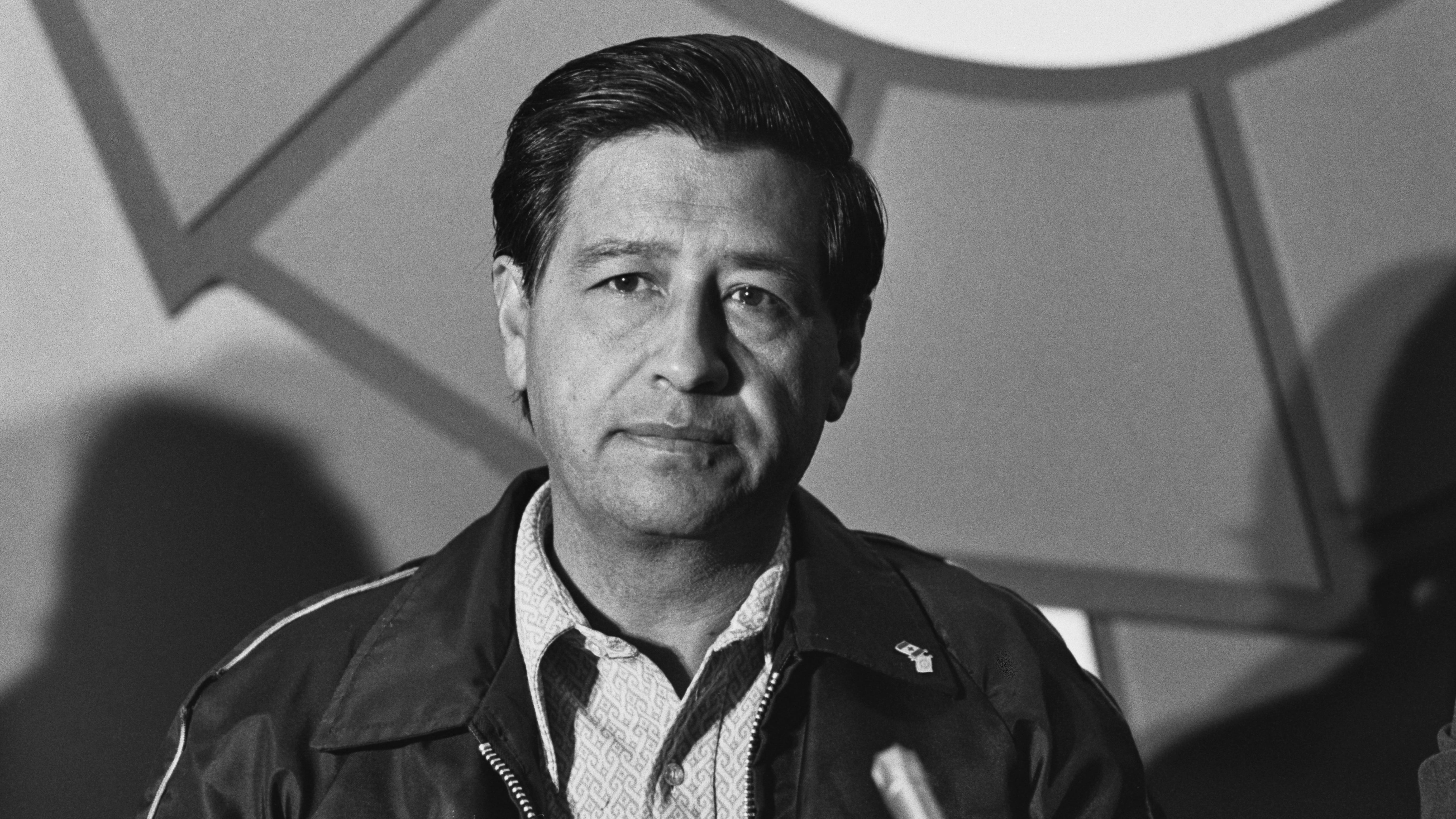

Show Caption
The United Farm Workers says it will not participate in Cesar Chavez Day events this year, citing what it called “deeply troubling” allegations involving one of the union’s co-founders.
In a statement released Tuesday, March 17, the UFW said it had learned of allegations that Cesar Chavez “behaved in ways that are incompatible with our organization’s values.” Chavez, a central figure in the farm labor movement, co‑founded the union and is widely honored across California, where streets, schools and public buildings bear his name.
The union said it does not have firsthand knowledge of the allegations and has not received direct reports. Still, it said the claims were serious enough to prompt the decision to step back from public celebrations.
“Some of the reports are family issues, and not our story to tell or our place to comment on,” the union said. “Far more troubling are allegations involving abuse of young women or minors.”
Cesar Chavez Day is observed annually on March 31 and is recognized as a state holiday in California.
Here's what to know about Chavez, the UFW, and the current controversy.
Who was Cesar Chavez?
Cesar Chavez was a labor organizer and civil rights activist who became one of the most influential figures in the modern farmworker movement, particularly in California and the American Southwest.
Born in 1927 in Yuma, Arizona, Chavez grew up in a family of migrant farmworkers and experienced poverty and unstable housing firsthand. Those experiences shaped his later activism and commitment to improving working conditions for agricultural laborers, many of whom were immigrants and people of color with few legal protections.
Chavez rose to prominence in the 1960s after co‑founding what would become the United Farm Workers. He advocated for nonviolent protest, drawing inspiration from figures such as Mahatma Gandhi and the Rev. Martin Luther King Jr. His organizing efforts included strikes, marches, boycotts and prolonged fasts that drew national attention to the treatment of farmworkers.
Among the most notable campaigns associated with Chavez was the Delano grape strike and subsequent grape boycott, which helped push growers to recognize unions and negotiate labor contracts. The movement brought issues such as low wages, pesticide exposure and unsafe working conditions into the national conversation.
Over time, Chavez became a symbolic figure for labor rights, Latino civil rights and social justice causes. His image and name are widely recognized across California, where schools, streets, parks and public buildings bear his name. California also observes Cesar Chavez Day each year on March 31, marking his birthday.
Chavez died in 1993 at the age of 66.
History of the UFW
The United Farm Workers traces its roots to the early 1960s, when farm laborers — many of them immigrants and people of color — were excluded from basic labor protections and worked under harsh conditions with little political power.
Chavez, Dolores Huerta and other organizers founded what began as the National Farm Workers Association, which later became the UFW. The union focused on organizing agricultural workers facing low wages, pesticide exposure and limited access to healthcare.
The UFW gained national attention through nonviolent campaigns, including strikes, marches, boycotts and public fasts. The Delano grape strike and grape boycott helped propel farmworker conditions into the national spotlight and drew support from labor, religious and civil rights groups.
Over time, the union won contracts that improved wages, working conditions and protections for farmworkers, becoming closely identified with Chavez and his leadership. While the UFW’s influence later ebbed amid legal, political and internal challenges, it remained a powerful symbol of farmworker advocacy.
Today, the UFW continues to represent farmworkers and engage in political organizing, even as it reassesses how its history — and the legacy of its founders — is understood. Its decision to step back from Cesar Chavez Day events reflects that moment of reckoning.
Schools, streets and memorials named for Cesar Chavez in California
Cesar Chavez’s name is embedded across California’s civic landscape, reflecting decades of recognition for his role in the farmworker and labor movements. His name appears on public schools, parks, libraries, community centers and government buildings throughout the state, particularly in regions closely tied to agricultural labor and civil rights history.
Major California cities have also renamed prominent streets and corridors for Chavez, placing his legacy into everyday navigation and public life. Los Angeles, San Francisco, San Jose, Sacramento, Fresno, Oakland and San Diego all have streets, boulevards or plazas that carry his name, many of them former major thoroughfares renamed through city council action.
In addition to schools and streets, Chavez is memorialized through parks, plazas and monuments that serve as gathering spaces and sites for commemorations. These locations are often used for Cesar Chavez Day events, labor rallies, educational programs and community celebrations tied to his legacy and the broader farmworker movement.
California also formally recognizes Chavez through Cesar Chavez Day, observed each year on March 31 as a state holiday. The holiday reinforces how deeply his legacy is woven into public institutions, education systems and civic culture across the state — beyond individual memorials and place names
Examples of California places named for Cesar Chavez
- Avenida Cesar Chavez — Los Angeles
- Cesar Chavez Street — San Francisco
- Plaza de César Chávez — San Jose
- Cesar E. Chavez Plaza — Sacramento
- Cesar Chavez Boulevard — Fresno
- César E. Chávez Park — Berkeley
- César E. Chávez Park — Oakland
- César E. Chávez Waterfront Park — San Diego
- César E. Chávez Park — Delano
- Cesar Chavez Middle School — Union City
- César Chávez High School — Stockton
- Cesar E. Chavez National Monument — Keene (Kern County)
Criticism of Chavez’s leadership and allegations of abuse
While Chavez has been widely celebrated, historians and former members of the farmworker movement have long debated aspects of his leadership, including internal union practices and decision‑making.
Chavez believed undocumented workers were undermining strikes, a view that led the UFW to take aggressive steps in the late 1960s and 1970s, including so‑called “wet lines” aimed at stopping border crossings and an “Illegals Campaign” that encouraged reporting undocumented workers to federal authorities. Historians, including biographer Miriam Pawel, have documented allegations that some encounters involved intimidation and violence. Chavez also used language to describe strikebreakers that critics say would draw sharp condemnation today.
The current allegations referenced by the UFW and the Cesar Chavez Foundation add a new layer of scrutiny to Chavez’s legacy. While neither organization has provided details or firsthand confirmation, both emphasized the seriousness of the claims, reinforcing what many scholars describe as a complicated legacy that includes both transformative achievements and deeply contested actions.