

1. Acceptance of Terms
By accessing or using the website https://national-coalition.us (the “Site”), including any subpages, membership registration, article viewing, or related services (collectively, the “Services”), you agree to be bound by these Terms of Service (“Terms”). If you do not agree, you must immediately cease all use of the Site. Continued use constitutes ongoing acceptance. These Terms form a binding legal agreement between you and the operator of National Coalition (referred to as “we,” “us,” or “our”). We reserve the right to update these Terms at any time, as detailed in Section 14.
Nuance and implication: This “browse-wrap” acceptance is standard for content platforms but includes an explicit notice to enhance enforceability, as upheld in cases like Specht v. Netscape (U.S. courts have scrutinized implied consent). For users who register (see Section 4), a click-wrap confirmation will apply during signup.
2. Description of Services
The Site is an informational platform publishing original articles, analyses, and commentary on U.S.-centric topics, including but not limited to American High Schools, Government, Businesses, Justice, Healthcare, Economics, Universities, Food and Drugs, and emerging issues such as AI advancements and political developments. Content is primarily authored by designated contributors (e.g., “TheCoalitionGuy”). Membership registration enables access to enhanced features, such as personalized updates or archived content (exact features may evolve). The Services are provided “as is” for informational purposes only and do not constitute legal, medical, financial, or professional advice.
Context and examples: Similar to platforms like national news aggregators, the focus remains editorial rather than interactive. Edge case: Users seeking actionable guidance (e.g., on healthcare policy) are directed to consult licensed professionals, preventing liability as seen in disclaimer-heavy sites like WebMD.
3. Eligibility and User Representations
You must be at least 18 years old (or the age of majority in your jurisdiction) to use the Services. By using the Site, you represent that you meet this requirement, have the legal capacity to agree to these Terms, and will comply with all applicable U.S. federal, state, and local laws. International users acknowledge that the Services are directed primarily to U.S. audiences and may not fully comply with foreign regulations (e.g., GDPR).
Multiple angles: This protects against underage access (COPPA implications) while addressing global reach—nuance: enforcement against foreign users relies on U.S. jurisdiction (see Section 13), a common limitation for .us domains.
4. User Accounts and Membership
Registration is optional but required for membership features. You agree to provide accurate, current information and maintain its confidentiality. You are solely responsible for all activity under your account. We may suspend or terminate accounts for violations, suspected fraud, or inactivity (defined as 12+ months without login). Password resets and two-factor authentication may be implemented at our discretion.
Examples and edge cases: Account sharing is prohibited (a frequent violation on membership sites). Implication: Termination is at our sole discretion, mirroring policies on platforms like Substack, but users receive notice where feasible to balance fairness.
5. Intellectual Property Rights
All content on the Site—including articles, logos, design elements, and underlying code—is owned by us or our licensors and protected by U.S. copyright, trademark, and other intellectual property laws. You may view and print limited excerpts for personal, non-commercial use only, with proper attribution. Any reproduction, distribution, modification, or commercial use requires prior written permission. User-submitted feedback or suggestions (if any) become our property.
Nuances: Content is opinion-based and protected under the First Amendment; however, fair-use doctrines (17 U.S.C. § 107) apply to third-party quoting. Implication: This deters scraping or AI training on our material, a growing concern post-2023 copyright rulings involving generative tools.
6. User Conduct and Prohibited Activities
You agree not to: (a) interfere with Site operations (e.g., via bots, scraping, or DDoS); (b) post or transmit unlawful, defamatory, harassing, or infringing material (if comment features are later enabled); (c) impersonate others; (d) use the Services for commercial solicitation without permission; or (e) violate any applicable law. We reserve the right to monitor, remove, or moderate content at our discretion without notice.
Thorough considerations: No user-generated articles exist currently, but this section future-proofs for expansions. Edge case: Political commentary could invite takedown requests—response follows Section 230 of the Communications Decency Act (47 U.S.C. § 230), shielding us as a platform provider while allowing editorial control.
7. Disclaimers and No Warranties
The Services are provided “AS IS” and “AS AVAILABLE” without warranties of any kind, express or implied, including accuracy, completeness, timeliness, or fitness for a particular purpose. We do not guarantee uninterrupted access or freedom from errors, viruses, or third-party interference. Content reflects opinions as of publication and may not represent current events.
Implications from multiple angles: Critical for a news-style site to avoid liability for outdated economic or justice analyses (e.g., evolving Supreme Court rulings). Example: Healthcare articles disclaim medical advice, reducing malpractice exposure.
8. Limitation of Liability
To the fullest extent permitted by law, we shall not be liable for any indirect, incidental, special, consequential, or punitive damages arising from your use of the Services, even if advised of the possibility. Our total liability shall not exceed $100 or the amount you paid us in the prior 12 months (whichever is greater). This limitation applies regardless of the legal theory (contract, tort, etc.).
Nuance: Caps are standard in U.S. ToS (e.g., Twitter/X precedents) but may be unenforceable in certain consumer-protection states; users in high-regulation jurisdictions (e.g., California) should note potential variations.
9. Indemnification
You agree to indemnify, defend, and hold us harmless from any claims, losses, or damages arising from your breach of these Terms, your use of the Services, or any content you transmit (if applicable).
10. Termination
We may terminate or suspend your access at any time, with or without cause or notice, for conduct violating these Terms or harming the platform. Upon termination, your right to use the Services ceases immediately, though Sections 5, 7, 8, 9, and 13 survive.
Edge case: Mass terminations during high-traffic political events could raise free-speech questions, but as a private platform, we retain discretion.
11. Privacy
Your use is also governed by our Privacy Policy (to be published separately). By using the Site, you consent to data practices described therein, including collection of registration details for membership management.
12. Third-Party Links and Content
The Site may link to external resources. We are not responsible for their content, privacy practices, or availability. Inclusion does not imply endorsement.
13. Governing Law and Dispute Resolution
These Terms are governed by the laws of the United States of America and the Commonwealth of Massachusetts, without regard to conflict-of-laws principles. Any disputes shall be resolved exclusively in the state or federal courts located in Boston, Massachusetts. You waive jury trials and class-action participation where permitted. International users submit to this jurisdiction.
Context: Massachusetts selection provides a neutral U.S. forum consistent with the user’s IP context and common for East Coast operators; alternatives (e.g., arbitration) could be added for efficiency.
14. Changes to These Terms
We may revise these Terms by posting an updated version on the Site with a new effective date. Your continued use after changes constitutes acceptance. We encourage periodic review.
15. Miscellaneous
These Terms constitute the entire agreement, superseding prior understandings. If any provision is invalid, the remainder remains enforceable. No waiver of rights is implied by delay. Contact us at [placeholder:
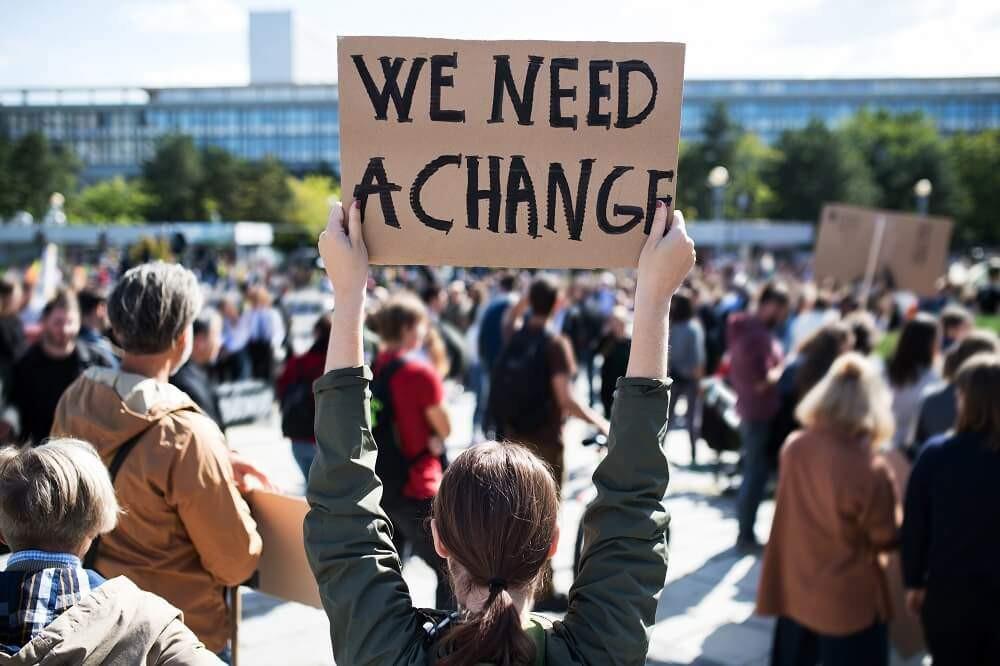
Activism in the United States represents a cornerstone of the nation's democratic experiment, embodying the collective efforts of individuals and groups to drive social, political, economic, or environmental change—or, in some cases, to resist it. Defined broadly as "efforts to promote, impede, direct or intervene in social, political, economic or environmental reform," activism encompasses everything from organized marches and boycotts to online advocacy and lobbying. It is not merely protest for its own sake but a rational, often legitimate expression of dissent in a republic founded on principles of liberty and self-governance. As one scholarly overview notes, activism is "a dynamic process through which individuals and groups strive for social or political change," with deep roots tracing back to the early republic and accelerating through labor rights campaigns, women's suffrage, and beyond.
Yet activism in America is neither monolithic nor without controversy. It operates across ideological spectra—liberal, conservative, progressive, and populist—yielding landmark reforms alongside periods of backlash, polarization, and debate over its methods and efficacy. This article examines its historical evolution, diverse forms, legal safeguards, transformative role in the digital age, notable successes and criticisms, public perceptions, and broader implications for American society. In doing so, it highlights nuances: activism's power to expand rights and its potential to exacerbate divisions, including rare escalations into violence or performative gestures that yield limited tangible outcomes.
Historical Foundations: From Abolition to the Civil Rights Era
American activism predates the nation's founding but gained momentum in the 19th and 20th centuries amid profound inequities. Early efforts focused on ending slavery and securing voting rights for women and marginalized groups. Peaceful protest formed the bedrock, as seen in the abolitionist movement and the women's suffrage campaign, which culminated in the 19th Amendment's ratification in 1920 after decades of marches, petitions, and civil disobedience.
The mid-20th century marked a pivotal surge. The Civil Rights Movement of the 1950s and 1960s, led by figures like Martin Luther King Jr. and organizations such as the NAACP, employed nonviolent tactics—including sit-ins, boycotts (notably the Montgomery Bus Boycott), freedom rides, and the 1963 March on Washington—to dismantle Jim Crow segregation. These actions directly influenced landmark legislation: the Civil Rights Act of 1964, which banned discrimination based on race, color, religion, national origin, and sex, and the Voting Rights Act of 1965. Parallel movements emerged, including anti-Vietnam War protests, farmworkers' advocacy under Cesar Chavez and Dolores Huerta, and the early stirrings of LGBTQ+ rights following the 1969 Stonewall Rebellion.
This era also saw conservative and labor activism, such as union drives for workers' rights and later movements like the anti-abortion cause. Interactive historical mappings underscore how these efforts spanned geographies, from urban centers to rural South, reshaping laws and norms. The legacy endures: activism proved instrumental in expanding democratic participation, yet it often faced violent opposition, underscoring the personal risks involved—from arrests to assassinations.
Forms and Methods: Traditional, Digital, and Hybrid Approaches
Activism manifests in myriad ways, each with distinct strengths and limitations. Traditional methods include street protests, petitions, boycotts, and direct lobbying, which build community solidarity and generate media attention. The Fight for $15 minimum wage campaign, for instance, combined worker strikes with legislative pushes, leading to wage hikes in dozens of states and cities by 2020.
In the 21st century, digital activism has revolutionized the landscape. Social media platforms enable rapid mobilization, hashtag-driven awareness (#BlackLivesMatter, #MeToo), and global amplification. What began as a 2013 hashtag following Trayvon Martin's acquittal evolved into a nationwide movement against police violence, surging after high-profile incidents like the 2020 killing of George Floyd. Similarly, #MeToo exposed systemic sexual harassment, prompting corporate firings and cultural shifts.
Digital tools lower barriers to entry—allowing "slacktivism" like profile blackouts or viral challenges (e.g., the ALS Ice Bucket Challenge, which raised over $100 million)—but also foster sustained engagement. Research indicates social media reframes narratives from isolated incidents to systemic issues, sustaining "protest cycles" across events. Hybrid models blend online organizing with offline action, as seen in 2020 protests where TikTok users and K-pop fans disrupted rally attendance estimates or bail funds raised millions via shared donation drives.
Edge cases abound: performative online activism risks superficiality, while foreign or astroturfed efforts (coordinated fake grassroots campaigns) complicate authenticity. Corporate "woke" branding or backlash (e.g., against DEI initiatives) adds another layer, sometimes diluting or commercializing movements.
Legal Protections: The First Amendment's Shield—and Its Boundaries
U.S. activism enjoys robust constitutional safeguards under the First Amendment, which protects speech, assembly, petition, and the right to "peaceably assemble." Supreme Court precedents affirm broad leeway for protest, even when disruptive or offensive. In *Texas v. Johnson* (1989), flag burning was deemed protected symbolic speech; *Tinker v. Des Moines* (1969) upheld students' armband protests against the Vietnam War; and *Snyder v. Phelps* (2011) shielded funeral picketers' hateful messages as public concern speech.
The Court has repeatedly emphasized that government cannot suppress speech merely because it invites dispute or angers observers, as in *Terminiello v. Chicago* (1949): "A function of free speech... is to invite dispute." Boycotts and nonviolent civil disobedience also receive protection, per *NAACP v. Claiborne Hardware* (1982).
Limits exist: incitement to imminent lawless action, true threats, or violence fall outside protections (*Brandenburg v. Ohio* standard). Time, place, and manner restrictions (e.g., permits for large gatherings) are permissible if content-neutral. Recent cases highlight tensions, such as debates over protest organizer liability for third-party violence or restrictions near private residences. In polarized times, these boundaries test democratic resilience, with critics on all sides alleging selective enforcement.
Impact, Criticisms, and Public Opinion: Successes Amid Skepticism
Activism's track record includes undeniable victories—legal equality for African Americans, women's suffrage, marriage equality for same-sex couples, and environmental regulations—yet outcomes vary. Movements like Occupy Wall Street spotlighted inequality without immediate policy wins, while Black Lives Matter influenced policing reforms and public discourse, though measurable systemic change remains debated.
Criticisms include "slacktivism," where low-effort online actions substitute for sustained commitment, or risks of echo chambers amplifying extremes. Polarization has intensified: some view activism as essential to accountability; others see it as destabilizing. Recent polls (2025) reveal heightened concerns, with roughly one-third of Americans believing political violence may be justified "to get the country back on track"—a striking shift reflecting eroded trust, though support for actual violence remains low and context-dependent (higher among certain partisan groups). Democrats and Republicans diverge sharply on protest characterizations, with the former more likely to view recent actions as peaceful.
Challenges in the current era (2025–2026) include authoritarian-leaning pressures on voting and assembly, rising populist disruptions, and digital fatigue. Edge cases involve foreign interference in online campaigns or movements co-opted by elites, diluting grassroots authenticity.
Implications for Democracy and the Road Ahead
Activism remains vital to American democracy, holding power accountable and adapting to societal shifts—from labor strikes to climate strikes and beyond. It fosters innovation in advocacy but risks deepening divides if unchecked by civility or facts. As social media evolves and legal battles continue, its future hinges on balancing robust expression with order.
Ultimately, activism's value lies in its capacity to fulfill the nation's founding promise: government by consent of the informed. Whether through historic marches or algorithmic organizing, it compels reflection on justice, equity, and the common good. In an era of rapid change, understanding its mechanics—from history's lessons to digital pitfalls—equips citizens to engage thoughtfully, ensuring activism strengthens rather than fractures the republic.
Sources and Further Reading
All citations link to primary research, historical archives, and analyses drawn from the reporting above. Key references include the Library of Congress on the Civil Rights Movement, Pew Research on digital activism, and Supreme Court records on First Amendment protections. For deeper dives, consult interactive timelines from the Mapping American Social Movements Project or ongoing public opinion tracking from NPR/PBS/Marist. Activism's story is ongoing; its chapters continue to unfold in real time.
The Civil Rights Movement: Catalyst for Transformation in American Democracy and the Enduring Struggle for Racial Justice
The Civil Rights Movement of the 1950s and 1960s stands as one of the most consequential chapters in U.S. history, a mass mobilization that dismantled legal segregation, expanded voting rights, and reshaped the nation's moral and political landscape. Emerging from centuries of racial oppression—from slavery through Reconstruction's unfulfilled promises to the Jim Crow era's entrenched discrimination—it embodied the activist ethos explored in broader examinations of American protest: nonviolent direct action, strategic litigation, grassroots organizing, and moral suasion to compel federal intervention against systemic injustice. Far from a monolithic event confined to the South, the movement intertwined legal battles, economic boycotts, street demonstrations, and cultural shifts, ultimately forcing landmark legislation that echoed the 13th, 14th, and 15th Amendments' original intent while exposing the limits of reform in addressing deeper economic and cultural inequities.
This expansion delves into the movement's historical roots, key organizations and leaders, pivotal campaigns, tactical innovations, fierce opposition, legislative triumphs, internal nuances and criticisms—including the often-overlooked roles of women and debates over nonviolence versus militancy—and its complex legacy. Viewed from multiple angles, the Civil Rights Movement was not merely a Southern phenomenon or a singular decade's triumph but a "long" struggle with national implications, influencing subsequent activism while grappling with backlash, co-optation, and unfinished business in an era of persistent disparities.
Historical Context: From Emancipation's Aftermath to Postwar Awakening
The movement's foundations lay in the post-Civil War era. The 13th Amendment (1865) abolished slavery, the 14th (1868) guaranteed equal protection, and the 15th (1870) protected voting rights for Black men. Yet Reconstruction's gains evaporated amid Southern "Redemption," sharecropping, lynchings, and Supreme Court rulings like *Plessy v. Ferguson* (1896), which enshrined "separate but equal" segregation. Jim Crow laws codified discrimination in public accommodations, education, employment, and voting, enforced by violence from groups like the Ku Klux Klan and poll taxes, literacy tests, and grandfather clauses that disenfranchised Black voters.
World War II accelerated change. Black veterans returned from fighting fascism abroad only to face segregation at home, while the Great Migration shifted millions to Northern cities, fostering urban activism and economic leverage. The NAACP's decades-long legal campaign, led by Thurgood Marshall, culminated in *Brown v. Board of Education* (1954), unanimously striking down school segregation and galvanizing a new phase of direct action. Postwar prosperity, Cold War scrutiny of American hypocrisy, and television's ability to broadcast injustice nationwide created fertile ground for mass protest.
Key Organizations and Leaders: A Network of Strategies and Voices
Diverse groups coordinated efforts. The NAACP focused on litigation and lobbying, its Legal Defense Fund securing *Brown*. The Southern Christian Leadership Conference (SCLC), founded in 1957 after the Montgomery Bus Boycott with Martin Luther King Jr. as president, emphasized church-based nonviolent mobilization. The Student Nonviolent Coordinating Committee (SNCC), born from 1960 sit-ins, empowered youth with grassroots organizing. The Congress of Racial Equality (CORE) pioneered interracial Freedom Rides.
Leaders embodied varied philosophies. King, drawing from Gandhi and Christian ethics, championed nonviolent resistance to appeal to the nation's conscience, as articulated in his "Letter from Birmingham Jail" (1963). Rosa Parks' refusal to yield her bus seat in Montgomery (1955) sparked a 381-day boycott that desegregated city buses and elevated King nationally. Malcolm X, initially with the Nation of Islam, advocated Black self-reliance and "by any means necessary" resistance, critiquing integration as naive; his later evolution toward broader alliances highlighted converging visions amid personal growth. Other figures included Ella Baker (SNCC organizer), Fannie Lou Hamer (voting rights activist), and Bayard Rustin (March on Washington strategist), whose contributions often operated behind the scenes.
Major Events and Campaigns: From Boycotts to Marches
The movement unfolded through escalating direct actions. The Montgomery Bus Boycott (1955–1956) demonstrated economic power, with Black riders—many working-class women—walking or carpooling until victory via Supreme Court ruling. Greensboro sit-ins (1960) saw students occupy segregated lunch counters, inspiring nationwide actions and SNCC's formation. Freedom Rides (1961) tested interstate desegregation, enduring mob violence to force federal enforcement.
Birmingham's 1963 campaign, with its "Children's Crusade," exposed police brutality under Commissioner Bull Connor, swaying public opinion. The March on Washington for Jobs and Freedom (August 28, 1963) drew 250,000 participants; King's "I Have a Dream" speech crystallized demands for economic justice alongside legal equality. Selma's 1965 marches proved pivotal: "Bloody Sunday" on the Edmund Pettus Bridge, where state troopers attacked peaceful protesters with clubs and tear gas, shocked the nation via live television, prompting the Voting Rights Act.
Strategies: Nonviolence as Moral Weapon—and Its Limits
Core to success was nonviolent civil disobedience: sit-ins, boycotts, marches, and jail-filling tactics designed to provoke sympathetic media coverage and federal intervention. King's philosophy, outlined in works like *Stride Toward Freedom*, viewed suffering as redemptive, aiming to convert oppressors. This approach yielded moral high ground, contrasting with Southern violence.
Yet nuances emerged. Malcolm X and later Black Power advocates (e.g., Stokely Carmichael) argued nonviolence disarmed Black communities against systemic terror, advocating self-defense and cultural nationalism. Internal tensions arose: SNCC shifted toward Black Power by 1966, critiquing white allies. Edge cases included urban riots (1965–1968) in Watts, Detroit, and elsewhere, which some viewed as spontaneous rebellions against poverty rather than organized protest, complicating the movement's image.
Opposition, Violence, and Federal Response
White supremacist resistance was ferocious: bombings, assassinations (Medgar Evers, 1963; Malcolm X, 1965; King, 1968), and state-sanctioned brutality, as in Selma. Local officials, the KKK, and Citizens' Councils employed economic reprisals and legal obstruction. Northern indifference and FBI surveillance (COINTELPRO targeting King and others) added layers.
Federal action lagged until crises forced it. President Kennedy's 1963 civil rights bill, advanced by Lyndon B. Johnson post-assassination, became the Civil Rights Act of 1964, banning discrimination in public accommodations, employment, and federally funded programs. The Voting Rights Act of 1965 dismantled barriers like literacy tests, with federal oversight in discriminatory jurisdictions, dramatically boosting Black voter registration.
Nuances and Criticisms: Gender, Class, and Ideological Fault Lines
Mainstream narratives often center male ministers, marginalizing women who formed the movement's backbone—organizing boycotts, registering voters, and bridging communities—yet faced sexism, as in the March on Washington's exclusion of female speakers. Black women like Diane Nash and Amelia Boynton navigated intersectional barriers, their stories later recovered through scholarship.
Critics note the movement's focus on Southern de jure segregation overlooked Northern de facto issues like housing and jobs, as King's later Poor People's Campaign (1968) attempted to address. Post-1965 shifts to economic justice and anti-Vietnam stances alienated some allies. Long-term critiques highlight how legislative wins coexisted with persistent wealth gaps and mass incarceration.
Legacy and Implications: Triumphs, Backlash, and Contemporary Resonance
The movement's achievements were profound: desegregated schools and facilities, enfranchised voters (Black registration in the South surged from ~35% in 1964 to 65% by 1969), and cultural shifts toward inclusion. It inspired global human rights efforts and U.S. movements for women's, LGBTQ+, and environmental rights.
Yet legacies are contested. The Voting Rights Act's preclearance provision was gutted by *Shelby County v. Holder* (2013), enabling new voter restrictions; ongoing battles over gerrymandering and access underscore fragility. Economically, Black poverty and educational disparities persist, fueling debates on reparations and affirmative action. The movement's nonviolent model endures in protests like Black Lives Matter, while polarization revives questions of militancy's role.
In an era of renewed activism (2020s protests, voting rights litigation), the Civil Rights Movement reminds us that democracy requires vigilant, intersectional engagement. Its lessons—moral clarity amid violence, coalition-building despite divisions—offer a blueprint for addressing 21st-century inequities, from algorithmic bias to economic injustice. As historian Jeanne Theoharis notes, the "long" movement persists, demanding not nostalgia but renewed commitment to unfinished justice.
Sources and Further Reading
Primary archives and analyses underpin this account:
- History.com: Civil Rights Movement Timeline (https://www.history.com/topics/civil-rights-movement)
- Library of Congress: Civil Rights Movement Primary Sources (https://www.loc.gov/classroom-materials/civil-rights-movement/) and NAACP Century of Freedom (https://www.loc.gov/classroom-materials/naacp-a-century-in-the-fight-for-freedom/)
- Britannica: American Civil Rights Movement (https://www.britannica.com/event/American-civil-rights-movement)
- Brennan Center: Voting Rights Act Explained (https://www.brennancenter.org/our-work/research-reports/voting-rights-act-explained)
- National Park Service: Women in the Civil Rights Movement (https://www.nps.gov/articles/women-in-the-african-american-civil-rights-movement-an-historic-context.htm)
For interactive timelines, consult the Stanford King Institute or SNCC Legacy Project. The story evolves; its principles remain vital to American self-examination.
Fallacy Definition Example Ad hominem Attacking the person instead of the argument. "You can't trust John's climate change opinion; he's not a scientist." Straw man Misrepresenting an opponent's argument to make it easier to attack. Opponent says "We need gun control," you reply "They want to ban all guns and leave us defenseless." Appeal to authority Claiming something is true because an authority says so, without evidence. "This diet works because a celebrity endorses it." False dilemma Presenting two options as the only possibilities when more exist. "You're either with us or against us in this war." Slippery slope Arguing a minor action will lead to extreme consequences without evidence. "If we allow same-sex marriage, soon people will marry animals." Hasty generalization Drawing a broad conclusion from a small sample. "I met two rude New Yorkers, so all New Yorkers are rude." Red herring Introducing irrelevant information to distract from the issue. Discussing taxes, but shifting to the opponent's personal life. Bandwagon Arguing something is true because many believe it. "Everyone is buying this stock, so it must be a good investment." Post hoc ergo propter hoc Assuming one event caused another because it followed it. "I wore lucky socks and won; the socks caused the win." Circular reasoning Using the conclusion as a premise. "God exists because the Bible says so, and the Bible is God's word." Equivocation Using a word with multiple meanings ambiguously. "A bank can hold money or river water, so it's the same." Appeal to emotion Manipulating emotions instead of using logic. "Think of the children!" to push a policy without data. No true Scotsman Redefining a group to exclude counterexamples. "No true patriot would criticize the government." Tu quoque Dismissing criticism by pointing out hypocrisy. "You say smoking is bad, but you smoke too." Burden of proof Shifting the need to prove a claim to the opponent. "Prove aliens don't exist." Genetic fallacy Judging something based on its origin, not merits. "That idea came from a bad person, so it's wrong." Middle ground Assuming the compromise between extremes is correct. "One says 2+2=4, another says 6; truth is 5." Composition Assuming the whole has properties of its parts. "Atoms are invisible, so the table is invisible." Division Assuming parts have properties of the whole. "The team is great, so every player is great." Begging the question Assuming the conclusion in the premise. "Oppressive laws are unjust because they're unfair." Bias Definition Example Confirmation bias Seeking or interpreting evidence to support existing beliefs. Ignoring studies that contradict your political views while citing those that agree. Anchoring bias Relying too heavily on the first piece of information encountered. Negotiating salary: starting offer of $50k anchors you, even if worth $70k. Availability heuristic Judging likelihood by how easily examples come to mind. Fearing plane crashes more than car accidents due to media coverage. Dunning-Kruger effect Unskilled people overestimating their ability; experts underestimating. Novice coder thinking they're expert after one tutorial. Hindsight bias Seeing past events as predictable after they occur. "I knew the stock market would crash" after it happens. Sunk cost fallacy Continuing a behavior due to prior investment. Watching a bad movie to the end because you paid for the ticket. Bandwagon effect Adopting beliefs because many others do. Buying a product because it's trending on social media. Loss aversion Preferring to avoid losses over equivalent gains. Holding losing stocks longer than selling winners. Endowment effect Valuing owned items more than identical non-owned ones. Refusing to sell a mug for $5 but wouldn't buy it for $5. Status quo bias Preferring things to stay the same. Sticking with a bad phone plan to avoid change. Optimism bias Overestimating positive outcomes for oneself. "It won't rain on my wedding day" despite forecasts. Framing effect Decisions influenced by how information is presented. 90% fat-free sounds better than 10% fat. Actor-observer bias Attributing own actions to situations, others' to traits. "I was late due to traffic; he's late because he's lazy." Self-serving bias Taking credit for successes, blaming failures on externals. Good grade: "I'm smart"; bad grade: "Test was unfair." Halo effect One positive trait influencing overall perception. Attractive person assumed to be kind and smart. Negativity bias Giving more weight to negative experiences. Remembering one criticism over ten compliments. Recency bias Overemphasizing recent events. Judging a player by last game, not season average. Illusion of control Overestimating influence over uncontrollable events. Blowing on dice for luck in gambling. Fundamental attribution error Overemphasizing personality in others' behavior, ignoring situations. "She cut me off because she's rude," not considering her emergency. Survivorship bias Focusing on successes while ignoring failures. "Dropouts like Gates succeed, so college is useless" ignoring failed dropouts.