
CRITIC'S NOTEBOOK
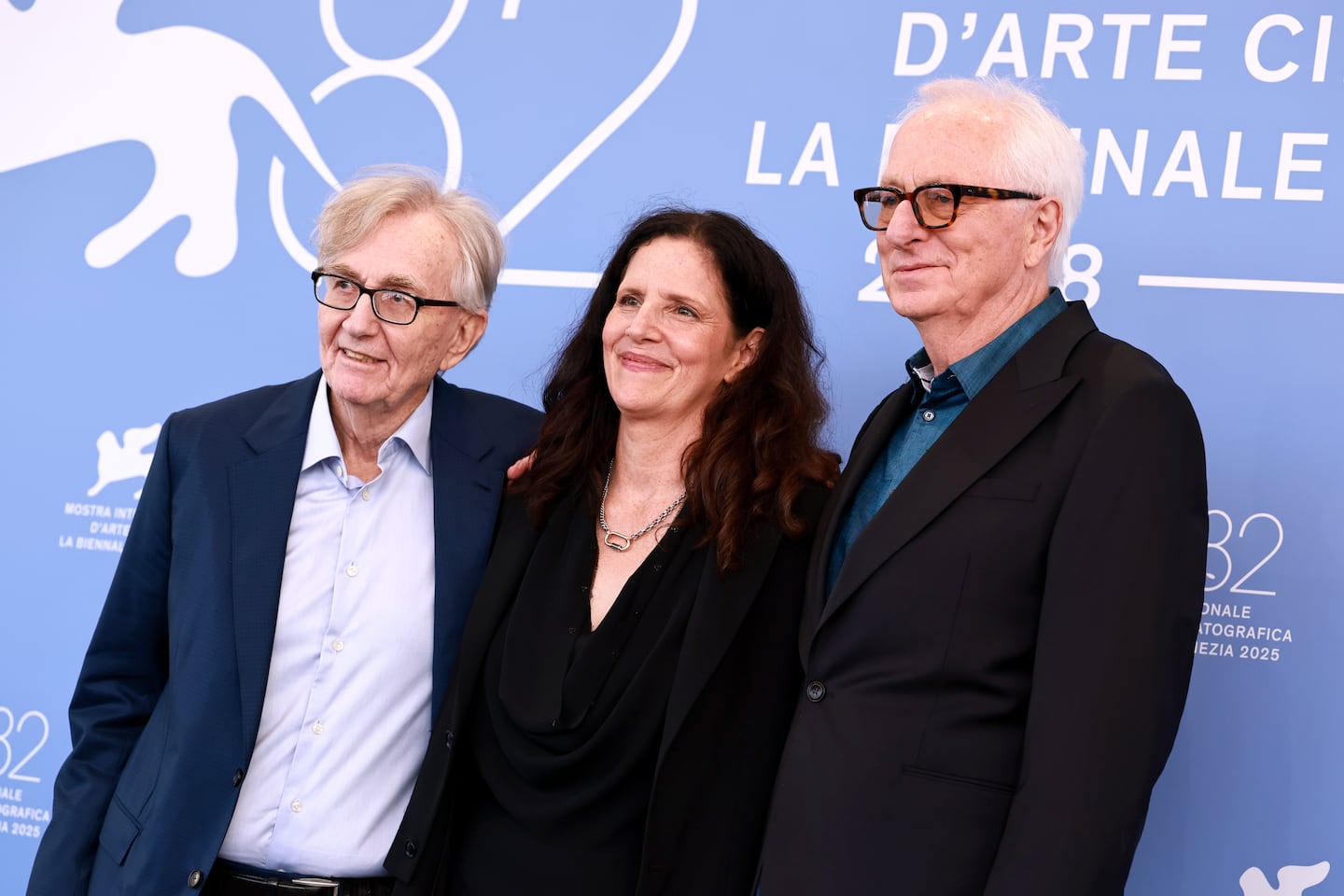
The 82nd Venice International Film Festival wraps up Saturday, having ushered in movie awards season and hosted boldface names including Julia Roberts (star of “After the Hunt”), George Clooney (star of “Jay Kelly”), Guillermo del Toro (director of “Frankenstein”), and Kathryn Bigelow (“A House of Dynamite”). Meanwhile, a little below the radar, the festival also launched several first-rate documentaries — including some with strong Boston and New England ties.
The high caliber is really nothing new; Venice always programs a stellar nonfiction lineup. But this year’s slate seemed particularly strong. Among the strongest was “Remake,” the latest and most painful work from Boston-based filmmaker Ross McElwee.
McElwee, who began teaching filmmaking at Harvard in 1986, makes essayistic docs that incorporate his own life into a larger thematic framework. The most famous of these is “Sherman’s March,” which came out 40 years ago. What began, in theory, as a look at General William Tecumseh Sherman’s fiery destruction of the South during the Civil War became a personal and eccentric exploration of McElwee’s love life. Some of “Remake” concerns Hollywood’s efforts to adapt the doc into a feature movie, then a TV series. But the bulk of it concerns the overdose death of McElwee’s son, Adrian.
Advertisement
As I write these words, I feel like I’m unfairly reducing the film. “Remake” is a stirring meditation on the passage of time, on memory and loss, and the capacity and limits of film to capture reality. McElwee filmed his son throughout his life; we see Adrian as a precocious little boy, and as a young man struggling with addiction before he died at the age of 21. The film collapses time to devastating effect, but McElwee doesn’t do manipulation. He’s after something bigger — the relationship between the camera and the life it can and can’t capture, and between art and guilt. “Remake” is a hell of a film.
Advertisement
So, too, is “Cover-Up,” the new film from Boston’s Laura Poitras (directed with Mark Obenhaus). The subject is Seymour Hersh, the investigative reporter who has broken stories on everything from the My Lai Massacre during the Vietnam War to US-sanctioned torture at the Abu Ghraib prison camp during the war on terror. Known for cultivating (and fiercely protecting) anonymous sources, Hersh is profiled here in all his prickly glory, a true believer in exposing corruption and abuses of power. His tenacity has earned him the enmity of those who would rather their government’s darkest secrets remain in the shadows.
Poitras, whose doc “All the Beauty and the Bloodshed” was my favorite Venice film in 2022 (and won the festival’s Golden Lion for best film that year), initially approached Hersh about spotlighting him in a film 20 years ago. Now 88, He finally agreed, but in “Cover-Up” we see him pull back more than once, and even walk away from the project for a time. He’s reluctant to reveal too much, especially when it comes to his sources. Far from perfect — he was widely accused of shoddy journalism for his 1997 book on John F. Kennedy, “The Dark Side of Camelot” — Hersh comes across as a truth-seeking missile who suffers no fools, an old school bulldog reporter who has no problem making powerful enemies.
Advertisement
Bob Dylan certainly made some enemies when he went electric at the 1965 Newport Folk Festival, an event dramatized in the 2024 movie “A Complete Unknown.” But that’s just one of the story lines in “Newport & The Great Folk Dream,” Robert Gordon’s new doc featuring intimate footage of the festival from 1963 to 1966.
Playing like an oral history set to music, with performances from Dylan, Joan Baez, John Lee Hooker, The Staple Singers, Phil Ochs, and a delightful assortment of other artists famous and obscure, the film tells a story of how a scrappy, almost utopian event grew into something bigger and more commercial. Gordon, whose previous films include the first-rate “Best of Enemies: Buckley vs. Vidal” (directed with Morgan Neville), doesn’t pass judgment. Instead, he lets interview subjects have their say and shapes his treasure trove of footage (from the archives of the late documentary filmmaker and Harvard graduate Murray Lerner) into an indelible visual document.
Other standout docs at the festival included “Agnus Dei,” an Italian documentary about a thriving ritual involving two (unbelievably adorable) lambs and the pope; “Landmarks,” Lucrecia Martel’s deeply troubling examination of a fatal land dispute in Argentina; and several films about film and film history. Among the best of these are “Sangre Del Toro,” which looks at the inspirations and career of Guillermo del Toro; and “Boorman and the Devil,” a deep dive into John Boorman’s disastrous “Exorcist II: The Heretic,” which nearly ended the filmmaker’s career.
We’ll keep an eye on all of the above films as they try to find an audience beyond the festival circuit. Theatrical distribution is a tough road for docs (and other films) these days, but streamers abound, even if they’re mostly interested in celebrities, true crime, and cults. Here’s hoping you get a chance to catch the best nonfiction Venice had to offer.
Advertisement
Chris Vognar can be reached at