
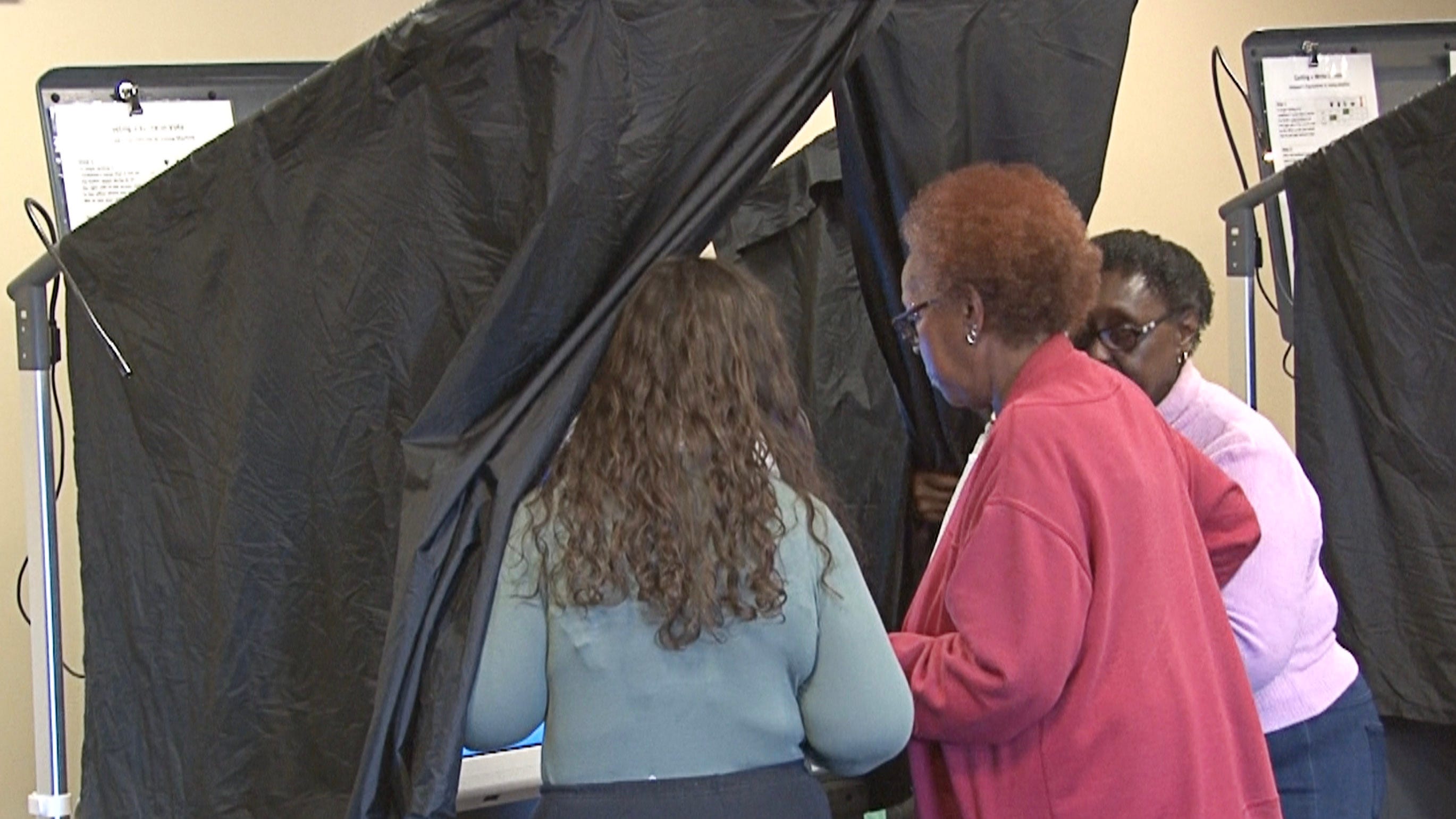

Show Caption
Wilmington Democrats in House District 1 will choose between incumbent Rep. Nnamdi Chukwuocha and City Council member Shané Darby in a rematch of their razor-thin 2022 primary, a race likely to decide who represents northern Wilmington in Dover.
The district contains most of the northern part of the city of Wilmington.
Chukwuocha emphasizes educational equity, student-centered school funding, affordable housing and expanded public transit, while Darby focuses on economic stability, housing affordability, accountability for education spending and stronger protections against displacement and rising costs.
The winner of this primary will face Republican Lisa McInnis in November's general election.
Delaware Online/The News Journal sent each candidate in this election an identical questionnaire. Their responses are published below, edited only for grammar and brevity.
Nnamdi Chukwuocha
Name: Nnamdi Chukwuocha Residence (town/city): Wilmington- Brandywine HillsAge: 55Occupation: Social Worker, Poet
Education: Master of Social WorkCampaign website: Nnamdi-DE.com
Question: Why are you running for office, and what is the most important issue facing your district?
Answer: I am running for reelection because I want to continue the progress we have begun and keep fighting for the people of Wilmington.
As a social worker, I bring a unique perspective and a powerful voice to the General Assembly. My professional experience has shaped how I advocate for families, children, and communities, and I have worked hard to be a strong leader and champion for the City of Wilmington.
To me, the most important issue facing our city is the current state of education. We have a severe lack of educational equity, and we are failing too many of our children. Every child deserves access to a high-quality education and the opportunity to reach their full potential, regardless of their ZIP code, neighborhood, or family circumstances.
Education is about so much more than what happens inside a classroom. Educational outcomes have a profound impact on a person’s quality of life and future direction. Education is connected to employment and financial stability, housing, physical and mental health, and even public safety and crime. When we invest in our children’s education, we are investing in the future health, stability, and prosperity of our entire community.
How should Delaware ensure property reassessments are fair and prevent sharp tax increases for homeowners?
I believe our state needs to continue supporting our counties as they implement property reassessments. At the same time, counties must be held accountable for ensuring that reassessments are fair, accurate, transparent, and based on reliable property values.
As we, as a state, become more accustomed to regular, fair, and consistent reassessments, the challenges and potential tax increases associated with them should become less daunting. The most recent reassessment was particularly difficult because it was the first in nearly several decades, creating significant disruption and uncertainty for homeowners.
We must also ensure that multiple tax-relief options are available to those who need them most, particularly seniors, low-income residents, and veterans. In addition to considering a split-rate system, the state should explore other approaches, such as a circuit-breaker model, which could provide meaningful, broad-based relief to homeowners while helping ensure that property taxes remain affordable and equitable.
What changes, if any, would you make to Delaware’s education funding system, and how would you improve student outcomes?
Although I am supportive and thankful for the changes being made to our current funding system through the PEFC’s hybrid model, if it were up to me, I would have scrapped the unit count system altogether. The current system does not adequately account for student need. While it incorporates weights, its core structure is still not truly student-centered. From a funding perspective, it continues to operate from a model that is not sufficiently rooted in the individual needs of students. I would have preferred a student-centered funding model or a true weighted funding formula that moves away from unit counts, which can create and sustain inequities.
I also believe that improving student outcomes requires a greater focus on individual student needs and individual student growth, not simply proficiency. We are fighting a losing battle when we fail to recognize where students and families are and provide the support they need to move forward. Student growth should be measured by progress from each student’s starting point, while ensuring that every student has meaningful opportunities to reach high levels of achievement.
Ultimately, we need an equitable system in which every school and every student has the support necessary to succeed. That means equitable access to resources, high-quality educators, adequate support staff, and school and district leaders who are committed to meaningful, student-centered change. If we truly want to improve outcomes, our systems must be designed around students and their needs, not around the structures we have historically used to fund education.
Delaware continues to experience significant growth. How should state and local governments balance development with concerns about traffic, infrastructure, farmland and open space?
In order to better prepare for continued population growth, our cities, unincorporated areas, counties, and state must do a much better job of comprehensive, coordinated planning. Currently, we are falling short in several critical areas, and without proactive planning, these challenges will only intensify as our population grows. Infrastructure, green space, farmland preservation, housing, transportation, and other essential services must be considered together rather than addressed in isolation.
Effective growth management requires meaningful coordination among all levels of government. We need to anticipate the needs associated with population growth and invest in the infrastructure and services necessary to support thriving, sustainable communities.
One area of particular concern is healthcare. With many older Americans moving to our state, our healthcare system is not adequately prepared to meet the increased demand. We need significant investment in primary care and preventive health services so that residents can access care before their needs become more complex and costly. A strong primary care system is essential to ensuring that we can meet the healthcare needs of our growing population and build a healthier, more resilient state.
What is one specific action you would support to make Delaware government more transparent and accountable?
Ensure transparency by creating and maintaining an open, accessible process where government decisions are made above board and residents feel informed, included, and involved.
I would continue to invest in a strong public civic infrastructure that supports neighborhood planning councils, civic associations, block clubs, and other community-based organizations. When residents are meaningfully engaged in their communities, neighborhoods are stronger and safer, and there are more consistent opportunities for residents to communicate directly with their elected representatives.
Transparency also means ensuring that all public records, meeting notices, agendas, reports, budgets, and other government documents are published accurately, promptly, and in accordance with the law. Residents should not have to struggle to find information about the decisions that affect their families, neighborhoods, and communities.
What transportation or infrastructure project should be the state’s top priority, and how should it be funded?
I would say the state’s number one transportation priority should be to continue expanding and improving our public transportation system across all three counties, with a particular focus on Kent and Sussex Counties.
New Castle County has aging water and sewer infrastructure, particularly in the City of Wilmington. Addressing these critical infrastructure needs will require strong support and significant investment from both the state and federal governments. This should be a top priority, because reliable water and sewer systems are essential to public health, economic development, and the quality of life for residents.
What should Delaware do to address rising housing and cost-of-living challenges?
I fully support efforts to expand Delaware housing trust fund financing and use state dollars to leverage federal programs such as the Low-Income Housing Tax Credits to further expand financing available for affordable rental construction.
At the edge of the first district there are multiple buildings that have been vacant for decades I support state purchasing of such properties for housing development.
Shané Darby
Name: Shané Nicole DarbyResidence (town/city): Wilmington, DelawareAge: 37Occupation: Wilmington City Councilmember; Founder and Executive Director of Black Mothers In Power; Delaware Army National Guard Paralegal; Adjunct InstructorEducation: B.A., African American Studies & Mass Media Communications, Temple University; M.A., African American Studies, Temple University; Graduate Certificate in Trauma & Resilience, Wilmington UniversityCampaign website: www.darby4de.com
Question: Why are you running for office, and what is the most important issue facing your district?
Answer: I am running for State Representative because the First District deserves leadership that is accessible, accountable, and focused on improving the everyday lives of residents. My experience as a Wilmington City Councilmember, nonprofit leader, educator, and member of the Delaware Army National Guard has shown me how decisions made at the state level directly affect our neighborhoods.
The most important issue facing our district is economic stability. Housing costs, property taxes, utilities, childcare, food, and other basic expenses are rising while too many families are struggling to keep up. I want to bring more state resources into our district while advancing policies that make housing more affordable, strengthen our schools, create economic opportunities, and help families remain in the communities they have built.
How should Delaware ensure property reassessments are fair and prevent sharp tax increases for homeowners?
Property reassessment should not become a tool for displacement. Delaware needs strong protections for longtime homeowners, seniors, people with disabilities, and lower- and moderate-income households who may live in appreciating neighborhoods but have not experienced a comparable increase in income.
I support examining income-based relief, expanded credits and exemptions, payment plans, and protections against sudden increases in tax bills. We also need a transparent and accessible appeals process so residents can challenge inaccurate assessments. The goal should be fairness: similarly situated properties should be assessed consistently, while preventing residents from being taxed out of their homes simply because their neighborhood has become more valuable.
What changes, if any, would you make to Delaware’s education funding system, and how would you improve student outcomes?
Delaware needs to move toward a funding system that directs additional resources to students with the greatest needs. Funding should account for poverty, special education, English-language learners, student mental health, and the additional challenges facing schools serving concentrated poverty.
But increasing funding alone is not enough. We need accountability for outcomes. I would prioritize evidence-based literacy and math instruction, high-dosage tutoring, smaller class sizes where appropriate, early intervention, mental-health supports, strong career and technical education, and competitive compensation that helps recruit and retain high-quality educators.
Wilmington has seen significant investments and repeated initiatives without the academic improvements our children deserve. We should measure what works, discontinue programs that consistently fail to produce results, and direct resources toward strategies with demonstrated outcomes.
Delaware continues to experience significant growth. How should state and local governments balance development with concerns about traffic, infrastructure, farmland and open space?
Development should be responsible, coordinated, and supported by adequate infrastructure. Too often, communities experience the consequences of development after decisions have already been made.
Before approving major developments, government should evaluate the impact on roads, public transportation, schools, water and sewer systems, emergency services, flooding, and surrounding communities. Developers should contribute appropriately toward infrastructure improvements necessitated by their projects rather than shifting those costs entirely onto taxpayers.
At the same time, Delaware should prioritize redevelopment of vacant and underutilized properties, particularly in existing communities, while protecting farmland and important open spaces. Smart growth means building where infrastructure already exists whenever possible instead of continuously expanding outward.
What is one specific action you would support to make Delaware government more transparent and accountable?
I would support creating a stronger, easily searchable public transparency system that allows residents to see how state dollars are being spent—including grants, contracts, major appropriations, recipients, project purposes, and measurable outcomes.
Transparency should mean more than posting documents somewhere online. Information should be understandable and accessible to the average resident. When public money is awarded, taxpayers should be able to determine who received it, why they received it, what they promised to accomplish, and whether those outcomes were achieved.
What transportation or infrastructure project should be the state’s top priority, and how should it be funded?
For Wilmington and the First District, our priority should be improving neighborhood infrastructure and transportation access—not simply expanding highways. That includes repairing aging roads and sidewalks, improving pedestrian safety, addressing dangerous intersections, strengthening public transit connections, and making our streets safer for children, seniors, cyclists, and people with disabilities.
I would prioritize maximizing available federal infrastructure and transportation funding, combined with state capital investments, while ensuring Delaware’s Transportation Trust Fund remains sustainable. Major new developments should also contribute toward transportation improvements when they create additional infrastructure demands.
What should Delaware do to address rising housing and cost-of-living challenges?
Delaware needs a comprehensive housing strategy that addresses both supply and affordability. We should increase investment in affordable housing, preserve existing affordable units, support first-time homebuyers, rehabilitate vacant properties, strengthen protections for renters and homeowners, and create more pathways to homeownership.
I also support policies that prevent displacement and unreasonable housing-cost increases while encouraging responsible development of housing at different income levels. Housing policy cannot be separated from the broader cost of living. Families are simultaneously paying for childcare, utilities, transportation, healthcare, groceries, and housing.
My approach is simple: Delaware’s economy should work for working families. A person working full time should be able to afford a safe place to live, meet basic household expenses, and still have an opportunity to build wealth.