
The ambitions of the Koch-backed network behind Project 2025 and the the PayPal Mafia behind President Trump are set to converge in a public-private fin-tech industry that distributes school choice subsidies using digital wallets and stablecoins based on AI social credit analytics.
In “TrumpED 2025: School Choice Corporatization, Social Impact Finance, and the Dismantling of the Department of Education,” I documented how President Donald Trump has been pursuing education reforms that align with Project 2025, which calls for Trump to push federal “school choice” subsidies, including “Education Savings Accounts” (ESAs) and tax credits for corporate donations to “Scholarship Granting Organizations” (SGOs). In the wake of my report, Trump signed into law the omnibus “One Big Beautiful Bill Act,” ramming through a school choice rider that resembles the SGO tax credit provisions stipulated in the “Educational Choice for Children Act” (ECCA), which is championed in Project 2025.
School choice ESAs and SGO tax credits may afford parents and students with a broader menu of learning options, but not without simultaneously expanding Big Government, Big Business, and Big Tech control over public, private, and home education. To be sure, ESAs and tax-credited “scholarships” are primed to expand government regulation of private, religious, and home schools while publicly subsidizing ed-tech companies that data-mine students’ psychometrics for predictive learning analytics. Not only are ESAs and tax-credited “scholarships” positioned to extend the reaches of government bureaucracies and ed-tech corporations into public, private, and home educationl, but they go even farther, as they are also positioned to usher fin-tech companies into public-private partnerships between ed-tech corporations and government bureaucracies in order to digitally dole out ESAs and “scholarships” to students.
In fact, several fin-tech corporations, including ClassWallet, Odyssey, Student First Technologies (SFT), Merit International, and SAP Ariba, are already specializing in “digital wallets” that streamline ESA and tax-credited “scholarship” payments. Altogether, these fin-tech companies have already contracted with at least 32 state governments to facilitate ESA and “scholarship” payments for public-private school choice programs. Some of these fin-tech corporations, such as ClassWallet, have also contracted with the United States (US) Federal government to digitize emergency education funding for virtual-online “distance learning” during COVID lockdowns. Many of these fin-tech companies and their digital wallets have also been promoted by a Koch–funded regiment of corporatist State Policy Network (SPN) think tanks, including the Heritage Foundation, the American Enterprise Institute (AEI), EdChoice, and ExcelinEd–– all of which are affiliates of Project 2025 contributors.

In short, the corporatist contingent of the Koch-SPN think tanks behind Project 2025 is advocating for school choice ESAs and “scholarships” to be streamlined by fin-tech companies while the Silicon Valley technocrats of the PayPal Mafia are guiding Trump to accelerate the evolution of the digital economy through federal government adoption of blockchain DLTs and stablecoins. As Trump’s “PayPal Presidency” onboards federal blockchain systems, the school choice corporatization of the Koch-SPN cartel and the fin-tech disruptions of the PayPal Mafia are set to converge in a public-private digital wallet industry that tokenizes ESA and “scholarship” subsidies through stablecoins programmed by AI for government-restricted purchasing of ed-tech products and services. Synergizing the neo-conservative, beltway-libertarian, and VC Silicon Valley blocs of the Republican Party, the Koch-SPN and PayPal Mafia powers behind Trump are setting the stage for fin-tech digitization of school choice subsidies in order to upgrade public-private ed-tech systems for AI social credit scoring in the blockchain economy of the Fourth Industrial Revolution (4IR).
To SPN a Web: School Choice Corporatization Meets Fin-Tech Digitization
As I document in “TrumpED 2025,” the Trump administration’s education reforms are following the Project 2025 “Playbook.” Titled Mandate for Leadership: The Conservative Promise, Project 2025 was authored by associates of the Koch–funded SPN, which is a consortium of neo-conservative and beltway-libertarian think tanks, including the Heritage Foundation and the AEI, along with corporatist school choice think tanks, such as EdChoice, and ExcelinEd. Not only have these Koch-SPN think tanks advocated for school choice ESAs in alignment with Project 2025, but they have also called for corporate fin-tech overhauls to privatize payment and accounting systems for government ESA subsidies.
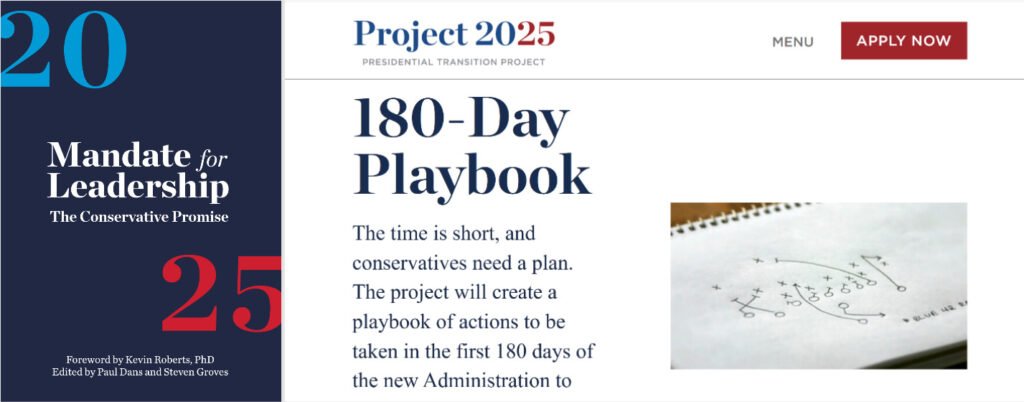
Heritage Foundation, Project 2025 “Playbook”
At the helm of Project 2025 is the Heritage Foundation, which is the “arch-conservative” think tank that has set the mold for Republican policies for more than a half century. In addition to directing Project 2025, which calls for converting federal education entitlements into school choice ESAs, the Heritage Foundation serves on the Project 2025 Advisory Board. The main author of Project 2025’s “Department of Education” chapter is Lindsey M. Burke, who is the Director of the Heritage Center for Education Policy where her Project 2025 co-author, Jonathan Butcher, is a Senior Research Fellow. In a Heritage Foundation article titled “Financial Technology and Parental Choice in Education,” Butcher calls for fin-tech corporatization to streamline payment and accounting systems for government ESAs.

According to Butcher, school choice ESAs are model financial vehicles for subsidizing private schools and ed-tech corporations with public tax dollars because ESAs enable “parents [to] customize their children’s education” by purchasing an array of “educational products and services.” In particular, ESAs enable “[p]arents [to] buy online classes, hire a personal tutor, . . . pay private school tuition,” and purchase ed-tech products.
While ESAs might deliver a more dynamic menu of customizable choices, the sheer scale of such individualized customization presents financial accounting and transaction complications that impede parents’ abilities to efficiently access the full menu of private schools and ed-tech companies that are eligible to receive ESA money. To resolve these transactional and accounting complications and, thereby, streamline the customization of education choice, Butcher advocates for ESA fin-tech that can be programmed to quickly verify a wider range of authorized educational services and products and, in turn, speedily transfer ESA payments to certified schools and vendors. Butcher avers that ESA payments:
“need a system that allows parents and students to make multiple purchases each fiscal quarter, perhaps even multiple purchases each day, while limiting such transactions to lawful educational products and services. The system needs to block unlawful transactions and facilitate payment to multiple vendors without using cash—all characteristics of the payment services becoming available today through financial technology.”
To support his case for fin-tech privatization of ESA administration, Butcher describes how Visa and several fin-tech companies, including Venmo, PayPal, and BenefitWallet, have already contracted with the state governments of Arizona and Nevada to facilitate tax-funded ESA payments.
According to Butcher, next-generation fin-tech, such as ClassWallet, which specializes in school choice vouchers, “scholarships,” and ESAs, should replace prepaid Visa and PayPal ESAs in order to save parents money and prevent fraudulent use of ESA tax subsidies. Butcher relays that, although prepaid Visa ESAs are programmed with purchasing codes that restrict products or services that do not fall under authorized categories, some of those codes, such as Walmart product codes, are imprecise, creating loopholes for families to buy unauthorized products or services with government ESA subsidies. Conversely, Butcher highlights how next-generation fin-tech, such as ClassWallet, does not incur a fee and can be programmed to transfer funds only to specifically authorized schools, ed-tech companies, and educational service vendors.
Hyping next-gen fin-tech as the future of ESA administration, Butcher advises state governments to:
“outsource full or partial implementation of education savings accounts to private organizations. State departments of education should provide policy guidance concerning eligible educational services and products for purchase, but state lawmakers should look to companies that specialize in fintech in order to streamline transactions and prevent the expansion of government activity. State agencies should not create new data systems or hire new staff. Instead, the state should contract with private entities to manage payment processing and audits.”
In brief, Butcher’s Heritage whitepaper rationalizes fin-tech privatization of school choice ESAs on the basis of ostensibly eliminating government waste, fraud, and abuse, which is the same rationale that the Trump administration provides for directing the US Department of Government Efficiency (DOGE) to chainsaw public education and other tax-funded programs.
In addition to the Heritage Foundation, another Koch-SPN think tank that has espoused fin-tech privatization of ESAs is the American Enterprise Institute (AEI) where Butcher’s Project 2025 co-author, Max Eden, has served as a Research Fellow, a Senior Fellow, and an Education Policy Program Manager. In an AEI article titled “Implementing K–12 Education Savings Accounts,” Michael Q. McShane, who is an AEI Adjunct Fellow, asserts that “there should be more competition in the ESA payment platform industry. Part ‘govtech’ and part ‘fintech’ solutions should be able to straddle the worlds of private industry and government to make payments fast and fluid.” According to this AEI whitepaper, governments should contract with innovative fin-tech corporations that make the “use of ESA dollars seamless and straightforward.” To achieve these fin-tech efficiencies, McShane calls for legislation and regulations that appoint “a private entity to administer the day-to-day details of the program (approving expenditures, paying schools and other providers, etc.).”

McShane is also the Director of National Research at another Koch-SPN think tank, EdChoice, where Project 2025 author Lindsey M. Burke is a Fellow. Formerly known as the Milton and Rose Friedman Foundation for Educational Choice, EdChoice has also advocated for fin-tech privatization of ESAs. In an “EdChoice Policy Toolkit” titled “ESA Financial Accountability: Reimbursements, Debit Cards or Online Platforms?,” EdChoice touts that “[o]nline [fin-tech] platforms like those developed by ClassWallet and SAP Ariba provide the highest level of [ESA] financial accountability with the least amount of bureaucracy.” According to this EdChoice “Toolkit,” “[s]ince the [fin-tech] platforms only allow the purchase of eligible products and services, this model provides the highest form of financial accountability. Moreover, it is much more cost-effective than the other models because it does not require a huge staff to pore over innumerable receipts.”

Another associate of yet another Koch-SPN think tank, the American Federation for Children (AFC), has championed “digital wallets,” such as ClassWallet, as the most cutting-edge fin-tech upgrade for privatizing ESAs. Sarah Raybon, who is the Senior Director of Strategic Initiatives at ClassWallet, “has worked to expand educational opportunities through . . . the American Federation for Children,” according to her ClassWallet employee profile. In a ClassWallet article titled “Ensuring Transparency with Education Savings Account Programs,” Raybon advises state governments to privatize “ESA programs” through public-private “digital wallet” contracts with fin-tech corporations in order to “meet the needs of all stakeholders,” including “[p]olicymakers,” “[p]rogram participants,” and “[s]tate administrators.” Raybon explains how:
“[ESA] [p]rogram administrators can set rules with digital wallets around [ESA] purchases to avoid the misuse of [ESA] funds, helping program administrators comply with legislative requirements and easily track where dollars are spent. The technology provides administrators with real-time tracking and reporting options. The technology provides administrators with real-time tracking and reporting options. The technology provides administrators with real-time tracking and reporting options. The technology provides administrators with real-time tracking and reporting options. The technology provides administrators with real-time tracking and reporting options. The technology provides administrators with real-time tracking and reporting options. The technology provides administrators with real-time tracking and reporting options. The technology provides administrators with real-time tracking and reporting options. The technology provides administrators with real-time tracking and reporting options. The technology provides administrators with real-time tracking and reporting options. The technology provides administrators with real-time tracking and reporting options. The technology provides administrators with real-time tracking and reporting options. The technology provides administrators with real-time tracking and reporting options. The technology provides administrators with real-time tracking and reporting options. The technology provides administrators with real-time tracking and reporting options. The technology provides administrators with real-time tracking and reporting options. The technology provides administrators with real-time tracking and reporting options. The technology provides administrators with real-time tracking and reporting options. The technology provides administrators with real-time tracking and reporting options. The technology provides administrators with real-time tracking and reporting options. The technology provides administrators with real-time tracking and reporting options. The technology provides administrators with real-time tracking and reporting options. The technology provides administrators with real-time tracking and reporting options. The technology provides administrators with real-time tracking and reporting options. The technology provides administrators with real-time tracking and reporting options. The technology provides administrators with real-time tracking and reporting options. The technology provides administrators with real-time tracking and reporting options.
In addition to advancing school choice corporatization and digital wallet privatization through the AFC and ClassWallet, Raybon has also served as the Director of Communications and Engagement at the Arizona Department of Education (ADE) where she administrated facets of the state’s “Empowerment Scholarship Account (ESA)” program, which is America’s first-ever ESA program. Today, the ADE website officially states that “ClassWallet is the financial management platform for the [Arizona] ESA program.”
It is worth noting here that the AFC, which was founded, financed, and chaired by former US Secretary of Education, Betsy DeVos, operates a “Growth Fund” that was formerly known as the Alliance for School Choice where Project 2025 co-author, Robert S. Eitel, served as the “national director.” Under Trump’s first presidency, Eitel served as “Senior Counselor” to Secretary DeVos, who has also bankrolled EdChoice, the Heritage Foundation, and the AEI.

On left: Robert S. Eitel – Source | Middle: AFC Growth Fund | On right: Jim Blew – Source
It is also worth noting here that Secretary DeVos staffed her Department of Education with Neil Ruddock, Andrew Kossack, and Josh Venable, all of whom worked for Jeb Bush’s Foundation for Excellence in Education (ExcelinEd), which is yet another Koch-SPN think tank that has also been advocating for fin-tech privatization of ESAs. In an ExcelinEd blog article titled “Unlocking the Full Potential of Education Savings Accounts: Navigating Expense Review for Maximum Impact,” the ExcelinEd Education Choice Policy Director recommends administering ESAs through “multiple systems for payment methods, such as an online marketplace for direct purchases” facilitated through “various payment options,” including “digital wallets.” For precision accounting and transfer of digital ESAs, ExcelinEd recommends combining fin-tech with artificial intelligence (AI) that can “streamline the expense review process. AI can rapidly process and approve clear-cut cases while flagging more complex expenses for manual review, thereby balancing efficiency with oversight.” ExcelinEd adds that “[i]deally, the [AI] technology could ‘learn’ over time, reducing the number that require manual review.”

On left: Betsy DeVos – Source | Middle: ExcelinEd | On right: Jeb Bush – Source
In sum, Project 2025 author, Jonathan Butcher, has directly hyped fin-tech privatization of ESAs. Meanwhile several Koch-SPN think tanks, including the Heritage Foundation, the AEI, and EdChoice, which are affiliated with Project 2025 authors, such as Butcher, Lindsey M. Burke, and Max Eden, have also been calling for fin-tech privatization of ESAs. At the same time, another Koch-SPN think tank, ExcelinEd, has likewise been cheerleading for fin-tech corporatization of ESAs. Considering that Trump’s push to “dismantle” the Department of Education has been following the Project 2025 “Playbook,” which calls for a portion of federal education entitlements to be converted into ESAs, the trajectory of Trump’s school choice reforms is palpably bent toward greenlighting the fin-tech ESA overhauls touted by Project 2025 affiliates and their Koch-SPN cronies.
Venture Capital & School Choice Fin-Tech: From Digital Wallets to Blockchain IDs
Leading fin-tech corporations, such as ClassWallet, Odyssey, Student First Technologies (SFT), Merit International, SAP Ariba, and BenefitWallet, have already been contracting with at least 31 state governments to streamline public education expenditures, including school choice subsidies, such as ESAs and tax-credited “scholarships.” These fin-tech companies have been bankrolled by disruptive venture capital firms, such as Stand Together Ventures Lab, which is associated with the Koch–SPN syndicate, along with Alumni Ventures, Bling Capital, and Andreessen Horowitz, which share common investments with PayPal Mafia don, Peter Thiel. Bolstered by venture capital and public-private partnerships with more than 60% of America’s State governments, these premier fin-tech companies are poised to not only privatize the Federal school choice ESAs championed by Project 2025 and its associate SPN think tanks, but to also upgrade digital wallets with blockchain DLTs and AI analytics such as those that have been financed by Thiel and other PayPal Mafiosos. In turn, school choice subsidies and other public education funds can be doled out by AI to pay for a menu of ed-tech products and services that are algorithmically prescribed based on students’ predictive social credit analytics extrapolated from their learning metrics logged into their blockchain digital IDs.